SONAR charts check temperature of Shanghai’s ailing supply chain
China’s zero-COVID policy is a prescription for more inflation and supply chain “illness.”
‘Right now, we don’t see a huge buildup of volumes because of the closedown in Shanghai,’ reports Maersk CEO Soren Skou.
CEO Brad Wright explains how Chunker’s short-term container storage model reduces risk for shippers.
America’s largest container port, Los Angeles, just posted the best March and best first quarter in its history.
The debate heats up on whether this is the beginning of the end of container shipping’s bull run.
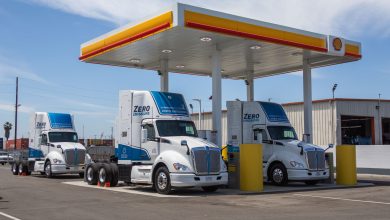
Dirty trucks will pay $10 per TEU in and out of the Los Angeles and Long Beach ports to raise money for zero-emission trucks and infrastructure.
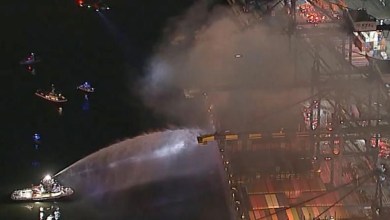
A container fire at the ports of Los Angeles and Long Beach has led to a Coast Guard investigation of four companies for possible shipping violations.
Federal regulators will begin to assess how container lines are serving U.S. exporters.
California ports make progress on bottlenecks, but Chinese lockdowns could spur “hockey stick” import rise.
DOT is leading a freight data exchange pilot project that it envisions as a long-term effort to speed cargo flow and cut costs for consumers.
COVID lockdowns haven’t closed Chinese ports yet. If they do, U.S. importers face “shockwave” of higher rates and delays.
Liner company Zim expects to rake in a billion dollars more this year than in record-setting 2021.
There are now more container ships waiting off East and Gulf Coast ports than there are off Los Angeles/Long Beach.
“Efforts to successfully move aging cargo out of shipping terminals” improve the picture at California’s San Pedro Bay ports.
One-year agreement will allow for at least 20,000 boxes to be stored off-site, state says.
West Coast terminal operators could be taking advantage of supply chain disruptions by overcharging shippers for using night gates.
Dysfunction at the nation’s largest port helps explain why the U.S. is losing the trade war to China.
An internal process audit can be easier than you think, ships waiting for berths in San Pedro Bay have finally decreased, and Canada can’t quit with border issues.
The number of ships waiting off Los Angeles/Long Beach fell 23% over the past week.
In this exclusive interview with American Shipper, the port envoy to the White House Supply Chain Disruptions Task Force discusses the state of the ports, the challengers at hand and the outlook for the future.
Accusations fly as shipping lines rake in billions, but the numbers imply more carrier competition, not less.
Barring an economic downturn, U.S. demand could still be squeezing ports a year from now.
Despite the victory of saving Christmas, the congestion problems at the nation’s largest ports have not improved.
“International collaboration is essential to decarbonize global supply chains. It’s time to get started on this important work,” said Gene Seroka, executive director of the Port of Los Angeles.
SoCal imports suffering multimonth slide, not because of falling demand, but because of supply chain bottlenecks.
Drivers are people who have needs and wants, goods from October are just now being unloaded at West Coast ports, and the FMSCA has a new deputy administrator.
No letup yet: It’s taking even longer for Asian exports to get across Pacific to American buyers.
The finger-pointing of blame and the political promises and suggestions are not improving the flow of trade.
DOT Secretary Pete Buttigieg touted holiday season wins at the ports of LA and Long Beach while addressing shipping-sector prices.
Popular interest in the supply chain may have faded, but the pileup of ships waiting offshore keeps growing.
How could the consensus — that container spot rates will remain extremely high — be wrong?
Port of Los Angeles is going vessel operators to clear out empty containers or else face big fines.
There has never been a year like this for container shipping. Here are the biggest stories of 2021.
After an exceptional year for ocean shipping, the data points to more action ahead in 2022.
Carriers and shippers are turning to East Coast ports as Los Angeles/Long Beach remains mired in congestion.
Port Hueneme is an example of a niche port that is attracting more container shipments because of bottlenecks at big seaports.
Import demand remains exceptionally strong but volumes through America’s largest port are falling.
SoCal port crunch “has really become as bad as it’s ever been,” reports industry veteran Jon Monroe.
A new report by Shifl shows the impact the massive congestion off the coast of Los Angeles and Long Beach has had on transit times from China.
A look at the end of Central Freight Lines, the port congestion blame game between drivers and officials, and investments no one asked for.
Christmas is just around the corner, but the supply chain remains snarled, says a C.H. Robinson exec.
The effects of port congestion on independent contractors may be underplayed in a recent driver satisfaction survey.
After brief reprieve, trans-Pacific shipping rates head back up, pointing to ongoing supply chain pressure.
California drayage company Orange Avenue Express alleges ocean carrier Hapag-Lloyd is forcing it to act as a storage facility for refrigerated containers.
The container shipping surge shows no signs of letup, but the Southern California ports say they are slowly clearing out the backlogs.
In addition to 40 waiting close to shore, another 56 farther out
Controversial plan to charge for containers lingering on terminals keeps getting delayed. Yet containers still linger.
Customers reach expiration dates, Amazon is trialing home deliveries in the U.K., 96 ships in San Pedro Bay.
Industry cooperation removing containers from the docks has convinced port officials to hold off imposing penalties for excess storage.
COVID exposed underlying chinks in the supply chain, especially at the ports. The White House has lit a fire under the industry’s feet to improve the container shipping system.
Marine Exchange now counts ships waiting farther out to sea, confirming just how big the backlog really is.
Officials are creating unrealistic expectations that supply chains will be unplugged within weeks or months.
Congestion can be attributed to increased ship traffic, a lack of labor and crane availability, and the sea of empty containers rising throughout Southern California.
While technically the congestion has decreased in the bay because of the new queuing system, that does not mean the vessels do not exist. They do.
Despite claims to the contrary, the ship backlog is not getting smaller. Vessels are waiting on both sides of the Pacific.
Southern California ports and private operators are using carrots and sticks to help eliminate a massive pileup of cargo.
Despite reports that congestion issues are easing on the water at California’s major ports, drayage truckers claim this isn’t the case for them as efficiency issues continue to plague terminal operators.
Record number of container ships waiting but they’re harder to see, as new plan spreads queue across Pacific.
Cargo is moving a bit more smoothly at the Southern California ports, giving officials reason to hold off assessing stiff storage fees.
Ship arrival data confirms seasonal surge to Southern California has ebbed — even as port congestion has risen.
Convoy’s #NoEmptyMiles campaign hits new heights; the importance of verifying equipment type; a halt to the impending fees at LA and Long Beach ports; and one more acquisition.
CalTrans is boosting the weight limit for port truckers. The regulatory change was made with good intentions, but can it work?
Zim’s profits are still going up — way up — despite more vessels getting snared in West Coast port gridlock.
Los Angeles and Long Beach hold off on charging highly controversial fee on import containers.
Rates expected to remain strong into 2022, fallout from new ship deliveries in 2023-2024 to be muted.
Just five days before emergency SoCal container fee is set to begin, offshore traffic jam reaches new heights.
Lack of data sharing regarding nonscheduled vessels is adding to the congestion in San Pedro Bay and impacting the ability to plan for container processing.
Port congestion forced container ships to go faster. Congestion remains extreme, yet ships are slowing down.
California congestion hits charter rates as ship operators waste millions waiting to get to terminals.
The White House has begun monitoring container volume at the ports of Los Angeles and Long Beach to measure progress in clearing supply chain bottlenecks.
Dedicated trucking becomes more committed, truck parking capacity crunch, consumer spending sky high
A whopping 40,000 of those containers have been at the Port of LA for nine-plus days, which is considered lingering.
The ports of Los Angeles and Long Beach are turning into makeshift warehouses. Officials hope new fines on lingering cargo will end the practice.
The Port of Los Angeles is hoping to scare the freight community into more efficient behavior with big fines for the slow retrieval of containers.
The ports of Los Angeles and Long Beach haven’t informed federal regulators yet about their plans to hit ocean carriers with big fees for excessive storage of containers.
The ports of Los Angeles and Long Beach are turning to heavy-handed tactics to address a container logjam that is gumming up supply chains.
Shippers, carriers and logistics companies aren’t getting many answers yet about hefty surcharges for lingering containers at the ports of Los Angeles and Long Beach.
The daily surcharge fines begin Monday, but there has been no immediate surge of container activity.
Biden-backed plan to tackle container congestion could make logjam even worse, critics believe.
The Los Angeles/Long Beach cargo community is confused about punitive fees on ocean carriers designed to expedite the clearance of containers from marine terminals.
Company shoots out the lights in the third quarter with soaring profits and EPS.
To make room for more containers at the ports of Los Angeles and Long Beach, UP and BNSF are offering incentives to ocean carrier customers to move out the containers already there. UP is also temporarily pausing westbound marine container movement to its Long Beach facility.
Upward of 2,000 empty containers are being sent to LA, potentially creating more burden on the congested port.
The port congestion crisis is Southern California is not getting any better.
Amazon Freight positioned to sneak its way into the brokerage world, Flock Freight’s unicorn status achievements, and how much is sitting off the coast of LA and Long Beach?
California port congestion is as bad as ever. Some imports have been stranded offshore for over a month.
The Biden administration is pushing industry to take immediate and long-term steps to get ports and intermodal transport working smoothly.
As freight congestion weakens transportation links, AskWaves looks at potential federal funding options for supporting a move to 24/7 operations.
A top Biden administration official believes securing data among supply chain competitors will be the key to rolling out a nationwide 24/7 strategy.
Every facet of the supply chain must be participating in an equal fashion in order to successfully complete the 90-day sprint.
Collaboraion is the future of 3pls, U.S. waterways widely under utilized, Seroka wants retailers to come pick up their shipments.
Big-box retailers, FedEx and UPS have detailed plans to speed up container processing at the ports of Los Angeles and Long Beach.
Ahead of talks with President Biden, the ILWU is calling out foreign carriers’ focus on profits as a hurdle to solving supply chain disruptions.
Pullback in trans-Pacific shipping rates: beginning of the end or brief reprieve with end still not in sight?
Yes, despite the headaches, the ocean carriers are making boatloads of money.
Shipping Asia-U.S. via regular ocean service and rail? “I would bet your goods will not arrive in time for Christmas,” says Flexport’s Nerijus Poskus.
Los Angeles is at the front line of the port congestion crisis. Its executive director outlines his strategy to clear anchorages.
How will public view ships anchored off Los Angeles/Long Beach if one of them is tied to Huntington Beach spill?
With no end in sight for global supply chain crisis, importers warned to brace for high costs throughout next year.
With disruptions likely to linger well into 2022, intermodal equipment provider DCLI sees the labor shortfall as the biggest hurdle in the supply chain.