FMCSA streamlines regulations on truck routing, civil penalties

truck on highway

WASHINGTON — The Federal Motor Carrier Safety Administration is making changes to two truck safety regulations to eliminate potential red tape and improve consistency and clarity for the industry.

In a final rule that takes effect on Friday, FMCSA is repealing for-hire motor carrier routing regulations as they relate to serving municipalities and unincorporated communities, according to a notice posted on Tuesday.

“The purpose of this final rule is to remove an outdated regulation … as it no longer accurately reflects the agency’s current statutory authority,” FMCSA stated.

The motor carrier routing regulation authorizes freight carriers and freight forwarders to serve points within the commercial zones and territorial limits of municipalities and unincorporated communities.

However, federal law does not authorize FMCSA to include routing limitations when granting operating authority to U.S.-domiciled motor carriers, the agency stated, which makes the motor carrier routing regulation obsolete.

“This final rule will remove the obsolete regulation thereby streamlining the CFR [Code of Federal Regulations] and eliminating a source of possible confusion for stakeholders.”

Final rules issued by FMCSA are routinely preceded by a notice-and-comment period. That will not happen in this case, because “retaining regulations that are unlawful is plainly contrary to the public interest,” the notice states.

“Agencies thus have ample cause and the legal authority to immediately repeal unlawful regulations. Furthermore, notice-and-comment proceedings are unnecessary where repeal is based purely on legal analysis. For these reasons, FMCSA finds good cause that notice and public comment on this final rule are unnecessary.”

In another final rule posted on Tuesday, a civil penalties schedule update, FMCSA is amending its regulations to remove the reference to rules under the Transportation Department’s “Procedures for Transportation Workplace Drug and Alcohol Testing Program” from the agency’s civil penalty schedule.

“Instead, the civil penalty schedule will refer solely to the part of the Code of Federal Regulations where this program is incorporated” into the regulations, FMCSA stated. “Because the rule does not impose any new material requirements or increase compliance obligations, it is issued without prior notice and opportunity for comment.”

The agency explained that removing the reference to DOT’s drug and alcohol testing procedures will not affect FMCSA’s enforcement programs because any recordkeeping violations relating to testing for controlled substances and alcohol would be cited under a different part of the CFR.

“The amendment made in this final rule serves to remove an erroneous reference and to improve clarity for stakeholders,” FMCSA stated. “It is technical in nature and does not impose any new material requirements or increase compliance obligations.”

Click for more FreightWaves articles by John Gallagher.

‘Fear and uncertainty’ driving up China-US container rates

If Hunter S. Thompson had written about supply chain, we might have “Fear and Uncertainty in Ocean Shipping.” He didn’t, but we do. And the supply chain is trying to cope.

Container rates on the Asia-U.S. trade are surging during the pause in the China-U.S. tariff tiff as carriers press for higher prices and gauge shippers’ desperation.

“Fear and uncertainty is a powerful force in global supply chains and we are seeing this clearly as shippers fight to get their goods moving after the temporary lowering of U.S.-China tariffs – and they are willing to pay higher rates to do so,” said Peter Sand, Xeneta chief analyst, in a note.

For the week that ended on Friday, Xeneta data showed market average spot rates from the Far East to U.S. West Coast at $3,000 per forty-foot equivalent unit from $2,722 the previous week, and $4,069 per FEU for Far East to U.S. East Coast, up from $3,883 for the week of May 16.

“Carriers are pushing for big spot rate increases on trades from China to the U.S. on June 1 and shippers are once again being offered ‘Diamond Tier’ services to guarantee space on ships,” Sand said. “How successful carriers are in getting these rates will be determined by how much shippers are willing to push back.”

For what Xeneta terms mid-high spot rates as paid by shippers in the 75th percentile of the market, Far East to U.S. West Coast was $3,200 per FEU, up from $3,012 the previous week; Far East to U.S. East Coast came in a $4,250 per FEU, from $4,050.

Sand noted a squeeze after carriers reduced capacity amid falling demand during the period of 145% tariffs, but he urged shippers to question the severity when negotiating rates.

“Are these rate increases being driven by a squeeze in capacity or fear in the market? Likely a combination of both,” he said. “In the defense of carriers, it does take time to shift capacity back to the China-U.S. trades, so spot rates will peak in the first half of June before softening later in the month.”

Find more articles by Stuart Chirls here.

Related coverage:

CMA CGM developing $600M Vietnam container terminals

Maersk, Hapag-Lloyd partner on new Asia-Long Beach service

Maersk more than halfway through $1B stock buyback

Drewry: China-US container rates up by double digits

Retail diesel benchmark price resumes downward momentum

Retail diesel prices declined last week, according to the benchmark number published by the federal government, picking up on a downward trend that had taken a break the prior week. 

The Department of Energy/Energy Information Administration average weekly retail diesel price fell 4.9 cents a gallon to $3.487, a drop of 4.9 cents. 

It follows a 6 cents per gallon increase for the weekly price posted a week ago. With the latest decline, it resumes a downward trend that had seen the benchmark used for most fuel surcharges fall five consecutive weeks.

From a recent high of $3.715 a gallon on Jan. 20, the price is now down 22.8 cents.

Ultra low sulfur diesel on the CME has dropped sharply the past two weeks. On May 14, it settled at $2.2061 a gallon. The settlement Tuesday was $2.0794, a decline of 12.67 cents. Oil markets rebounded Wednesday, with ULSD settling at $2.0881 a gallon.

That fall between May 14 and Tuesday was 5.7%. But Brent crude, the world benchmark, declined only 3% during that time. 

In his weekly commentary, energy economist Philip Verleger, who has always viewed diesel as a leading indicator of not just oil markets but of economic activity, says data coming out of the diesel market is pointing toward a slowdown in economic activity.

Under a headline that referred to data on distillate consumption – diesel is a distillate and makes up about 90% of the EIA data under distillate – Verleger writes that the numbers are the “canary in the coal mine.”

He said weekly data on U.S. distillate consumption through the week ending May 16 showed a 600,000-barrel-per-day decline from a mid-February peak, which he says is extremely large by historical standards.

Verleger found a similar, disquieting decline: the period between August and November 2008, as the Great Recession was tightening its grip on the U.S.

He said some of the decline could be because earlier numbers were skewed by imports being pulled forward due to avoidance of potential tariffs. But it is not just that, according to Verleger. It also reflects “the ongoing reduction in investment activity that is not yet reflected in forecasts.”

Citing the 2008 data, Verleger said, “the drop in distillate use corresponded to the decline in real GDP.”

“Thus, we suspect the current drop in use, particularly since the beginning of March, warns of a slowdown in investment that will be reported later in 2025 and in 2026,” he wrote in the report. “This decrease will also feed back into the GDP calculations.”

Oil markets in recent weeks have been reacting not just to macroeconomic concerns driven by tariff uncertainty. They also are moving lower on the determination by OPEC+ to unwind its organization’s production cutbacks, with more than 400,000 barrels per day scheduled to come back online in June.

Additionally, OPEC+ ministers are scheduled to meet virtually this weekend and affirm another increase of that magnitude to go into effect in July.

More articles by John Kingston

BMO’s Q2 earnings show no improvement in credit conditions for trucking

Double whammy for Wabash: 2 key agencies cut debt rating on trailer builder

Despite red ink at Heartland, Morgan Stanley report relatively upbeat

100 deadliest days of summer; do truckers know their pay?; carrier bankruptcy | WHAT THE TRUCK?!?

On Episode 843 of WHAT THE TRUCK?!?, Dooner is joined by Justin Martin to break down the headlines regarding FMCSA’s proposed rule changes; a carrier bankruptcy; and a look at the truckload market.

A recent TikTok series revealed many drivers don’t know their pay. Martin breaks down the videos and answers the question: How well do drivers know their numbers?

We’ll also find out how being a Transportation Secretary Sean Duffy “reply guy” can help shape policy, and we’ll take a look at some of the worst driving of the week.

With more than 40,000 U.S. roadway deaths attributed to unsafe driving each year, we’re shining a light on the deadliest 100 days of the year: from Memorial Day to Labor Day. Dooner is joined by Mike Lutzenkirchen, executive director at Lutzie 43 Foundation, to learn why this mission is so personal for him. The Lutzie 43 Foundation was established in loving memory of Philip Lutzenkirchen, Mike’s son, shortly after his death in 2014. 

DriverAssure’s Mike D. shows off the company’s new driver verification app. 

Plus, Switch 2 supply chain leaks; flying kangaroos; and a look at the post Memorial Day truckload market.

Catch new shows live at noon EDT Mondays, Wednesdays and Fridays on FreightWaves LinkedIn, Facebook, X or YouTube, or on demand by looking up WHAT THE TRUCK?!? on your favorite podcast player and at 5 p.m. Eastern on SiriusXM’s Road Dog Trucking Channel 146.

Watch on YouTube

Check out the WTT merch store

Visit our sponsor

Subscribe to the WTT newsletter

Apple Podcasts

Spotify

More FreightWaves Podcasts

Bonus depreciation for manufacturing plants now!

President Donald Trump’s “big, beautiful” budget bill could dramatically accelerate investments in domestic manufacturing by allowing companies to fully depreciate their production facilities in the first year, but the bill is under threat in Congress from Republicans concerned about its impact on the federal debt.

One of the keys of the bill is its revolutionary way of applying bonus depreciation to the construction of entire buildings involved in production and manufacturing, not just upgrades or new equipment – it’s tailored to boost reshoring and industrial production.

This is JP Hampstead, co-host with Craig Fuller of the Bring It Home podcast. Welcome to the 24th edition of our newsletter, which is all about the current federal budget reconciliation bill and how it could affect reindustrialization.

Whoever coined the term “budget reconciliation,” in crafting the 1974 Budget Reform Act, deserves an award for articulating a paradox that accurately depicts the current process in Congress. The paradox of budget reconciliation is that budgets are contentious, fluid and divisive moving targets, whereas “reconciliation” means coming together on a mutually agreeable, consensus outcome. The two terms collide when fiscal reality, which has chased the tail of all members’ worthy goals and projects, catches up and forces them to limit their aspirations.

This tension between fiscal discipline and political priorities has never been more apparent than in the current congressional debates over Trump’s budget reconciliation bill – what he has called “one big, beautiful bill.” As lawmakers wrestle with competing priorities, the fundamental challenge remains: how to balance ambitious policy goals with the sobering reality of America’s fiscal situation.

Mercedes-Benz plant in Tuscaloosa County, Alabama. (Photo: Mercedes-Benz)

The GOP’s debt concerns

The fiscal impact of Trump’s “big, beautiful bill” has become a significant political concern among Republican lawmakers who have made little progress toward offsetting the $3 trillion projected cost of the legislation. Some GOP senators fear the bill’s failure to rein in federal spending in a substantial way over the next decade is fueling jitters in the bond market, where soft demand for U.S. debt has caused yields to climb in recent weeks.

Rep. Thomas Massie, R-Ky., one of only two Republicans to vote against the bill in the House, called it a “debt bomb ticking,” warning it “dramatically increases deficits in the near term” while promising fiscal reforms “five years from now.” Sen. Rick Scott, R-Fla., echoed these concerns, citing rising interest rates: “I think we’re having trouble selling our long bonds already.”

The 30-year U.S. Treasury yield rose to 5.15% after the House passed the massive package, its highest level since October 2023. Christopher Waller, a member of the Federal Reserve board of governors, said “markets are looking for a little more fiscal discipline” and called yearly deficits of more than $2 trillion “not sustainable.”

Sen. Rand Paul, R-Ky., has been particularly vocal, warning colleagues that Trump and Republican lawmakers will “wholly own” future federal deficits if they enact the legislation without making significant changes to offset costs. “The anticipated deficits per year now will be $2 trillion a year for the next two years,” Paul noted, adding that “these will be GOP spending bills, GOP deficits, and there is no change in the direction of the country.”

Defense, research and 100% depreciation

Despite these concerns, the reconciliation bill contains several provisions aimed at stimulating economic growth, particularly in the manufacturing and defense sectors. The bill would provide a $150 billion boost to defense spending, of which $24.7 billion is designated for construction of the “Golden Dome” missile defense shield proposed by the president in January.

On the tax front, the bill would reintroduce tax rules allowing companies to fully deduct domestic research costs in the year they occurred, reversing a rule introduced in the 2017 Tax Cuts and Jobs Act that requires companies to spread the deduction of R&D costs over five years. The National Association of Manufacturers has praised the bill, with President and CEO Jay Timmons stating it “brings us closer to the vision of a 15% effective tax rate for manufacturers.”

The bill also includes a qualified production property deduction that allows taxpayers to claim a 100% depreciation allowance for property used in manufacturing, production or refining. This provision effectively enables immediate expensing of new buildings or plants, which tax experts view as Ways and Means’ interpretation of Trump’s promise to reduce corporate tax rates for companies that manufacture domestically.

Additionally, the bill addresses three major provisions from the Tax Cuts and Jobs Act: It would increase the bonus depreciation rate to 100% for qualifying property placed in service between January 2025 and January 2030; temporarily suspend the requirement to capitalize domestic research and experimentation expenses for tax years 2025-2029; and reinstate the more favorable limitation on earnings before interest, taxes, depreciation and amortization for business interest deductions during the same period.

Senate considerations

Senate Majority Leader John Thune, R-S.D., has acknowledged that members of the Senate GOP conference will push for more deficit reduction in the bill. However, many of the proposals to cut spending already face opposition from other Republican senators, creating a significant challenge for passage.

Sens. Susan Collins, R-Maine, Lisa Murkowski, R-Alaska, Josh Hawley, R-Mo., and Jerry Moran, R-Kan., have warned against Medicaid reforms that would reduce benefits or threaten the finances of rural hospitals. Similarly, Murkowski, Moran and Sens. Thom Tillis, R-N.C., and John Curtis, R-Utah, have expressed concerns about the sudden repeal of renewable energy tax breaks and incentives, arguing they would destabilize the clean energy industry and potentially lead to job losses.

With a 53-seat majority, Senate Republicans can only afford to lose three votes and still pass the bill. This narrow margin gives any group of four senators significant leverage to demand changes, creating a delicate balancing act for leadership.

The paradox of budget reconciliation continues to play out in Congress, with lawmakers struggling to reconcile ambitious policy goals with fiscal constraints. The much-sought golden age of prosperity through prudent fiscal management remains elusive, as political pressures continually push against meaningful deficit reduction.

As Don Wolfensberger, a 28-year congressional staff veteran, observed, “Deficits will continue to climb, government spending will continue to grow, and false savings will continue to be fabricated. The paradox of budgeting is that its shifting parameters will never be reconciled with utopian grand fixes.” The stark reality is that entitlement benefits, where the real money is, remain politically untouchable.

Quotable

“Chairman Smith and the Ways and Means Committee are delivering what manufacturers in America have called for and what our industry needs to compete and win. The 2017 tax reforms were rocket fuel for manufacturers – driving job growth, higher wages and investment in communities. This bill brings us closer to the vision of a 15% effective tax rate for manufacturers that President Trump and I discussed in 2016.”


– National Association of Manufacturers President and CEO Jay Timmons, in a May 12 press release

Infographic

News from around the web

Kraft Heinz confirms $3B investment in US manufacturing

Kraft Heinz will spend $3 billion on its U.S. manufacturing facilities, the company confirmed to Food Dive. It’s the largest investment in its plants in decades.

Pedro Navio, president of Kraft Heinz’s North America operations, told Reuters recently that planned investments could add 3,500 employees to the Lunchables producer’s workforce. Part of Kraft Heinz’s investment includes a $400 million distribution center in DeKalb, Illinois, that is set to create 60 jobs, a transaction first announced in 2023.

Energy company Carrier to invest additional $1 billion in US manufacturing

Carrier Global, a provider of intelligent climate and energy solutions, has revealed plans to invest an additional $1 billion over five years in U.S. manufacturing, innovation and workforce expansion.

Carrier says the investment is “incremental to its ongoing commitments to American operations” and is expected to create 4,000 highly skilled jobs in R&D, manufacturing and field service.

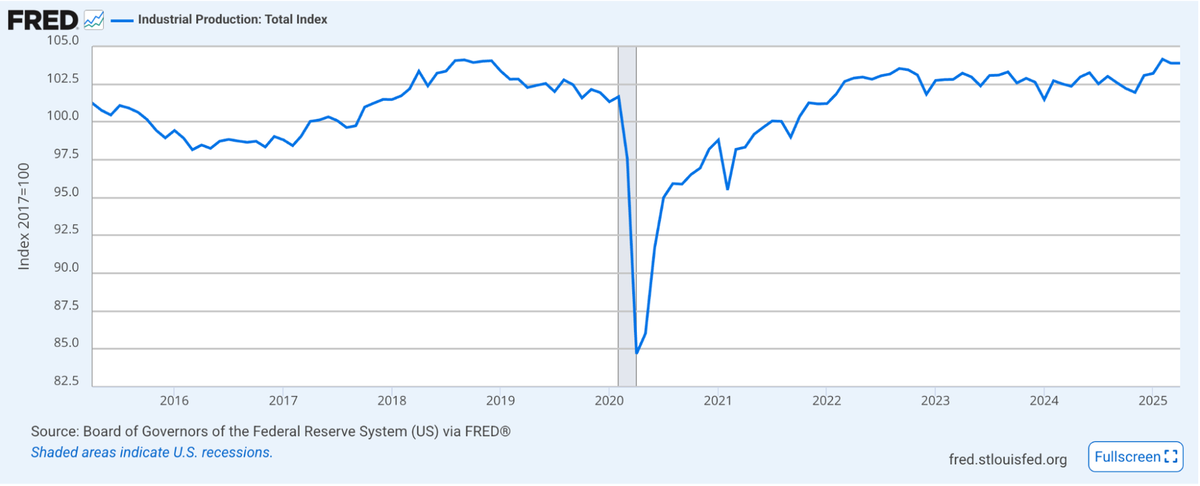
US industrial production stalled in April

U.S. industrial output stalled in April after contracting a month earlier, the Federal Reserve said Thursday, with a decline in manufacturing counteracted by growth in electricity and gas production.

The data covers the period of time when Trump imposed his sweeping “Liberation Day” tariffs, which have lifted levies substantially above their historical average for most countries.

U.S. industrial production was “little changed” last month after contracting 0.3% in March, the Fed said in a statement.

Most recent episode

The Practical Breakdown: FMCSA’s Newest Rule Changes and Proposals

The Federal Motor Carrier Safety Administration pulled the pin and lobbed an 18-rule proposal grenade into the trucking world: two final and the rest open for public comment. If you’ve only skimmed headlines, you’re missing what matters: what changed, why it matters and what drivers, fleets, brokers and compliance managers need to do about it.

This is the practical breakdown of what each rule used to require, what it will (or won’t) require now and what that means for operations, enforcement and real-world compliance. You’ll also find commentary where pause or deeper consideration is warranted, especially regarding rail crossings, hazmat implications and regulatory creep (or relief).

1. Accident Reporting – Redefining ‘Medical Treatment’

What it used to be: Any visit to a medical facility that resulted in an X-ray or imaging study could push an incident into DOT-recordable territory, even if no treatment was actually rendered.

What’s changing: FMCSA is excluding diagnostic imaging (like X-rays and CT scans) from the definition of “medical treatment.” Only prescription medications, sutures or interventions beyond diagnostics will count as recordable.

Why it matters: This should reduce the number of reportable accidents, easing data inflation on company records. Fleets need to retrain safety staff on the new threshold and ensure reports don’t include incidents that no longer qualify.

2. CDL Exemptions for Dual-Status Military Technicians

What it used to be: Reserve technicians and certain National Guard personnel were excluded from CDL exemptions granted to active-duty military, despite operating similar CMVs.

What’s changing: The rule expands exemptions to dual-status military technicians under 10 U.S.C. 10216, bringing them in line with 49 U.S.C. 31305(d).

Why it matters: It simplifies operations for military units using civilian CDL-like roles, cuts training costs and aligns FMCSA with the military’s needs. It doesn’t impact civilian fleets directly, but recruiters and training vendors working with military pipelines should be aware.

3. Driver Vehicle Examination Report Disposition

What it used to be: Fleets had to return signed roadside inspection reports to the issuing agency within 15 days, regardless of whether the state actually needed or used them.

What’s changing: Fleets only return signed reports if the issuing state requests it. You still must correct violations within 15 days and document the fixes.

Why it matters: It saves time and paperwork in states that don’t process returns. That said, fleets need to stay organized and some states still require returns, so don’t treat this as a blanket rule.

4. Electronic DVIRs – Now Explicitly Allowed

What it used to be: Under general provisions, driver vehicle inspection reports could technically be electronic, but the rule language still read like pen and paper was the expectation.

What’s changing: FMCSA explicitly says DVIRs can be created, stored and signed electronically.

Why it matters: ELD platforms like Motive already offer electronic DVIRs. This clarity eliminates any question for auditors or enforcement. Fleets using digital systems now have FMCSA’s full backing.

5. No More ELD Operator’s Manual in the Cab

What it used to be: 395.22(h)(1) required every driver to carry a physical ELD user manual in the cab.

What’s changing: That requirement is being scrapped. Drivers are still responsible for knowing how to use the ELD, but manuals can live online.

Why it matters: Less clutter in the cab means less chance of citations for missing booklets. Be sure training is dialed in; inspectors may still quiz your driver on operation.

6. Auxiliary Fuel Tanks – Exemption for Small Ones

What it used to be: Gravity/siphon-fed auxiliary tanks, even tiny ones used for tools or small motors, had to meet strict Federal Motor Vehicle Safety Standards (FMVSS) fueling requirements.

What’s changing: Tanks under 5 gallons for nonvehicle purposes (e.g., trailer-mounted equipment) now get a pass.

Why it matters: It eliminates costly compliance workarounds for small tool tanks. Think hotshot trailers or construction support units. One fewer nitpick for those setups.

7. Brakes on Portable Conveyors – A Niche But Big Win

What it used to be: Portable conveyors needed braking systems that many pre-2010 units were never designed for.

What’s changing: FMCSA proposes to exempt certain pre-2010 portable conveyors used in the aggregate industry if they meet other performance and speed limits.

Why it matters: It’s a practical fix for a narrow segment. It’s a small exemption, but it will have a big impact on those affected.

8. Tire Load Markings – No More Mandate on the Sidewall

What it used to be: Tires had to be marked with load ratings, visible and legible.

What’s changing: Proposed rule drops this requirement.

Why it matters: Fleets can avoid costly tire replacement or downtime over faded markings. The tire’s performance still must meet load specs, just not legible proof.

9. Spare Fuses – Outdated Requirement on Its Way Out

What it used to be: CMVs had to carry a spare fuse for every type used in the electrical system.

What’s changing: FMCSA wants to eliminate that mandate.

Why it matters: Trucks using resettable breakers or integrated electronic systems don’t need spares. This is another cleanup rule that matches today’s hardware.

10. Vision Standards – Removing the Grandfather Clause

What it used to be: Drivers with long-standing vision issues operated under a waiver program that predated newer physical standards.

What’s changing: FMCSA proposes ending the “grandfathered” vision waiver program.

Why it matters: Existing drivers must be reevaluated according to modern standards. Fleets should review which drivers may be affected and prepare for the transition.

11. Railroad Crossing Stop Rule – This Needs a Real Conversation

What it used to be: All CMVs had to stop at rail crossings, even if warning systems weren’t active.

What’s changing: The proposed rule allows drivers to proceed without stopping at crossings with inactive signals.

Why it matters: On paper, it improves efficiency. In practice? This needs a serious pause. Will it apply to hazmat haulers and buses? Because we’ve seen an uptick in rail strikes involving CMVs. If this applies across the board, it could increase risk. FMCSA must clarify mode-specific exemptions and driver training requirements.

12. Water Carriers – Removed from the Language

What it used to be: FMCSA regulations still referenced “water carriers,” a term dating back to Interstate Commerce Commission days.

What’s changing: They’re scrubbing the term.

Why it matters: It doesn’t. But it’s nice to see some regulatory spring cleaning.

13. Self-Reporting of Violations – CDL Holders May Be Off the Hook

What it used to be: CDL drivers had to self-report moving violations to their state licensing agency.

What’s changing: FMCSA proposes to eliminate that self-reporting requirement.

Why it matters: States already get violation data electronically. It’s one less thing to chase your drivers for and one less technicality for auditors to hang citations on.

14. Rear Impact Guards – No More Labeling Citations

What it used to be: Rear guards had to carry a label showing FMVSS 223 certification. If it faded, fleets got cited.

What’s changing: FMCSA wants to remove the labeling requirement.

Why it matters: You can’t get written up for a missing label anymore, but the guard must still meet strength standards.

15. Fuel Tank Overfill – 95% Limit Removed

What it used to be: Fuel tanks couldn’t be filled beyond 95% of their stated capacity.

What’s changing: FMCSA proposes removing that cap for modern tanks with vented caps.

Why it matters: Fewer exemption requests and easier fueling but fleets must still prevent spillage due to expansion.

16. License Plate Lamps – Redundant on Truck Tractors

What it used to be: Every rear plate, even on truck tractors, needed to be lit.

What’s changing: The exemption applies where tractor plates are blocked by trailers, making them unreadable anyway.

Why it matters: One fewer violation for enforcement to hit drivers with.

17. Liquid-Burning Flares – Out with the Old

What it used to be: Flares were on the approved list of emergency devices.

What’s changing: Liquid-burning flares are being removed.

Why it matters: Reflective triangles and modern LEDs are the standard now. This rule is in line with the real world.

18. Retroreflective Sheeting – Outdated Mandate Repealed

What it used to be: Pre-1993 trailers had to be retrofitted with retroreflective tape.

What’s changing: That mandate is gone. Most of those trailers are gone too.

Why it matters: Less compliance confusion. Fleets managing older trailers should still verify that visibility is adequate.

These Are the ‘Unsexy’ Rules That Matter

This is the real work of compliance. Understanding what used to be required, what’s changing and how to prepare separates the reactive fleets from the resilient ones. If you’re a fleet manager, broker, safety director or driver trying to stay ahead, this is your playbook. These aren’t headlines. These ripples turn into waves, and how you respond defines your risk, audits and viability in the year ahead.

Volvo Cars to slash 3,000 workers amid global trade uncertainty

Sweden-based automaker Volvo Cars said it is eliminating 3,000 white-collar jobs at operations around the world as the automotive industry faces supply chain and tariff-related disruptions. 

The layoffs represent around 15% of Volvo Cars’ office staff, with about 2,200 job losses expected to occur in Sweden and the rest in the company’s global operations.

Volvo Cars has not said where the other workforce reductions will take place.

The job cuts announced Monday are part of a $1.88 billion action plan to bolster the company’s long-term profitability, officials said.

“The automotive industry is in the middle of a challenging period,” Håkan Samuelsson, president and CEO of Volvo Cars, said in a news release. “To address this, we must improve our cash flow generation and structurally lower our costs.”

Volvo Cars said the layoffs will be completed by the end of fall.

As of the first quarter, the automaker had 42,600 full-time employees, with white-collar staff making up more than 40% of its workforce, according to its earnings report.

Volvo Cars’ head office, product development, marketing and administration functions are mainly located in Gothenburg.

The company’s car production plants are in Gothenburg; Ghent, Belgium; Charleston, South Carolina; and Chengdu, Daqing and Taizhou, China. 

The company also has research and development and design centers in Gothenburg and Shanghai.

The latest round of layoffs comes after Volvo announced plans to eliminate 5% of its workforce, about 125 workers, at the Charleston factory, according to Reuters. The factory produces the company’s EX90 SUV.

Volvo Cars is majority-owned by China’s Geely Holding. It was sold by Ford Motor Co. to Geely in 2010 for $1.8 billion.

Volvo Cars and Volvo Trucks North America are separate entities.

Canada Post parcel volumes drop 50% as labor dispute compounds challenges

A red-and-white Canada Post van makes deliveries in a suburban neighborhood.

Canada Post parcel volumes are down 50% year over year and continue to drop as ongoing tensions with labor over a new contract erode shipper confidence in the national mail carrier. The package business’s decline, however, predates the current dispute by nearly a decade, the result of management’s inability to respond to competition from private courier companies, according to industry analysts and stakeholders.

Negotiators representing Canada Post and unionized employees are scheduled to resume contract talks on Wednesday. 

Many businesses have fled to alternative last-mile delivery providers after a five-week strike during the holiday season and the threat of yet another strike, the postal operator and parcel service firms said last week as a deadline approached. On Sunday, Canada Post quantified the contraction, saying shipments are half what they were at this time a year ago.

Canada Post avoided a shutdown on Friday when members of the Canadian Union of Postal Workers opted to keep the pressure on by declining overtime assignments, limiting their work to eight hours per day and 40 hours per week.

The state-owned corporation said it received a response Sunday to its latest offer on May 21. The parties met near Ottawa with the Federal Mediation and Conciliation Services, which operated as an interlocutor passing documents and ideas back and forth in lieu of face-to-face meetings, according to a CUPW account of the talks. 

Unresolved issues include wages, cost-of-living allowance, sick days, workers’ compensation, staffing, outsourcing, weekend delivery and use of part-time workers. 

Parcel headwinds

Canada Post never developed a strategy to capitalize on the parcel market when presented with a choice about 10 years ago, said Alison Layfield, director of product development at cross-border package consolidator ePost Global, in an interview. 

Since then, online shopping and home delivery have skyrocketed, letter mail volume has plunged (down 66% over 20 years), and Canada Post has lost more than $2.2 billion. In addition, Canada Post’s market share in parcel delivery plunged from 62% in 2019 to 29% in 2023, according to a report this month from the Industrial Inquiry Commission. 

“Canada Post’s biggest mistake was they did not move forward with any changes in their network structure, which made them unable to compete with the other carriers that are out there, like Amazon’s Dragonfly, Fleet Optic and all these other carriers that have popped up, especially since COVID,” Layfield said. 

The government’s review commission noted that private couriers, which dominate in urban and suburban settings, benefit from being able to choose which routes to serve while Canada Post is bound by law to serve all addresses. Private couriers also have access to huge amounts of capital and are typically able to hire nonunion workers, many on a part-time basis or as independent contractors.

Layfield endorsed the commission’s call for flexible use of part-time employees and said Canada Post also needs to deliver seven days per week and offer better pricing to compete with last-mile carriers.

Canada Post’s parcel development has been hamstrung by leadership that focuses on letters and doesn’t understand the evolving parcel market, Layfield said.

Canada Post says it needs a flexible business model to compete in the new environment. That includes basing delivery routes on parcel volumes for each day; the ability to offer weekend, evening and next-day delivery services at affordable rates; and a lighter regulatory hand so it has more autonomy to adapt quickly to the growing e-commerce market

It has proposed a weekend delivery model using a dedicated part-time workforce as well as dynamic routing, which would allow it to plan and optimize delivery routes based on volumes, delivery addresses and pickup. The union has been reluctant so far to accept some of those changes.

“There’s two things they have to do: Reimagine the day-to-day standard postal delivery, and they need to be great at dealing with the competition in the express world,” said Eric Miller, president of cross-border government relations consultancy Rideau Potomac Strategy Group, who worked on industrial policy while in the Canadian government. 

Management hasn’t shown the imagination or the fortitude to push against entrenched interests, including labor, to make transformational change, he said. 

If Canada Post were willing to experiment, Miller said, it could try some sort of premium delivery model, such as secure package delivery in cities.

“They aren’t great at anything, and they haven’t figured out how to make their business model viable,” Miller said. “It’s an organization massively in need of restructuring, but there isn’t the political will to do it because if you reduce service you take away service from seniors, who are the biggest voters.”

Many of Canada Post’s parcel challenges are similar to those faced by the U.S. Postal Service, noted Kate Muth, executive director of the International Mailers’ Advisory Group. 

“The future seems to be in packages, but how do you do that in a way where you can compete with the other providers, but still do it at a price that’s competitive and with the service that people are coming to expect with package delivery,” she said.

Click here for more FreightWaves/American Shipper stories by Eric Kulisch.

Canada Post avoids crippling strike but not damage to parcel business

Small businesses at risk as Canada Post workers prepare to strike

BMO’s Q2 earnings show no improvement in credit conditions for trucking

The improvement in trucking credit conditions seen in the first-quarter earnings of Canada-based bank BMO came to a halt in the second quarter, with only a few signs of a strengthening market alongside other numbers pointing to more deterioration.

BMO (NYSE: BMO), the former Bank of Montreal, is a major lender to the trucking industry. Its quarterly earnings break out results for various sectors, including transportation, which is believed to be more than 90% lending to trucking companies. Its credit results are seen as a sign of broader lending conditions in the trucking sector.

BMO’s fiscal year begins Nov. 1. The latest report is for the second quarter, ended April 30.

One of the more notable statistics in the report was the figure for gross loans and acceptances in the transportation group. That is the size of the bank’s book of business in the sector before deducting loan loss reserves.

That number fell to $14.06 billion, down from almost $14.9 billion in the prior quarter. It’s the lowest figure since the fiscal first quarter of 2023, when it was less than $14 billion. It could be a one-quarter aberration or may signal a reluctance to lend on the part of the bank, which does not comment on the results, except occasionally on earnings calls with analysts.

The contrast between the latest gross loans figure for BMO’s transportation sector is particularly stark in comparison to the more than $15.6 billion it posted in the fourth fiscal quarter of 2023.

The biggest number suggesting conditions are not improving in trucking were that gross impaired loans and acceptances soared to $503 million, up from $410 million. This is easily the largest figure in the history of BMO data, which dates back to when the bank acquired the transportation lending operations of GE Capital in late 2015.

To illustrate the contrast between current conditions and the peak of the post-pandemic trucking boom, gross impaired loans in the third fiscal quarter of 2022, which ended in July 2022, were $72 million.

An impaired loan has been defined as one for which a lender is unlikely to collect all the monies due, including principal and interest.

After reserves are accounted for, net loans and acceptances for the transportation sector was just under $14 billion, down from $14.82 billion in the prior quarter.

There were small areas of improvement. Allowances for credit losses were $57 million in the quarter, down from $61 million one quarter earlier and $68 million the quarter before that. A year ago, in 2024’s second fiscal quarter, allowances were $24 million.

Provisions for credit losses rose to $45 million from $44 million. Provisions showed a significant improvement in the first quarter, declining to $44 million from $85 million. A year ago, they were $56 million.

Allowances and provisions are charges taken by a bank to reflect loans with performance issues. Allowances hit a bank’s earnings, while provisions are charged against its balance sheet.

Net write-offs were $41 million, down from $46 million. The recent peak was $63 million in the fourth quarter of fiscal 2024.

More articles by John Kingston

Georgia tort reform aims to change practices in judicial ‘hell hole’

Double whammy for Wabash: 2 key agencies cut debt rating on trailer builder

Despite red ink at Heartland, Morgan Stanley report relatively upbeat

DOT Secretary Duffy announces $1.5B for Hurricane Helene, other disaster recovery

Transportation Secretary Sean P. Duffy announced Wednesday that the Department of Transportation will provide more than $1.5 billion in federal funding to help states and U.S. territories repair roads, bridges and other transportation infrastructure damaged by natural disasters, with $683 million targeted to Hurricane Helene recovery efforts.

The funding, part of the Federal Highway Administration’s Emergency Relief program, will support repair projects in 36 states, the District of Columbia, Guam, the U.S. Virgin Islands and Puerto Rico. Duffy, who visited the hardest-hit areas as one of his first official actions upon taking office, said the administration is committed to expediting recovery.

“Under President Trump’s leadership, this Department will leave no state behind. We are expediting the process to remove unnecessary barriers for urgent projects so communities can rebuild in real time,” he said. “Within the first 100 days of the Administration, we announced repairs to North Carolina’s I-40 highway, washed out by Hurricane Helene, that are projected to save two-thirds in both cost and time — amounting to hundreds of millions of hard-earned tax dollars.”

Hurricane Helene, which struck in September 2024, caused catastrophic damage across the Southeast, particularly affecting transportation networks in North Carolina and Tennessee. The storm destroyed sections of key highways, including I-40 and I-26, both critical routes for freight transportation in the region.

The hurricane’s impact was especially severe on railroad infrastructure. More than 40 miles of CSX’s former Clinchfield Railroad between Erwin, Tennessee, and Spartanburg, South Carolina, was washed away, including two bridges. Norfolk Southern also suffered extensive damage, with many sections along 50 miles of its line between Marshall and Old Fort, North Carolina, through Asheville destroyed by flooding.

I-40, which straddles the North Carolina-Tennessee border, has been particularly affected. While some sections have recently reopened with limited capacity — including the stretch between Exit 7 in North Carolina and Exit 447 in Tennessee — many areas remain under construction. Currently, only one lane is open in each direction between exits 15 and 20 in North Carolina.

Of the $1.5 billion allocated, North Carolina will receive $415 million, with more than $400 million dedicated to Hurricane Helene recovery. Tennessee will get $227 million, including more than $178 million for Helene-related repairs. Additional allocations include $68.8 million to South Carolina (with over $50 million for Helene), $44.6 million to Florida (including $43 million for damage from hurricanes Milton, Helene and Debby), and $26.4 million to Georgia (with $23 million for Helene recovery).

This emergency funding builds on previous allocations, including a $352.6 million “quick release” package and $167 million initially provided to North Carolina and Tennessee for emergency relief following the hurricane.

The funds will be used to restore transportation routes that are essential to regional productivity and economic recovery. Projects include rebuilding damaged sections of I-40 and I-26, repairing bridges, and restoring roads that support tourism by connecting Americans to the region’s natural resources.

“The Federal Highway Administration has been working closely with states across the country to restore vital transportation networks and provide safe travel for the public,” said FHWA Chief Counsel Jay Payne. “As we continue to provide disaster relief, we remain steadfast in our commitment to provide the federal resources needed until all highway transportation links are restored.”

The damage from Helene has had significant economic impacts beyond just infrastructure. CSX reported losing approximately $1 million per day in revenue during the first quarter due to hurricane damage and related network constraints. The railroad continues to rebuild its 60-mile line through eastern Tennessee and western North Carolina, with reconstruction expected to continue “through the better part of this year” before completion in October or November, according to CSX Executive Vice President and Chief Financial Officer Sean Pelkey.

Duffy emphasized that the Department of Transportation will continue assisting affected states throughout the recovery process.

“We will continue to support impacted states and regions every step of the way as they make emergency repairs and get critical transportation infrastructure back up and running as quickly and safely as possible,” he said.