Piston raises $7.5M for cardless fuel payments solution

Piston is making waves with its cardless, intelligent approach to fuel payments. Founded by seasoned fleet operators Vikram Sekhon and Shivam Shah, Piston has secured a total of $7.5 million in funding, with the latest seed round led by Spark Capital. This financial boost is instrumental for Piston, enabling it to scale operations and further expand its network of independent gas stations and commercial fleets across the United States.

“I was a fleet operator who was operating 120–250 trucks that were being dispatched every day,” Sekhon said. “Fueling was a major headache for us, mostly on the fraud side of things. We tried all of the cards, from traditional credit business cards to legacy fuel cards. Fraud was constant, fees were unpredictable, and we were spending a ton of time on admin reconciliation.”

Piston addresses a critical need in the fleet payments industry: eliminating fraud and excessive costs associated with traditional fuel cards. As Sekhon explained, “Fuel was our second-largest expense after payroll, and the most chaotic to manage.” Through their firsthand experiences managing fleets, Sekhon and Shah identified significant inefficiencies in existing fuel payment systems, especially concerning card fraud and retail price markups.

Piston’s solution promises to change the game. Instead of relying on traditional physical cards, Piston utilizes a secure, app-generated QR code system. This cardless approach significantly reduces fraud by tying each transaction to specific details, including vehicle, time, location, and fuel type. Drivers scan the QR code at the pump, ensuring real-time payment confirmation and transparency for fleet managers who can immediately monitor transactions. This innovation not only cuts down administrative efforts but also addresses fraudulent activities, which previously accounted for over 5% of total fuel spend, according to Sekhon.

Further, no credit card companies or banks are involved in the transaction—the payments to the fuel station come from Piston, who then invoices the fleet. This reduces latency in the transaction, allowing fleet managers to see fuel spend instantly, instead of waiting for batched transactions to be reported by a bank or credit card during the settlement or clearing process.

(Image: Piston)

The flexibility of Piston’s platform extends beyond its core technology, allowing fleet owners to establish customized business rules tailored to their specific operational needs. Fleet managers can determine spending limits, set restrictions on purchase types, and control the timing and location of fuel transactions. For example, businesses often cap individual transactions to $200 and restrict purchases exclusively to fuel, minimizing the risk of unauthorized expenses such as snacks or cash back. This level of control significantly reduces administrative burdens and ensures that fuel spend is aligned with company policies. If exceptions are necessary, drivers can send exception requests, which are routed directly to the fleet manager through a push notification, facilitating real-time decision-making and oversight.

For gas stations, particularly the 90% that are franchise-owned, Piston presents a valuable opportunity. The platform connects them directly to commercial fleet demand without the need for expensive hardware installations or third-party interference. This direct connection also allows for the negotiation of better wholesale pricing, a necessity that Sekhon emphasized. “My fuel spend of $3 million a year was paying the same as some guy in a Honda Civic—I wasn’t getting any volume-based pricing,” he noted. By integrating with Piston, gas stations can secure consistent commercial fleet volumes, thereby increasing profitability.

Currently, Piston serves over 120 fleets across more than 800 gas stations, processing an impressive $20 million in annualized transaction volume with a robust 50% month-over-month growth. This traction is partly due to Piston’s ability to offer cost-effective solutions to local fleets—hyperlocal operations such as courier and HVAC services—by optimizing their filling schedules either post-dispatch or on the way back to their base.

Strategically headquartered in Cupertino, California, with additional operations in Lehi, Utah, and Kolkata, India, Piston is actively expanding its station partner network. The company is focused on onboarding more independent fuel retailers and integrating directly into their systems to capture the missed commercial volume. This expansion will lead Piston towards becoming the default infrastructure for commercial fuel payments.

The company’s swift growth and innovative product have attracted significant attention and support from strategic investors, including Pear VC and BOND. Shravan Reddy, a partner at Pear VC, highlighted, “Vikram and Shivam identified a huge problem impacting an underserved market and we believe there is enormous opportunity. They consistently exceeded every growth target, and we’re excited to continue supporting them in this next phase.”

Piston’s impact on fleet operations is profound. By eliminating hidden fees and fraud disputes, fleet operators like Ash Kapoor of Saga Kapital Group have been able to reduce fuel spend substantially and streamline administrative processes. Kapoor shared, “Our drivers fill up faster, our accountants sleep better, and the savings drop straight to the bottom line.”

Looking forward, Piston is slated to go live with a regional chain with 1,000 stores and is operating in every time zone, keeping pace with population centers. This growth is bolstered by its recent funding, which will aid in growing its product, sales, and engineering teams.

In rethinking fuel payments, Piston not only provides a secure, efficient payment solution but also fosters a stronger connection between fleet operators and gas station owners, modernizing one of the most overlooked aspects of the mobility economy.
Navigating the complexities of cross-border freight

As nearshoring efforts accelerate, shippers are increasingly rethinking their cross-border strategies. Unlike transporting goods across state lines, cross-border shipping demands specialized expertise, robust infrastructure and comprehensive security measures. To fully capitalize on the advantages of nearshoring, companies need partners who understand that success hinges on more than just moving trucks –– it requires mastery of compliance, purpose-built infrastructure and vigilant security protocols.

Cross-border compliance

Cross-border shipping comes with its own complex ecosystem of customs regulations, trade documentation and security programs like the Customs-Trade Partnership Against Terrorism (C-TPAT). Even minor errors or omissions in these compliance efforts can cascade into major problems, including costly delays, rejected shipments or even denied entry altogether.

The regulatory landscape at international borders demands partners who specialize specifically in cross-border logistics. These specialists are equipped to handle intricate paperwork requirements, ensure comprehensive compliance across multiple jurisdictions, and proactively manage potential risks before they materialize into expensive disruptions.

Successful cross-border operations depend on this deep regulatory knowledge, which represents a significant departure from the relatively straightforward requirements of domestic shipping. Companies that underestimate these compliance demands often discover the hard way that border efficiency begins with proper documentation and regulatory adherence.

Infrastructure for efficient freight movement

The physical infrastructure supporting cross-border shipping forms the backbone of efficient operations. Strategic terminal locations, versatile cross-dock capabilities and specialized cold chain infrastructure all play crucial roles in maintaining freight integrity throughout the journey.

Border hubs such as Laredo and El Paso must function as more than mere handoff points between carriers. They should serve as fully integrated nodes within a cohesive supply chain network. The most effective border facilities feature capabilities for handling both dry and refrigerated freight, with specialized equipment and trained personnel to manage the transition between countries without compromising cargo quality or timeliness.

Real-time tracking systems implemented throughout this infrastructure network reduce dwell time and dramatically improve reliability. The right infrastructure is often the difference between smooth transitions and frustrating bottlenecks, particularly when handling time-sensitive or temperature-controlled shipments that cross international boundaries.

Security and visibility in cross-border freight

When it comes to cross-border shipping, cargo security and comprehensive visibility aren’t optional luxuries. They’re absolute necessities. The risk landscape for this shipping solution includes potential theft, unpredictable border delays and constant concerns about load integrity, all of which require sophisticated safeguards beyond standard domestic shipping protocols.

Effective cross-border security systems incorporate seal verification procedures, continuous 24/7 monitoring capabilities and tamper-evident systems that immediately flag potential breaches. These measures protect not just the cargo itself but also the reputation and compliance standing of all parties involved in the transaction.

Beyond physical security, real-time visibility from initial pickup through final delivery represents the current industry standard. Shippers need partners capable of delivering both robust security measures and transparent visibility tools, allowing stakeholders to monitor shipments as they navigate the unique challenges of international border crossings.

Werner’s unique position in cross-border freight

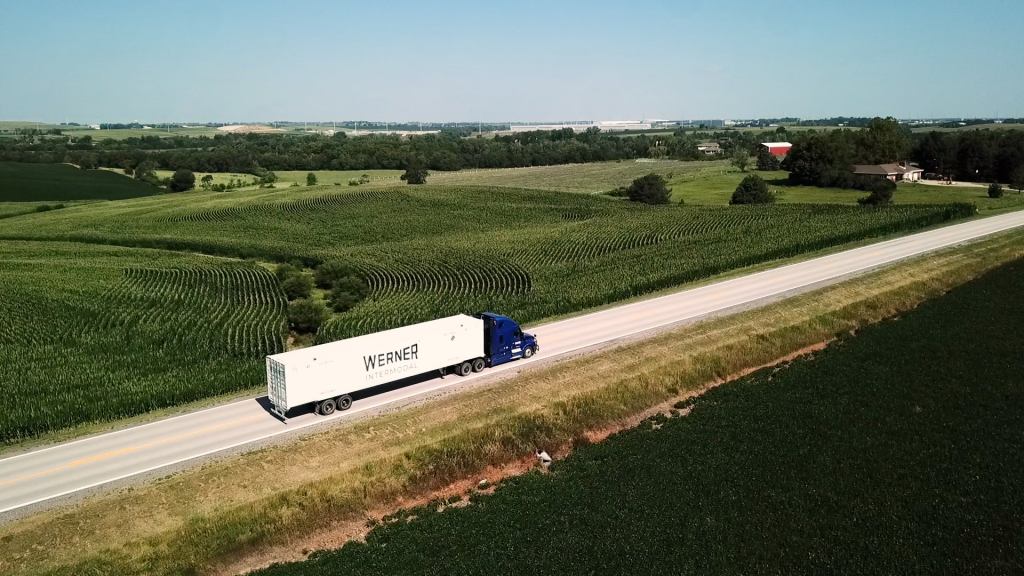
With more than 25 years of operational experience in Mexico, Werner® has developed cross-border expertise that transcends basic shipping knowledge. Its strategically positioned terminals in key border cities like Laredo and El Paso, TX, combined with carefully vetted Mexican carrier partnerships, create a seamless cross-border network designed specifically to address the challenges of U.S.-Mexico trade.

Werner’s dedicated cross-border operations team demonstrates fluency in both the regulatory requirements and cultural nuances that impact successful international shipping. This expertise enables the company to streamline even the most complex shipments that might otherwise face delays or compliance issues.

In Laredo, Werner’s integrated infrastructure includes specialized warehousing solutions and advanced cold chain capabilities through its state-of-the-art, multi-temperature cross-dock facility. These physical assets, combined with sophisticated visibility tools, ensure that freight moves efficiently, securely and compliantly across the border in both directions.

Successfully navigating the U.S.-Mexico supply chains demands a coordinated approach grounded in regulatory expertise, purpose-built infrastructure and trustworthy security protocols. Companies pursuing nearshoring opportunities must remember cross-border success depends less on basic metrics like cost or speed and more on selecting the right logistics partner with specialized cross-border capabilities.

The ideal cross-border logistics provider doesn’t just move freight; they actively protect brand reputation, systematically reduce operational risks and help construct resilient, long-term nearshoring strategies. As nearshoring continues to reshape North American supply chains, the difference between success and frustration increasingly depends on choosing partners who understand the unique demands of cross-border freight and have built systems specifically designed to address them.

New Mideast tensions fail to boost trans-Pacific container rates

Global energy markets and container shipping were rocked late last week as Israel and Iran continued to trade missile strikes, as well as by ongoing concerns over Tehran’s retaliation for U.S. bombings and the possible closure of the Strait of Hormuz.

While these scenarios held significant implications for oil markets and logistics, a tentative ceasefire between the U.S. and Iran has offered a degree of relief, potentially averting major disruptions.

Tanker flows through the Strait of Hormuz and operations at Dubai’s Port of Jebel Ali, busiest in the Persian Gulf, largely remained normal even during the conflict, as did activities at Israeli ports. 

Iranian missiles did claim a number of Israeli fatalities in at least one location.

With the immediate Middle East crisis seemingly de-escalating, attention is now shifting back to the U.S. trade war and upcoming tariff expirations. Countries other than China that are subject to U.S. reciprocal tariffs have until July 9 to finalize agreements, or they could face increased duties. 

Progress in negotiations with major trading partners like the European Union, Canada, and Vietnam remains limited, though a tentative agreement has been reached with the United Kingdom. President Donald Trump has indicated a willingness to apply tariffs unilaterally if deals aren’t met, though some administration officials suggest extensions for those negotiating in good faith.

In the China-U.S. trade imbroglio, a deal to maintain a 30% baseline on Chinese imports was anticipated, but details have been scarce. Despite this, the initial surge in demand following the May 12 tariff pause, ahead of the August 12 deadline for reduced U.S. tariffs, may be subsiding. Carriers, having increased trans-Pacific capacity by 13% since March, are now seeing container spot rates decline sharply, particularly to the West Coast. 

Container rates in the eastbound trans-Pacific have declined from their peak after the May 12 tariff pause. (Chart: SONAR)

SONAR’s Freightos Baltic Index showed Shanghai-Long Beach prices are back to late May levels at approximately $3,700 per forty foot equivalent unit (FEU), and East Coast rates have dropped from $7,200 to $6,300 per FEU.

While Asia-Europe rates saw a 6% increase last week to $3,100 per FEU, Asia-Mediterranean prices are down 9% to $4,400. Freightos research chief Judah Levine in a note said that these trends suggest that despite the onset of peak season demand and some capacity shifts, market conditions are not supporting mid-month rate increases, though prices remain significantly higher than at the end of May.

Find more articles by Stuart Chirls here.

Related coverage:

US maritime chief Sola steps down

Maersk stops Haifa service prior to Iran missile attacks

Tanker rates surge, Maersk still sailing through Strait of Hormuz

Solar to power half of Port Newark box terminal’s energy needs

FedEx navigates tariff swings to modest profit gain

A FedEx driver pushes a handcart with packages after loading up from his van.

FedEx credited its Drive cost-cutting initiative and higher export volumes at the Express division with generating better-than-expected quarterly results during a period of tariff turmoil and is targeting another $1 billion in savings in the current fiscal year.

FedEx (NYSE: FDX) released fourth-quarter earnings late Tuesday as the company mourned the passing on Saturday of founder Fred Smith. The board of directors on Monday promoted Brad Martin to succeed Smith as chairman.

Revenues at FedEx inched up less than 1% year over year in the fourth quarter, ended May 31, to $22.2 billion, while adjusted operating income gained 8% to $2 billion. Revenue was $200 million ahead of Wall Street’s consensus. Diluted earnings per share of $6.07 beat analysts’ estimate of $5.85 per share.

The parcel and logistics giant said it achieved its two-year Drive goal of permanently eliminating $4 billion in structural costs compared to fiscal year 2023, including $2.2 billion last year. As part of the restructuring, FedEx has been implementing a workforce reduction of 2,000 persons in Europe, announced last June, which will lead to about $150 million in annual savings by fiscal year 2027, CEO Raj Subramaniam said. 

Increased U.S. and international export volume at FedEx Express and higher base yields at each transportation division also helped to boost profits. Express division revenue increased 1% to nearly $19 billion on 6% and 4.7% increases in domestic and international package volume, respectively.

Gains at FedEx Express were partially offset by higher purchased transportation and wage rates and the expiration of a major U.S. Postal Service contract last September. 

Revenue at FedEx Freight, the largest less-than-truckload carrier in the nation, fell 4% to $2.9 billion due to lower fuel surcharges, reduced weight per shipment, higher healthcare costs and increased wage rates, FedEx said. The primary challenge, however, is continued weakness in the industrial sector. Operating income was down 6%. The division made a $33 million gain on the sale of a terminal, which accounted for nearly a third of the earnings beat.

Year-over-year volume declines moderated sequentially, with average daily shipments down 1% in the fourth quarter compared to down 5% in the third quarter and down 8% in the second quarter. Average daily shipments actually increased 8.3% sequentially, representing the largest Q4 over Q3 since fiscal year 2021.  

FedEx is preparing to spin off Freight into a stand-alone company next year. 

Full-year revenue was nearly flat at $87.9 billion, while operating income inched down $100 million to $6.1 billion.

Capital spending for fiscal 2025 was $4.1 billion, down $1.1 billion or 22% from $5.2 billion the prior year. Capital spending as a percentage of revenue declined to 4.6%, the lowest level in FedEx history. FedEx plans to invest $4.5 billion this year, with a focus on network optimization, fleet and facility modernization, and automation. Chief Financial Officer John Dietrich said the company will reduce capital expenditures on aircraft to $1 billion this fiscal year and maintain that level for several years.

First-quarter guidance was mixed. FedEx estimated revenue would range from flat to up 2% in the first quarter. The call for earnings per share of $3.40 to $4 was slightly below analysts estimate. The loss of U.S. Postal Service business represents a $120 million headwind this quarter, but after that won’t be a factor in comparing quarterly results. Management said it can’t provide full-year guidance because of the uncertain trade environment.

Wall Street seemed disappointed that FedEx is on track for low operating profit in a quarter that usually produces the highest growth of the year. The company’s stock price was down 5% in the first hour of trading Wednesday.

With the Drive initiative substantially complete, most of the $1 billion in projected savings during the 2026 fiscal year will come from the consolidation of the Express and Ground networks, dubbed Network 2.0. The retirement last quarter of 12 cargo jets is also intended to help on the cost front.

Flexible air network mitigates tariff uncertainty

FedEx leveraged digital tools and its trade compliance expertise to help customers, whipsawed by fast-changing tariff policies, change import strategies. Some shippers postponed orders, while others sped them up to beat future tariff increases or shifted procurement to different countries, according to analysts.

Tariffs heavily impacted trans-Pacific volumes, resulting in flat international export volume. The China-U.S. trade lane represents about 2.5% of consolidated revenue and is the most profitable intercontinental lane. 

FedEx flexed the transportation network in line with new trade flows, said CEO Raj Subramaniam during the earnings presentation. 

The Tricolor redesign of the air network, which segregates overnight express and deferred daytime freight shipments, is already driving greater flexibility, efficiency and customer satisfaction. The new system was designed to improve asset utilization and cargo density, provide differentiated capability and attract premium international cargo traditionally booked on commercial airlines by logistics companies. 

FedEx, for example, reduced capacity out of Asia to the U.S. by more than 35% in the first week of May, when e-commerce volumes fell sharply in response to the U.S. cancellation of duty-free treatment for low-value shipments, according to the CEO. Beyond operating fewer flights with its own aircraft, FedEx reduced capacity purchases for low-priority shipments booked on commercial passenger aircraft by FedEx’s freight forwarding arm — the so-called White network. Demand picked up when the U.S. temporarily lowered tariffs on China and FedEx ended May with a net capacity reduction of about 20% compared to April. 

Management said it is redirecting capacity to other regions where demand is strong as it contracts flight activity in Asia. 

“The global demand environment remains volatile. We are staying close to our customers to help them plan and adapt as they navigate trade policy changes, and we are actively matching our capacity with demand as the environment evolves,” Subamaniam said. “What we have accomplished in May would not have been possible without the implementation of tricolor.”

Other changes to the air network have enabled FedEx to consolidate shipments from multiple origins in a centralized gateway. In April, FedEx introduced its first direct flight from Singapore to the U.S. to more efficiently capture demand from regional shippers of heavier, palletized cargo. 

FedEx generated higher revenue per pound in its global airfreight operation as a result of the Tricolor strategy, Chief Commercial Officer Brie Carere said. International air cargo revenue increased 5% in the quarter with a high profit margin. The focus on non-parcel air cargo, along with Europe and healthcare, is part of FedEx’s strategy to grow high-margin business and diversify revenue sources.

FedEx recently unveiled an AI tool to help users of its online shipment management system select the appropriate product classification code for tariffs, reducing errors, delays and extra work for clearing goods through Customs. The tool uses generative AI to help companies enter accurate details about their shipment.

In May, FedEx opened a new automated sorting facility in Brest, France, to provide more package delivery capacity for northern Brittany. It also announced plans to open two high-tech logistics hubs in the United Kingdom, consolidating five terminals into two to improve service and support future growth. The new hubs, anticipated to be operational by 2029, will each be able to sort 32,000 packs per hour, and process different types of deliveries for customers, including international freight and ecommerce shipments.

Click here for more FreightWaves/American Shipper stories by Eric Kulisch.

FedEx retires a dozen freighter aircraft in efficiency move

FedEx says economic uncertainty slowing parcel and freight demand

FedEx taps leaders from within for LTL spinoff, to Wall Street’s dismay

FedEx converts parcel freighter to heavy cargo operation 

Truckstop’s Risk Factors simplify broker decisioning with AI-driven insights

(Note: as of the date of publication, Truckstop has renamed itself to truckstop.com. At the time of the award, it was still called Truckstop and will be referred to as such in this story.)

Truckstop emerged as a winner of the 2025 FreightWaves Fraud Fighter Awards with an innovative approach to combating fraud in the freight industry. The company’s standout solution, Risk Factors, is transforming how freight brokers identify and prevent fraud, establishing new standards for risk management across the logistics sector.

Risk Factors represents Truckstop’s groundbreaking SaaS solution specifically engineered to revolutionize fraud prevention and risk management for freight professionals. Developed with direct input from freight brokers, this innovative tool delivers real-time, AI-driven insights into carrier reliability, empowering users to make faster, more secure decisions while safeguarding their business operations.

“Risk Factors is built to transform fraud prevention and risk management in the freight industry,” Truckstop wrote in its application. “Designed with and for freight brokers, it provides real-time, AI-driven insights into carrier reliability, allowing users to make faster, safer decisions and protect their business operations.”

What sets Risk Factors apart is its pioneering approach to fraud detection in the freight sector. It stands as the first solution of its kind to combine cutting-edge generative AI technology with Truckstop’s extensive proprietary data resources. The system meticulously analyzes billions of data points gathered from public records, proprietary sources, and partner-sourced carrier information. This comprehensive data includes DOT and MC numbers, safety history, insurance records, contact information, and historical fraud indicators.

The genius of Risk Factors lies in its ability to distill this complex information into a straightforward, color-coded risk indicator that categorizes carriers as high, medium, or low risk. This represents a significant advancement over traditional vetting methods that require manual checks across multiple platforms and databases.

Perhaps most impressively, the Risk Factors Extension integrates seamlessly into brokers’ existing workflows through popular platforms like Gmail, Outlook, and web browsers. This integration delivers critical fraud signals directly at the point of engagement with carriers, making sophisticated fraud detection accessible even to new or junior team members.

Fraud prevention is woven into the very architecture of Risk Factors. The solution eliminates the need for time-consuming manual reviews of disparate data for each carrier, streamlining the decision-making process while simultaneously reducing errors and potential blind spots.

The system excels at detecting telltale warning signs that often indicate fraudulent activity. According to Truckstop, “Risk Factors detects red flags such as mismatched contact info, past violations, or unusual activity patterns—key indicators of double brokering or fraudulent carriers.” These insights give brokers the ability to take proactive measures before assigning loads, effectively closing common loopholes exploited by bad actors in the industry.

The freight industry’s response to Risk Factors has been overwhelmingly positive, with measurable results that demonstrate its effectiveness. Since its launch, Truckstop reports that Risk Factors has contributed to “a 57% drop in reported fraud incidents among Truckstop customers between Q1 2024 and Q1 2025.”

This impact is particularly significant considering that “over 78% of brokers previously cited time loss due to manual vetting and fraud mitigation efforts,” according to Truckstop. Risk Factors directly addresses this challenge by automating these processes, resulting in improved operational efficiency, faster carrier vetting, and greater peace of mind when assigning loads.

Beyond its immediate benefits to individual brokers, Risk Factors is helping to establish a new benchmark for centralized fraud insights across the logistics ecosystem. As Truckstop wrote, “It’s not just a helpful tool—it’s an industry-shaping innovation that’s redefining what proactive fraud prevention can look like in supply chain tech.”

By combining advanced AI capabilities with deep industry knowledge and extensive data resources, Truckstop’s Risk Factors is transforming the freight industry’s approach to fraud prevention. Its recognition in the 2025 FreightWaves Fraud Fighter Awards stands as a testament to how technological innovation can address long-standing challenges in the logistics sector, creating a more secure and efficient freight ecosystem for all participants.

House panel wrangles on rail safety technology

WASHINGTON — The partisan split over the implementation of technology in the railroad industry was on display during a House subcommittee hearing Tuesday.

Republicans favored unleashing innovation and modernizing outdated Federal Railroad Administration regulations that they say stand in the way of progress.

Democrats on the Transportation and Infrastructure Subcommittee on Railroads, Pipelines, and Hazardous Materials said technological advancements should not come at the expense of workers or safety.

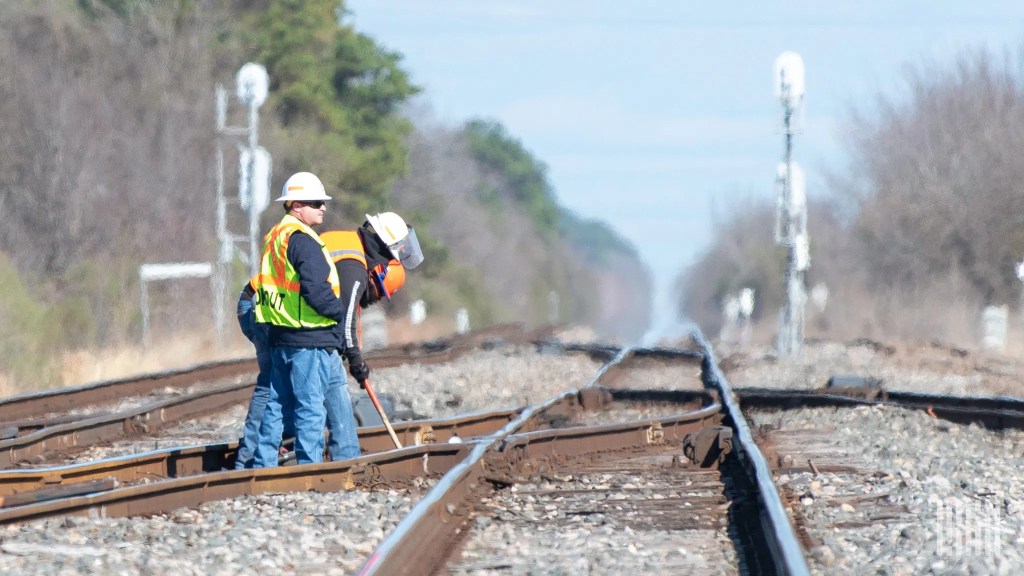
Much of the hearing focused on automatic track inspection and the extent to which railroads should be allowed to reduce the required frequency of traditional visual inspections performed by track workers in areas that are covered by the autonomous systems.

Brigham McCown, founder and chairman of the nonpartisan Alliance for Innovation and Infrastructure think tank, told the panel that there should not be an either/or debate about new technology on the one hand and safety and jobs on the other.

“The challenge before us is not partisan. It’s practical. Modernization done right enhances both safety and competitiveness,” McCown said. “We can protect American jobs while making our infrastructure smarter, more efficient, and more resilient.
Technology is not the enemy of safety. It is often its greatest ally.”

McCown said that regulations should be based on data – not on political priorities – and recommended that Congress take steps to limit “political whiplash” in FRA safety regulations.

During the first Trump administration, Class I railroads sought and gained FRA safety waivers that allowed the testing of automated track inspection (ATI) systems in conjunction with simultaneous reductions in the frequency of visual track inspections. During the Biden administration, the FRA denied extensions of those waivers, or simply let them expire, if labor unions raised objections.

“To FRA’s credit, a recent proposed rule on ATI acknowledges the need for reform,” McCown said. “But it still leans on outdated assumptions, such as mandatory visual inspections, even where automated systems demonstrated superior performance.”

The subcommittee’s chairman, Florida Republican Daniel Webster, said many FRA regulations are “a relic of the past” and require how and when railroads must inspect tracks and equipment.

“Although the law allows railroads to apply for waivers to test new processes and technologies that can achieve safety objectives while improving efficiency, this current waiver process is less than transparent and subject to political interference,” Webster said. “This regulatory uncertainty hinders both innovation and the rail industry’s ability to compete against other modes of freight.”

Rep. Dina Titus of Nevada, the subcommittee’s ranking Democrat, said, “We have a duty to ensure that advancements in technology do not come at the expense of the safety of workers, passengers, and the communities that trains pass through.”

“ATI should not … replace visual, in-person track inspections,” Titus said.

Tony Cardwell, president of the Brotherhood of Maintenance of Way Employes, said the union is not anti-technology and supports automated track inspection.

But he said the union believes that Class I railroads want automated systems to replace workers, a fear that’s based on a 30% decline in its membership since 2016 due to a combination of cost-cutting and the introduction of track maintenance equipment that requires fewer workers.

The railroads say the automated inspection equipment finds significantly more defects than visual inspections, which means they can turn track inspectors from finders into fixers of defects. The automated systems may create more work, not less, for track workers, McCown said.

But Cardwell said that his members look for 27 specific track defects, most of which cannot be identified by today’s automated systems. “ATI cannot find 73% of track defects,” he said.

Titus and some of the other Democrats on the panel were critical of an Association of American Railroads proposal that would reduce the required frequency of visual inspections to twice a month, down from twice weekly, in territory covered by autonomous track geometry inspection systems.

They also questioned why the proposal would give railroads up to 72 hours to repair a defect found by an automated inspection system, when track inspectors are required to take action on the spot. When they find a defect, regulations require track inspectors to repair it immediately, issue a slow order, or take a track out of service, Cardwell told the subcommittee.

But Rep. Doug LaMalfa (R-Calif.), pointed out that not all defects are created equal. “If my pickup has a dent in it, that doesn’t keep me from going out in my fields,” he said. “But if I’ve got a bent frame or leaking axle or something, then it does.”

McCown agreed. “Not every defect requires immediate action,” he said, noting that it takes railroad employees to make that determination after an autonomous inspection turns up a minor defect that may or may not develop into a more serious problem.

Cardwell said the FRA should not grant a safety waiver request that permits defects to go unrepaired for up to three days. “I don’t know that anyone wants to be around a railroad track where a defect is on that track for up to 72 hours without being corrected. I know I wouldn’t go anywhere near it,” Cardwell said. “And it’s a danger. It’s an extreme danger. I think the waiver is extreme.”

Rep. Seth Moulton (D-Mass.), sought to find some common ground.

He was critical of bipartisan legislation, drafted after the disastrous February 2023 hazardous materials derailment in East Palestine, Ohio, that would require railroads to install more wayside detectors that can identify hot wheel bearings like the one that caused the wreck.

Rather than relying on wayside hotbox detectors to find bearings that are at the point of failure, Moulton said railroads could use onboard sensors and telematics that can prevent bearing-related derailments by catching problems far sooner.

David Shannon, manager of the RailPulse joint venture that is installing telematics on freight cars, said the system can monitor a car’s location, condition, and health in real-time. Wheel bearing sensors, however, are not a part of the standard RailPulse package and remain in the experimental stage.

“If we have modern technology that can bring the accident rate down to zero, then that’s what we should be using, not installing more 1960s technology, which is the hot bearing detectors the railroads have,” Moulton said.

But he was sympathetic to Cardwell’s point about railroads’ focus on cost-cutting.

“The railroads, especially in the last 10 or so years, have a history of taking every cost-saving measure and not putting it into expanding their traffic, to actually getting more trucks off the highways,” Moulton said. “They put it into cutting service, cutting employees, and just improving profits for Wall Street.”

Moulton said that rail workers, the railroads, and ventures like RailPulse should work together to advance technology and safety. 

“Why can’t we get on the same page here?” he asked.

Subscribe to FreightWaves’ Rail e-newsletter and get the latest insights on rail freight right in your inbox.

Related coverage:

Rail unions warn DOT rollbacks could jeopardize train safety

Indiana port taps Louis Dreyfus to restart grain terminal

CPKC says service is on the mend in former KCS territory

Feds set $10M to study health effects of East Palestine rail disaster

English Language Proficiency Standards Could Drive Rates Higher

The Federal Motor Carrier Safety Administration (FMCSA) is intensifying enforcement of English Language Proficiency (ELP) standards, signaling major operational changes for the trucking industry. As of today, June 25, 2025, drivers who fail to meet these requirements face immediate grounding, potentially straining trucking capacity, increasing tender rejections, and driving up national truckload rates.

FreightWaves estimates that 10% of truck drivers currently fall short of the Department of Transportation’s (DOT) English proficiency standards, highlighting the potential for widespread impact.

Market Dynamics

The FMCSA’s directive is already reshaping the industry. FreightWaves’ SONAR data shows a 6% tender rejection rate, indicating a balanced market. However, stricter enforcement threatens this equilibrium. Trucking companies are revising hiring policies to prioritize candidates who meet ELP standards. Stricter enforcement is likely to reduce the pool of qualified drivers, shrinking trucking capacity. This could increase tender rejections, giving carriers more leverage to select loads and influencing the tender rejection index.

Effects on National Truckload Rates

Reduced trucking capacity is expected to push national truckload rates higher. SONAR’s National Truckload Index currently stands at $2.27 per mile. Due to limited truck availability, rates are likely to follow as tender rejections rise. Carriers will likely use tightening conditions to adjust pricing to offset costs tied to compliance.

Strategic Preparations

Fleet operators should act proactively. Providing language training for non-English-speaking drivers can ensure compliance and maintain operations. Staying updated on FMCSA policies through resources like the ELD & Safety page is essential for adapting to changes.

As ELP enforcement intensifies, shippers should prepare for potential capacity shortages in the coming months.

Relay Payments expands into maintenance with trio of deals

Relay Payments has launched providing its payment services to maintenance, tires and repairs with the announcement of three new partnerships.

The trio of repair and maintenance businesses that now accept payments through Relay are Southern Tire Mart at Pilot (which is a joint venture between the tire provider and the giant travel stop operator), Boss Truck Shops and AMBEST Service Centers.

Southern Tire Mart at Pilot (STMP) has more than 75 locations. Boss has more than 45, and AMBEST has more than 115, according to a spokeswoman for Relay Payments.

“This announcement marks one of Relay Payments’ first moves into the repair, tow and maintenance market, expanding digital payment options for carriers and improving acceptance and workflows for these merchants,” the spokeswoman said in an email to FreightWaves. While the three companies are not all launching their acceptance of Relay Payments at once, the spokeswoman said, “we’re announcing the partnerships at the same time as we wanted to show our commitment to making large strides within this new vertical with some of the largest names in repair, tow and maintenance in the U.S.”

For example, the prepared statement released by Relay quotes John Boynton, president of STMP, as saying the company “integrated with Relay last year to simplify service payments and combat fraud, and it’s been an overwhelmingly positive experience for our customers.”

Southern Tire Mart at Pilot–the formal name of the entity now accepting Relay Payments services–was formed in 2021 between Pilot Co. and Southern Tire Mart, which the spokeswoman described as “the largest commercial tire dealer and retread manufacturer in North America.”

Relay took a big step forward down to the retail level for truckers last year when it announced that Love’s Travel Stops would begin accepting Relay for fuel payments at its travel centers.
However, Relay Payments still does not have a payments agreement with Travel Centers of America and Casey’s (NASDAQ: CASY), two of the larger travel stop operators in the U.S.

Payments from Relay are not made via a fuel card or some other debit card. Instead, according to the prepared statement from Relay announcing the partnership, drivers or fleets utilize Relay’s platform to locate the maintenance facilities that accept Relay Payments. Repair and maintenance merchants accept digital codes, referred to as RelayCodes, that allow fleets to leverage secure payments from their Relay account.

“Launching service, maintenance, and repairs is a major milestone towards our mission of becoming an end-to-end payment network for the trucking industry,” Relay’s CEO and co-founder Ryan Droege said in a prepared statement. “By introducing acceptance of Relay at service locations along with discounted repairs, we’re not only lowering operating costs for our customers but also creating greater efficiencies by consolidating all over-the-road expenses in one platform.”

More articles by John Kingston

SCOTUS decision on California Clean Cars waiver could have benefit to trucking later 

Independent terminal operator Outpost adds four new facilities, targets more growth

Onstage in Chicago, CHRW talks tech and staffing; RXO sees language order hitting capacity

FedEx retires a dozen freighter aircraft in efficiency move

Purple-tailed FedEx planes in a row at an airport.

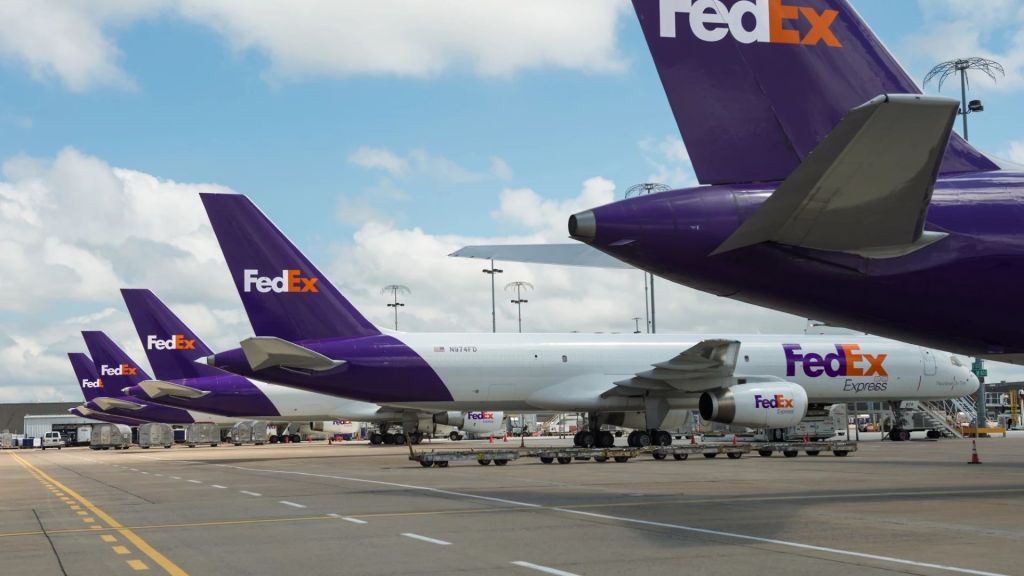
FedEx Corp. said Tuesday that it permanently retired 12 aircraft and took a $21 million impairment charge during the fourth quarter as part of an effort to streamline the air network in line with anticipated demand and modernize the fleet.

The Memphis, Tennessee-based express logistics giant said it removed seven Airbus A300-600 aircraft, three large MD-11 tri-engine freighters and two Boeing 757-200 (large narrowbody) freighter aircraft from the fleet. It also got rid of eight engines. During the fourth quarter in 2024, FedEx decommissioned 22 Boeing 757 cargo jets.

FedEx (NYSE: FDX) said in its previous earnings report on March 20 that it had exercised options to buy eight Boeing 777 freighters and pushed back retirement of the MD-11 fleet from 2028 until 2032 because of strong international parcel demand. It also announced plans to acquire 10 additional ATR 72-600 turboprop freighter aircraft, with deliveries scheduled for the tail end of the decade.

Over the last three years, FedEx has removed a net 31 jet aircraft from its fleet, which is a 7% reduction versus fiscal year 2022. Chief Financial Officer John Dietrich said FedEx plans to reduce aircraft investment to $1 billion in the current fiscal year and maintain that level for several years.

The aircraft retirements reduce FedEx’s fleet to 698 aircraft, comprising 382 mainline jets and 316 feeder planes operated by partner airlines. FedEx’s fleet size has ranged from 670 to 710 aircraft since 2018. FedEx still has 90 757s, 34 MD-11s and 58 A300-600s in service.

FedEx is flying less in the United States after its contract with the U.S. Postal Service expired in September, its strategy to pursue premium international air cargo that is traditionally consolidated and booked on airlines by freight forwarders has increased the need for widebody freighters.

FedEx reported revenues for the quarter ended May 31 inched up less than 1% to $22.2 billion and that operating margin increased 8% due to structural cost reductions in its multi-year Drive initiative and higher volumes at FedEx Express.

Click here for more FreightWaves/American Shipper stories by Eric Kulisch.

FedEx says economic uncertainty slowing parcel and freight demand

FedEx taps leaders from within for LTL spinoff, to Wall Street’s dismay

FedEx converts parcel freighter to heavy cargo operation 

Rail unions warn DOT rollbacks could jeopardize train safety

railroad worker

WASHINGTON — Rail unions are raising concerns about the Trump administration’s plan to roll back protections for federal inspectors and investigators put in place in 2021 that they say could increase safety risks in the rail industry.

In a Notice of Proposed Rulemaking (NPRM) issued in May, the U.S. Department of Transportation proposed several changes to Biden-era regulatory policies, including how DOT oversees enforcement procedures at its modal agencies, including the Federal Railroad Administration.

The NPRM would allow the railroads, during the course of an enforcement action against them, to “petition the DOT General Counsel for a determination that responsible DOT personnel violated provisions of this rule with respect to the enforcement action,” according to the proposed rule.

If such violation claims against DOT personnel can be corroborated, DOT’s general counsel can direct the Federal Railroad Administration to award the following relief, “as warranted by the circumstances and consistent with law”:

Removal of the enforcement team from the particular matter.Elimination of certain issues or the exclusion of certain evidence or the directing of certain factual findings in the course of the enforcement action.Restarting the enforcement action again from the beginning or recommencing the action from an earlier point in the proceeding.

The provision also allows the general counsel to recommend disciplinary action against the FRA investigator that committed the violation.

Mark Wallace, president of the Brotherhood of Locomotive Engineers and Trainmen (BLET), told DOT that his members rely on FRA investigators to hold railroads accountable to safety standards.

“Our members know that the railroads have a history of retaliation for reporting safety issues – something we take very seriously,” Wallace stated in comments filed with DOT.

“We do not want rail carriers – or any regulated entity – to be able to make a simple complaint to DOT and get an investigator or inspector fired for reporting a correct violation. There needs to be a process in place that protects inspectors who are calling balls and strikes to enforce safety regulations.”

Greg Regan, president of the Transportation Trades Department, AFL-CIO, whose member unions include the Brotherhood of Railroad Signalmen, warned that the proposed policy would have a “chilling effect” that could result in federal employees being punished for trying to uphold safety regulations.

“This not only undermines the credibility and effectiveness of the enforcement process but also risks creating an environment where personnel fear professional repercussions for doing their jobs,” Regan told DOT.

“Ultimately, this could erode the culture of safety that regulatory frameworks are designed to support. Transportation workers and the travelling public deserve the high standard of safety that only a regulated industry can provide.”

Regan wants DOT to “significantly modify” the proposed rule to take into account the safety enforcement concerns.

Rail labor’s concerns mirror those raised in the trucking industry by safety advocates, who warned DOT of the same “chilling effect” that could make federal investigators reluctant to provide the proper safety oversight. 

Click for more FreightWaves articles by John Gallagher.