UN postpones decision on shipping carbon tax

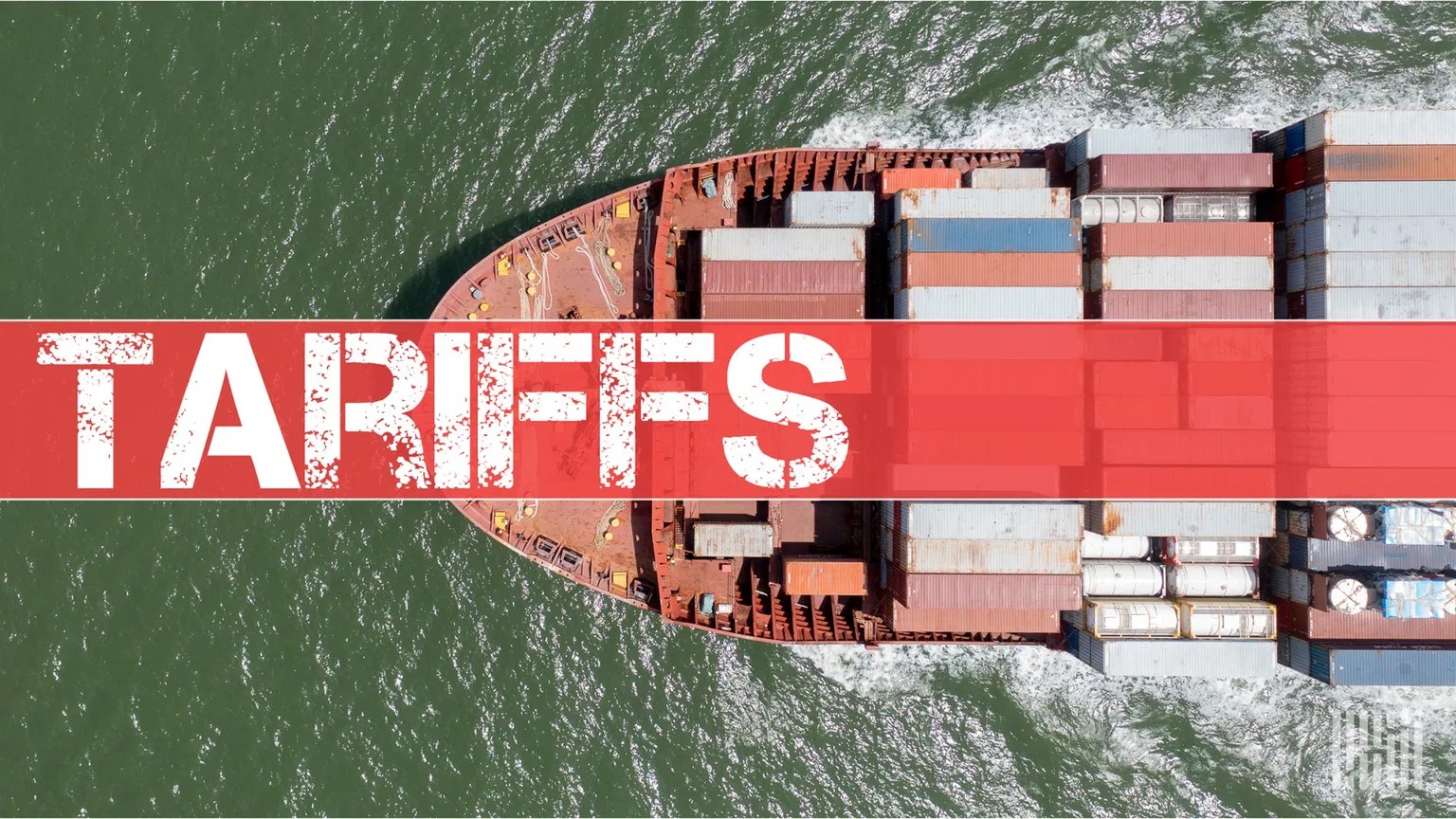
The International Maritime Organization on Friday said it would delay a decision on a global shipping carbon tax for one year.

The vote to delay the Net-Zero Framework by delegates meeting in London comes after President Donald Trump said the United States would not abide by any international agreement to limit greenhouse gas emissions from ocean-going vessels.

A source close to the Trump administration told FreightWaves that U.S. opposition to the plan had attracted support from members with significant stakes in shipping including Portugal, Greece, Cyprus, Liberia, the Bahamas and others.

The United States for years supported the development of the NZF which would require vessel operators to report GHG levels annually; those vessels exceeding emissions limits will pay fees based on their excess emissions, while those using cleaner fuels will receive incentives. The framework is designed to help international shipping reach net zero carbon emissions by 2050 — the first global carbon pricing system for any industry.

But the Trump administration reversed course, calling the plan a tax on shipping that would hurt U.S. consumers.

In a social media post Thursday Trump said, “The United States will NOT stand for this Global Green New Scam Tax on Shipping, and we will not adhere to it in any way shape, or form. Vote NO in London tomorrow.”

Media reports said the U.S. and Saudi Arabia had filibustered the meeting in an effort to defeat a vote. 

While the delay avoids putting the emissions plan at risk, some experts say it’s needed to guide development of the global maritime sector. Shipping accounts for about 3% of GHG emissions which scientists say contribute to climate change, on a par with aviation.

“Without a predictable and preferably multilateral framework in maritime transport, I am afraid that investors (ships, ports, energy, bunkering) would delay investments,” wrote Jan Hoffman, lead maritime analyst for the World Bank, in a LinkedIn post. “This, in turn, would lead to less supply of maritime transport capacity. And this would lead to higher and more volatile freight rates.

“We learned from Covid and the Red Sea crisis how lower shipping supply can lead to a shift of the supply curve to the left, causing more volatile and higher freight rates.” 

Find more articles by Stuart Chirls here.

Related coverage:

Ocean freight rates plummet amid China chaos

Import surge drives new Q2 record for busiest U.S. port

Union hits Newsom veto of measure to block port automation

U.S. ships built in China exempt from new port fees

Royal Mail moves to diversify non-home parcel shipping points

A red roadside parcel post box in the UK.

Royal Mail plans to almost double the number of parcel exchanges — including shops, lockers and parcel post boxes — to 45,000 locations by 2030, as part of a strategy to meet growing demand for drop off and collection points outside of the home. 

In the past two years, Royal Mail has moved to expand its multi-channel network and make parcel collection, sending and returns as convenient as possible. During that time it launched parcel lockers and more recently its Royal Mail Shop brand.

With the planned expansion, customers in urban areas will be within a five-minute walk of a Royal Mail parcel point, with targets of five and 15 minutes maximum drivetime for suburban and rural areas, respectively, Royal Mail said in a news release on Tuesday.

The continued popularity of online shopping and rapid growth of marketplaces like Vinted are driving Royal Mail’s investment in parcel infrastructure. About 15% of parcels in the United Kingdom are delivered to out-of-home parcel points — a figure expected to rise to around one-third within five years. Locker usage is also on the rise, with 40% of UK adults having used one in the past year.

“Royal Mail is committed to being the UK’s most convenient delivery company. This ambitious new target strengthens our leading position, with the largest parcel point network in Britain, giving customers even more convenience and choice,” said Interim CEO Alistair Cochrane. “For many, nothing beats the ease of home delivery or collection, but we’re seeing a clear shift towards more people choosing lockers and shops. Our strategy is to maximise our own network and work with partners to ensure we are always the nearest and simplest option for sending, collecting, and returning parcels.”

Parcel points are in addition to Royal Mail’s 115,000 post boxes, which can be used for parcels small enough to fit through a letterbox. Meanwhile, Royal Mail is modernizing 3,500 future post boxes to accept larger parcels up to the size of a shoebox.

To achieve its target, Royal Mail will continue to double down on its multi-channel approaching, including: 

  • – Accelerating the rollout of parcel lockers, working with partner companies to secure prime locations with high foot traffic.
  • – Growing the Royal Mail Shop brand – — nearly 8,000 convenience stores will feature the brand and offer parcel postage and stamps over the counter.
  • – Exploring new innovations, such as self-service kiosks, partnerships with retailers, and a broader rollout of parcel drop boxes. 
  • – Maintaining existing parcel points, including customer service points at delivery offices and through ongoing partnerships with 11,500 Post Office branches. 

Posts worldwide are investing heavily in their parcel businesses. Australia Post, for example, is investing hundreds of millions of dollars in new parcel hubs and delivery stations. Canada Post wants to reform operations so that it can offer weekend parcel delivery and better compete with private couriers, but is facing opposition from one of its main unions about the planned hiring of part-time workers. And Singapore Post is partnering with DHL eCommerce to increase the number of parcel drop-off points. 

Click here for more FreightWaves/American Shipper stories by Eric Kulisch.

Australia Post to invest $320M for parcel super hub

DHL partners with SingPost to expand parcel drop-off points

DHL eCommerce to buy out parcel locker partner in Poland

White Paper: AI, Optimization, and the Power of Networked Logistics

Driven by new technology and the rising complexity of global supply chains, the transportation management landscape is transforming fast.

To understand how the industry is adapting, FreightWaves and Blue Yonder surveyed shippers, carriers, and logistics intermediaries about their biggest challenges in data visibility, software limitations, and inbound logistics inefficiencies.

This white paper reveals what’s changing across the transportation ecosystem, and how AI-powered optimization and visibility networks are driving a new era of agility and performance.

Insights include:

  • How shippers and carriers are improving inbound logistics efficiency
  • Emerging trends and opportunities in freight procurement
  • Top transportation and movement challenges impacting performance
  • Where companies stand on technology adoption and future readiness
  • The state of data visibility and management in today’s supply chains
  • How AI-driven Cognitive Solutions are shaping the future of freight

Download the report to explore the insights shaping the next generation of transportation management.

Port of Charleston TEUs lower on trade reset

The Port of Charleston handled 212,363 TEUs in September, “a slight dip below planned volumes” as global trade constrictions settled across global shipping.

That compared to volume of 214,558 TEUs in September 2024.

SC Ports said in the first quarter of fiscal 2026 its recently-expanded Inland Port Greer saw 17,818 rail moves, up 18% y/y and a record September for the Upstate intermodal hub. As Japanese automaker Isuzu broke ground on its new production base in nearby Greenville County, Inland Port Dillon broke its monthly record with 4,888 rail moves, a 275% increase from September 2024.

“South Carolina’s ability to attract new business and grow statewide employment makes our port stronger,” said new SC Ports President and Chief Executive Micah Mallace, in a release.

Mallace said that a downturn in container traffic at the fourth-busiest East Coast port following the 90-day pause of retaliatory tariffs by China and the U.S. were compensated by growth in the inland port network and vehicle volumes.

A total of 16,122 vehicles were processed through the Columbus Street Terminal, up 6% y/y and the third consecutive month of year-over-year growth.

Find more articles by Stuart Chirls here.

Related coverage:

UN postpones decision on shipping carbon tax

Ocean freight rates plummet amid China chaos

Import surge drives new Q2 record for busiest U.S. port

Union hits Newsom veto of measure to block port automation

CSX earnings slump on charges, coal decline

CSX’s profits declined in the third quarter as intermodal growth could not offset an 11% decline in coal revenue.

But the railroad’s key operating metrics all improved, even amid detours related to a pair of major construction projects, the Howard Street Tunnel clearance project in Baltimore and the rebuilding of the hurricane-damaged Blue Ridge Subdivision.

“We’re encouraged by the progress made this quarter. Our team did a great job at working together, responding effectively to the tests faced earlier in the year,” new chief executive Steve Angel said on the railroad’s Thursday afternoon earnings call. “The railroad is running well, and we have a strong foundation to drive further improvements. While the underlying economy is mixed, our customer service is strong, and we have excellent relationships with those customers. We are working closely with numerous partners to help accelerate the build-out of industrial capacity on our network. And our commercial team is actively developing new solutions that will help us expand our reach and gain share.”

The quarterly earnings were complicated by one-time items, including a $164 million writedown of goodwill at Quality Carriers, the trucking company that CSX (NASDAQ: CSX) acquired in 2021.

Adjusted for one-time items, CSX’s operating income declined 8%, to $1.25 billion, as revenue declined 1%, to $3.58 billion. Earnings per share fell 4%, to 44 cents. The adjusted operating ratio was 65.1%, up 2.5 points from a year ago.

On an unadjusted basis, the goodwill hit dinged earnings per share by $0.07, reduced operating income 20%, and drove a 4.6-point increase in the operating ratio.

Overall quarterly volume increased 1%, with merchandise traffic down 1%, intermodal up 5%, and coal down 3%. The coal decline was driven entirely by an 11% drop in export coal tonnage. Domestic coal volume was up 8% for the quarter.

CSX still expects to see overall volume growth this year despite mixed business conditions. Customers face uncertainty and headwinds from shifting trade policies, global commodity prices, higher interest rates, and a stubbornly soft trucking market, Chief Commercial Officer Kevin Boone said.

The railroad’s key operating metrics improved during the quarter. Average train velocity inched up 2%, while terminal dwell was down 8%. Intermodal trip plan compliance increased one point to 93%. Merchandise trip plan compliance rose three points to 83%.

“It shows how disciplined the team has been in running a balanced, efficient network — even while major construction continued on the Howard Street Tunnel and Blue Ridge Subdivision,” Cory said of the two projects that were completed ahead of schedule in September.

The Blue Ridge Subdivision cost the railroad $440 million this year and likely will exceed $500 million in total before insurance reimbursements are factored in, Chief Financial Officer Sean Pelkey said.

CSX’s safety metrics improved for the quarter, with the personal injury rate down 7% and the train accident rate down by 21%. Cory says the improvements show that CSX is evolving into a more proactive, data-driven, and safety-focused daily operations culture.

Subscribe to FreightWaves’ Rail e-newsletter and get the latest insights on rail freight right in your inbox.

Related coverage:

First look: CSX Q3 earnings

Down week for rail traffic

Trucks to feel pressure from weaker port, rail: ITS

CN and Congebec partner to expand cold chain rail across North America

How Flexport simplifies complex global trade

Flexport has introduced a new Customs Technology Suite designed to help importers manage tariffs, reduce costs, and navigate increasingly complex trade environments. The launch, part of the company’s broader Fall 2025 technology rollout, adds to a growing portfolio of digital tools aimed at improving visibility and efficiency across global supply chains.


The Customs Technology Suite brings together several integrated applications focused on automation, compliance, and analytics. It includes a premium version of Flexport’s Tariff Simulator, which now provides real-time alerts on tariff changes and calculates landed costs across product catalogs.


The Customs Analysis tool uses U.S. Customs and Border Protection data to identify compliance risks and potential opportunities for duty recovery, while a Compliance Audit engine reviews entries automatically rather than relying on manual spot checks.
A conversational AI chatbot allows users to query trade data directly, and enhancements to Flexport’s duty drawback algorithms are designed to help importers recover more refunds.

(Photo: Flexport)

“Global trade is so important and yet it’s constantly slowed down by complexity, opacity, and inefficiencies,” said Ryan Petersen, Founder and CEO of Flexport. “Our goal is to make logistics as simple and reliable as flipping a light switch. With these new technologies, businesses can focus less on navigating tariffs, penalties, and hidden fees, and more on creating amazing products and driving growth.”


Many importers, especially small and midsize firms, have struggled with sudden tariff changes, inconsistent documentation, and a lack of transparency in landed cost calculations. By automating some of these processes, Flexport aims to help businesses make more informed decisions about sourcing and pricing.


The new technology can help users track duty exposure, avoid costly compliance issues, and better anticipate changes in trade policy. Flexport reports that its customers have collectively recovered more than $700 million in refunds and savings through its duty drawback operations to date, reflecting demand for greater visibility into customs processes.

(Photo: Flexport)

Flexport has a larger push into automation and AI-driven decision support tools. Alongside the customs platform, the company has launched additional products that alert users to demurrage and detention risks and offer public rate comparison tools to improve cost transparency.


The goal is to integrate customs, freight, and compliance data into a single platform that reduces friction and delays across international logistics operations.


While the company’s approach is part of the growing role of automation in customs management, it also highlights the challenges of applying technology to a regulatory environment that varies widely by region and product type.


Flexport’s latest rollout calls attention to a broader industry trend of automation and modernization. As trade policies shift and supply chains become more interconnected, importers are seeking systems that can deliver faster, more accurate insights into their operations.

First look: CSX Q3 earnings

CSX Corp. (NASDAQ: CSX) reported third quarter operating income of $1.09 billion and net earnings of $694 million, or $0.37 per share. 

Excluding a non-cash goodwill impairment of $164 million, adjusted operating income for the quarter was $1.25 billion and adjusted net earnings were $818 million, or $0.44 per share.

Earnings for the Jacksonville, Fla.-based company beat analysts’ consensus forecast of $0.42 cents per share. It was the first earnings report under new chief executive Steve Angel, who succeeded Joe Hinrichs in late September.

Non-adjusted operating income was $1.35 billion and net earnings totaled $894 million, or $46 per share. 

Adjusted operating income and adjusted earnings per share included $35 million and $0.01, respectively, in corporate restructuring, severance, and advisory expenses.

Find more articles by Stuart Chirls here.

Related coverage:

Down week for rail traffic

Trucks to feel pressure from weaker port, rail: ITS

CN and Congebec partner to expand cold chain rail across North America

Rail intermodal, carloads gain for second week in row

New guide: Cross-border ecommerce trends

Discover the latest trends shaping cross-border commerce — and how Avalara helps you turn compliance from a roadblock into a competitive advantage.

Download our guide to see how top businesses are managing tariffs, trade rules, and duty protocols — and get actionable steps to simplify your global trade operations.

Ocean freight rates plummet amid China chaos

Container freight rates on the trans-Pacific took another hit this week  as acrimonious negotiations between China and the United States turned into a full-blown trade war.

Prices on the benchmark Asia-U.S West Coast route fell 8% to $1,431 per forty foot equivalent unit for the week ending Oct. 10, according to the Freightos. Baltic Index. Asia-U.S East Coast rates also declined 8%, to $3,015 per FEU.

The weakening market came in the lead-up to new U.S. port fees on Chinese ships taking effect Oct. 14, and a matching tonnage tax implemented by Beijing on U.S.-flagged, -built and -operated vessels. The latter extend to vessel operators with 25% or greater U.S. ownership – a move seen as particularly onerous for publicly-listed ship operators who have to sort out their ownership structures.

The crisis saw the departure of U.S.-based directors from three shipowners — one from dry bulk specialist Pacific Basin Shipping (2343.HK) of Hong Kong, two from Greek tanker owner Okeanis (NYSE: ECO), and one from Danaos Corp. (NYSE: DAC), also of Greece, a containership owner that charters large ships to Maersk, CMA CGM and Hapag-Lloyd (HLAG.DE), among others.

“As regards the general market impact, the list of available ships to call China’s ports is definitely smaller than before, across all shipping markets,” said Stamatis Tsantanis, chairman and chief executive of Seanergy Maritime (NASDAQ: SHIP) and United Maritime (NASDAQ: USEA). “Turning to the dry bulk market and capesize market in particular, the impact remains to be seen, but there are around 60-70 ships that are clearly affected by the latest fees, representing around 3% of the cape fleet. Given the disproportionately large incidence of China discharge in the cape segment this is likely to have an appreciable impact on our market. Not necessarily dramatic but I expect it to be felt, especially give the fact that the cape market already had a relatively restricted ship supply amid rising demand leading to low vessel availability.

“Eventually, all the costs will fall down to the actual consumer, and that’s going to make things way more expensive,” he said.

Liner operators braced for the fees by reconfiguring services to minimize their exposure. 

Maersk (MAERSK-B.CO) on Tuesday said it was diverting two U.S.-flag vessels on its TP7 service away from China to South Korea. “We have noted the Chinese initiative taking effect on Oct. 14 and are currently assessing its potential impact on our services calling at ports in China. We will update our customers as soon as further clarification becomes available,” Maersk said in a statement to FreightWaves.

But structural issues are shadowing carriers’ efforts to shore up rates through rate hikes, surcharges and blank sailings. New tonnage is swelling capacity, as is an expected return to the Red Sea following the ceasefire in the war between Hamas and Israel. CMA CGM, which has maintained some Red Sea operations, said it is enhancing coverage between Asia and Red Sea ports on its REX2 service.

Rates on Asia-North Europe fell 9%, Freightos said, to $1,747 per FEU. Asia-Mediterranean prices were down by 4%, to $2,131 per FEU.

“Current U.S. import volumes estimated to be at their lowest since mid-2023 due to trade war frontloading earlier in the year – and projected to continue declining through December – are contributing, along with supply growth, to the strong downward pressure on trans-Pacific container prices,” said Freightos analyst Judah Levine in a note to customers. He said Asia-Europe demand is likely stronger than in 2024 although persistent congestion at some key ports was worsened by recent labor disruptions at some key ports, “pointing to capacity growth as a key driver of current rate behavior.

“Significant capacity reductions in October have so far not succeeded in slowing the rate slide.”

This article was updated Oct. 16 to add information on U.S. directors leaving shipping companies, and comments from Stamatis Tsantanis of Seanergy Maritime and United Maritime.

Find more articles by Stuart Chirls here.

Related coverage:

Import surge drives new Q2 record for busiest U.S. port

Union hits Newsom veto of measure to block port automation

U.S. ships built in China exempt from new port fees

New China sanctions on South Korean company aiding U.S. shipbuilding

Withholding $40 Million for ELP Noncompliance: What Precedent Is This Setting?

Recently, the U.S. Department of Transportation (DOT) announced it would withhold approximately $40.7 million in federal grant funding from the state of California, citing that it failed to enforce the federal English Language Proficiency (ELP) requirement for commercial drivers. 

That move is deeper than headline politics. For the trucking industry — especially small carriers and owner‑operators — it raises real questions about federal leverage, regulatory standards, and what’s coming next.

Let’s unpack what’s going on, why DOT chose this path, and what both sides of the issue need to watch.

What the DOT Is Saying — And Why

According to DOT Secretary Sean Duffy, the audit revealed “systemic noncompliance” in the state’s driver licensing agencies. The state in question allegedly refused to enforce that large‐rig drivers must meet English proficiency standards — meaning they might struggle to read road signs or communicate with law enforcement, Duffy asserted. 

To spur compliance, DOT is pausing the state’s issuance of non‑domiciled CDLs (i.e. licenses granted to drivers not legally domiciled in the state) and demanding stricter ELP assessments during inspections. The withheld funds principally come from Motor Carrier Safety Assistance Program (MCSAP) grants, which support roadside inspections, traffic enforcement, safety audits, and public education. 

In short: DOT is using financial tools to push a state into alignment with a federal safety standard.

What Precedent Does This Set?

When a federal agency leverages funding to enforce qualitative licensing standards, it draws a line in the sand. Here are a few key precedents this may establish:

1. Strings on Federal Highway & Safety Grants Can Get Tougher

States receiving federal money may be forced to comply not just with maintenance, bridge, and safety mandates, but also with language, training, or other operational standards tied to carriers. If DOT follows through, future grant agreements might include stricter compliance clauses beyond infrastructure.

2. Federal Authority to Withhold for Licensing Noncompliance

Withholding money over a licensing standard — rather than direct safety failures — solidifies precedent that DOT can condition funding on state enforcement of licensing rules. That raises questions for states with different regulatory approaches or legal interpretations.

3. State vs. Federal Tension Over Licensing Decisions

Licensing is often a state function. This move may provoke legal or constitutional pushback over federal overreach. But if it holds, it could shift more licensing discretion toward federal standards — especially in interstate trucking.

4. Selective Enforcement as a Market Disruptor

Carriers operating in states under compliance pressure could see differential scrutiny at weight stations or inspections. That could create soft regional advantages or disadvantages for certain fleets, depending on where they run.

From the Carrier’s Lens: What’s at Stake

While the politics swirl, here’s how this could impact carriers (especially small ones) in tangible ways — both risks and opportunities.

Potential Upsides

  • Stricter standards might weed out the “bottom feeders” — meaning fewer carriers cutting corners, which could help stabilize rates or reduce “rogue” capacity.
  • More consistency in inspections & enforcement — carriers who already comply may face fewer surprises or inconsistencies across state lines.
  • Ability to lean into compliance as a selling point — having paperwork, training, and a strong record may mean more trust from brokers and shippers in a tougher regulatory environment.

Possible Downsides

  • Increased inspection pressure — carriers may see more ELP checks or audits, especially in or through states under DOT scrutiny.
  • Licensing bottlenecks or delays — if states resist or struggle to adjust, issuing CDLs might tighten, affecting fleets that rely on high turnover.
  • Uneven playing field during transition — carriers in states compliant with ELP standards may temporarily be disadvantaged if noncompliant states drag their feet.

What Both Sides Must Think Through

  • Definition of “Enforcement”
    Is simply requiring an English test enough? Or does enforcement demand documented checks in the field? The boundaries will matter.
  • Fairness & Due Process
    States and labor advocates will demand that real consequences (withholding funds) align with fair review and appeals for drivers and agencies.
  • Uniformity Across States
    If DOT holds one state’s funds, others may be pressured or compelled to follow. But states vary wildly in licensing practice. Will exceptions be made, or standards harmonized?
  • Transition Plans & Timelines
    If a state lacks the infrastructure to immediately audit every driver, will DOT allow grace periods or phased compliance? That will matter for carriers caught mid‑cycle.

What Carriers Should Monitor Right Now

  1. Inspection behavior in scrutinized states — Are ELP checks showing up during roadside inspections?
  2. CDL issuance changes — Watch if states slow or pause non-domiciled driver licensing.
  3. Broker and shipper preference shifts — If compliance becomes a filter, brokers may prefer carriers from “clean states.”
  4. DOT or FMCSA memos clarifying standards — The devil will be in the definitions of enforcement.
  5. Legal challenges — States or trucking groups may potentially file suits — these will set the real limits of federal power.

Final Thought

Withholding $40 million over English proficiency enforcement isn’t just political theater. It’s setting a precedent: federal funding can be wielded to enforce licensing and regulatory compliance.