
The Chameleon Carrier Accountability Crisis
One owner who hired an unqualified driver got 60 days. Other owner offered no time plea deal. The driver who killed seven was acquitted. The system that enabled them both remains largely unchanged.
Discover why 9,500 drivers out of service doesn’t mean what you think it means and what that really means for the industry.
When a November 2025 draft memo from the Department of Transportation surfaced promising a groundbreaking “data-driven severity matrix” to catch chameleon carriers, it raised uncomfortable questions about ARCHI (Application Review and Chameleon Investigation), built with $3.5 million in congressional funding in 2012-2013. Is this bureaucratic amnesia, rebranding of an underperforming system, or evidence that FMCSA’s chameleon detection infrastructure has been quietly abandoned?
The Federal Motor Carrier Safety Administration is rolling out Motus, a new registration system designed to replace the agency’s decades-old platform, offering what it calls “a more intuitive, user-friendly experience.”
A federal lawsuit is now underway challenging the Federal Motor Carrier Safety Administration’s (FMCSA) new interim final rule that limits the issuance of non-domiciled commercial driver’s licenses (CDLs). The lawsuit, filed on October 20, 2025, in the U.S. District Court for the D.C. Circuit, argues that FMCSA’s decision to enforce the rule immediately—without going through […]
California just wrapped up a record 1.5 billion pound pistachio harvest, but cargo theft hit record highs in 2024 and nuts remain prime targets. We’ve documented sophisticated nut theft since 2006, $10 million stolen between 2013 and 2017 alone. Will it continue in 2025?
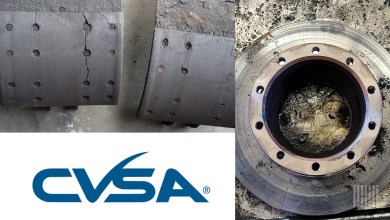
Inspectors pulled 2,296 commercial vehicles off the road during the 2025 Brake Safety Week, a 15.1% out-of-service rate virtually identical to 2024’s 15% failure rate. With next year’s enforcement already scheduled for Aug. 23-29, 2026, the question isn’t whether we’ll see similar results
The Federal Motor Carrier Safety Administration issued a waiver on October 9, 2025, extending the deadline for full implementation of the National Registry II electronic medical certification system to January 10, 2026.
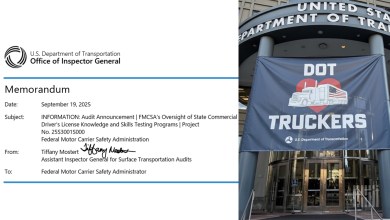
Federal watchdogs are once again questioning whether we have one CDL standard or 50. With nearly 5,000 truck and bus fatalities last year and English proficiency enforcement under fire, the new OIG audit could reshape how states test, license, and oversee drivers nationwide.
Two pilot programs will test flexible hours-of-service configurations as questions persist about ELD fraud, system vulnerabilities, and whether current regulations effectively reduce fatigue-related crashes despite improved compliance rates.
The U.S. International Trade Commission has ruled in favor of Motive, rejecting Samsara’s claims of patent infringement.
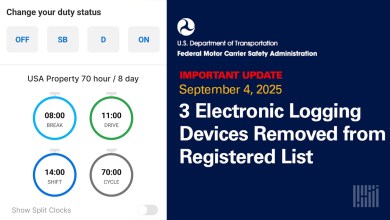
The Federal Motor Carrier Safety Administration on Wednesday removed three more electronic logging devices from its registered list, giving affected fleets until Nov. 3 to swap out the non-compliant systems before facing enforcement action.
The Federal Motor Carrier Safety Administration has extended its temporary waiver allowing commercial drivers and motor carriers to use paper medical examiner certificates for up to 60 days after issuance, up from the previous 15-day allowance, as state licensing agencies continue transitioning to electronic medical certification systems. The modified waiver addresses ongoing implementation challenges with the National Registry II electronic transmission requirements that took effect June 23, with only 38 states and the District of Columbia currently compliant while 12 states including California, Florida, and New York have yet to implement the new system.
A commercial tractor-trailer’s illegal U-turn on Florida’s Turnpike last week killed three people in a minivan that collided with the trailer at highway speed, putting new focus on critical flaws in commercial driver licensing and training standards that have made America’s highways increasingly dangerous.
With Colorado requiring commercial vehicles to carry chains starting September 1 and other states following suit through October, truck drivers need to understand the complex web of chain laws, installation requirements, and hefty penalties that await the unprepared. From $880 fines in Oregon to $1,000+ penalties in Colorado for blocking highways, the stakes have never been higher.
The trucking industry’s decade-long push for hair follicle drug testing is reaching a critical inflection point as the Trump administration prepares to address guidelines that have been delayed repeatedly since 2015. Major carriers say hair testing catches 10 times more drug users than urine screens, but face fierce opposition from minority groups and independent truckers who claim the methods are discriminatory.
For the first time in decades, the federal government is shifting its attention from policy roundtables to the actual drivers and fleets keeping the country moving.
Starting June 2025, the FMCSA will enforce long-delayed rules on driver medical certification and English proficiency, with direct implications for fleets, intrastate drivers and licensing agencies. From MVR downgrades to out-of-service roadside inspection orders, these rules shift from paper compliance to real-world enforcement. Fleets that fail to adapt may face costly violations or sidelined equipment.
The Texas Department of Public Safety does not enforce the federal English language proficiency requirement for intrastate CDL drivers. This aligns with state law but may conflict with the FMCSA’s updated ELP enforcement policy, raising questions about federal funding under the Motor Carrier Safety Assistance Program.
The FMCSA is quietly revamping its National Consumer Complaint Database (NCCDB), aiming to transform it from a bureaucratic black hole into a real-time system for identifying unsafe carriers, shady brokers, coercive shippers and repeat fraud offenders.