Supply chain software provider Manhattan Associates soars after strong revenue growth

Manhattan Associates, the supply chain software provider whose stock was a wild ride several months ago, reported earnings Tuesday that were cheered by investors and possibly signaled a broader demand turnaround in that sector.

At the market close, Manhattan Associates stock (NYSE: MANH) was up $14.92/share, or 7.36%, to $217.71. It traded early in the day as high as $247.22.

According to a report on Benzinga, three analysts that checked in with reports Wednesday maintained their buy ratings on Manhattan Associates, but also with target stock prices that ranged from $210 to $250.

What is striking about Manhattan’s stock is just how much it has swung since December. 

On December 12, Manhattan Associates hit a 52-week high of $312.60. In less than four months, it had declined to a 52-week low of $140.81, a period that saw its longtime CEO Eddie Capel step aside but remain as executive chairman. (Capel announced on the call that he is transitioning to board chairman, dropping the executive role).

That swing from 52-week high to 52-week low in just fourt months marked a roughly 55% decline. It also was a period coming after the company saw sluggish sales figures. The earnings report for the second quarter appears to be changing that narrative.

With the move Wednesday to more than $216, the stock is up more than 53% since that low. According to a report on Benzinga, three analysts that checked in with reports on Manhattan Associates Wednesday maintained their buy ratings, but also with target stock prices that ranged from $210 to $250.

What drove the surge in Manhattan Associates’ stock price Tuesday was an earnings report that showed strong revenue growth, so that the improvement in the bottom line–which was modest–was not just driven by cost cuts and belt tightening. The earnings report showed a sales landscape for Manhattan Associates that had greatly improved.

Total revenue of $272.4 million for the company was reported as a record for a second quarter. It was up from $265.3 million a year earlier. 

But within those numbers was $100.4 million for subscriptions to Manhattan Associates’ various offerings through cloud subscriptions, up from $82.4 million. That’s a gain of 22%.  

The positive signals from the cloud subscription figure were boosted further by the numbers on Remaining Performance Obligation (RPO), which is essentially a measure of future revenue that can be expected from subscriptions already under contract.  That number rose to just over $2 billion from $1.6 billion a year ago, up 26%.

Bottom line numbers were improved also, though not to the level of revenue numbers. Net income for the second quarter rose to $109.4 million, up from $106.6 million. 

Adjusted operating income, which is a non-GAAP measure of profitability, was $101.1 million for the second quarter. A year ago in the second quarter, it was $92.9 million.

Positive developments running through the system

Clark spelled out a quarter that produced what might be considered a “virtuous circle,” though he did not use that term. 

As a contract with a Manhattan Associates customer runs its course, Clark said, “the dollars move from RPO to subscription revenue. And by the end of the contract, there’s no RPO left.”

A renewal “refreshes” the RPO, Clark added, “but it does so at a higher level for a number of reasons.” He noted that users within a contract would have been added during the life of that pact, so a renewal now has more seats. 

But that isn’t new. What is new is the Manhattan Active Supply Chain Execution, rolled out in 2024 and which company executives describe as providing “unification” of its products on one platform.

And with a more unified platform, Clark said, there is a greater opportunity to cross-sell. “When they bought Warehouse Management, we didn’t have Transportation Management or Supply Chain Management or AI agents,” Clark said, the latter a reference to the agentic AI features at Manhattan Associates that received a significant amount of focus at Momentum this year.  

Lots of cross-selling

Clark said in the past five quarters, 80% of Manhattan Associates customers that purchased its TMS also bought its warehouse management product, or had already done so.

“So our customers are truly experiencing the value of unification,” Clark said. “The cross-sell results that we’ve seen since launching Manhattan Active Supply Chain Execution have far exceeded what we were able to achieve with our prior platform.”

Manhattan Associates has said it expects to have a sustainable revenue growth rate of 20% in its cloud subscription revenue. Answering a question from an analyst on the earnings call, Clark said the RPO figure is a reason the company is sticking to that forecast.

Clark said the stated goal of 20% would not be regularly updated each quarter on its progress. “But I can tell you we remain confident,” Clark said, citing the future revenues that are in the RPO. “That gives us good visibility in the second half and next year.”

He also said the renewal cycle “really starts to pick up pace next year,” citing in particular demand for the Manhattan Active Warehouse Management product. 

Clark also spoke of changes the company had made in its sales effort, including promoting long-time executive Bob Howell to be its chief sales officer. 

New middle-level sales managers also have been added, Clark said. But in terms of human resources, it isn’t just the executive level; Clark said Manhattan Associates has “added and will continue to add more feet on the street.”

In the three months since the company’s prior conference call with analysts, Clark said Manhattan Associates had added “more sales talent than in any quarter in the past ten years.”

Beyond just the last quarter, Clark said the latest three quarters at Manhattan Associates “have been our best three bookings quarters ever, and you can argue that all three of those quarters were during at least a changing if not a challenging macro.”

A boost from Google

The company also has put its product offerings up on Google Cloud Marketplace, the cloud platform that hosts third-party software applications. That was disclosed at Momentum.

Clark said the largest deal it signed in the quarter “was influenced by Google Cloud Marketplace, and we have a growing pipeline of Google Marketplace deals.”

Revenue in the Services group, which among other offerings provides advisory services to companies growing their use of Manhattan Associates products, fell to $129 million from $136.8 million a year ago. But despite that, CEO Eric Clark, in his prepared remarks on the company’s earnings call with analysts, said the group had “slightly outperformed expectations.”

“This execution is encouraging,” Clark said. “However, given the inherent flexibility of time and material contracts, coupled with the ongoing tariff and general market uncertainty, we remain cautious on our services revenue growth.”

More articles by John Kingston

Yet another broker liability case, this time in the Fifth Circuit, adds to the growing mix 

Much happened at Triumph Financial during the quarter; USPS dispute settled

Marten sells intermodal unit to Hub Group, which grows its refrigerated footprint

Private equity bids for Forward Air rolling in, report says

A Forward Air tractor-trailer backed up to an airport terminal

Shares of Forward Air were up 10% in late-day trading on Wednesday following a Reuters report that “a handful of private equity firms” have submitted bids to acquire the trucking and logistics company.

Potential buyers were reported to include Clearlake Capital, which holds a 13% stake in the company. Also, buyout firms, including Apollo Global Management (NASDAQ: APO) were reported to have submitted bids.

Activist investors have pushed Forward Air (NASDAQ: FWRD) to entertain a sale or other strategic alternatives following its heavily contested merger with Omni Logistics. That deal, which was announced in August 2023, was quickly panned by shareholders as well as some of Forward’s legacy customers.

Forward’s shareholders took issue with the way the transaction was structured as it circumvented their vote. They also had concerns that the deal placed a large debt burden on Forward (a 5.3 times net debt leverage ratio at the end of the 2025 first quarter) and gave Omni’s private equity backers voting control. The merger eventually closed in January 2024 after months of litigation, including efforts from Forward to get out of the deal.

Forward announced a strategic review earlier this year, but activists said that was too late and claimed the company was “slow-walking” the process after months of pressure.

Activists were successful in forcing three directors – who they blamed for “massive value destruction” as a result of the ill-conceived merger – to resign from the board last month. The departing board members included Chairman George Mayes, who was voted out by shareholders at the company’s annual election.

At the same election, shareholders approved the company’s reincorporation to Delaware, which may make it easier to sell given the state’s favorable corporate governance policies.

Forward’s stock traded at $110 per share before the deal was announced in 2023. Shares slumped more than 40% in the months following the announcement, later cratering further once the deal closed in early 2024. The stock gapped below $10 shortly after Liberation Day tariffs were announced in April, but has steadily stepped higher in recent weeks as takeout speculation has ramped.

Shares stood at $30.60 late in the session on Wednesday.

Analysts and investors have told FreightWaves that shares of Forward could be valued at $40, or higher, in a takeout scenario.

The back-of-the-envelope math assumes a low-double-digit multiple on the company’s roughly $300 million in annual earnings before interest, taxes, depreciation and amortization. Backing out roughly $1.6 billion of net debt from a more than $3 billion enterprise value leaves equity value somewhere between $1.5 billion and $2 billion. (The company has roughly 42 million shares on a fully diluted basis.)

Forward is scheduled to release second-quarter results on Aug. 11.

FreightWaves has reached out to Forward Air for comment.

More FreightWaves articles by Todd Maiden:

Trucking Matters Seminar Series covers key issues in 2025

The 4th Annual Trucking Matters Seminar Series, hosted by Reliance Partners, brought together nearly 300 industry professionals in Nashville, TN. This year’s event was the largest yet and provided numerous opportunities for networking and collaboration, 

Speakers covered some of the most pressing topics in the trucking and logistics sector today, including handling difficult shipper RFPs, the likely upcoming tractor pre-buy in 2026 and 2029, the fluff and substance around digital brokers, and much more. 

The event’s agenda was packed with sessions featuring major industry players: 

  • Freight and Economic Overview 

Thom Albrecht, Chief Revenue Officer at Reliance Partners, opened with a discussion on the state of the industry and economy at large. 

  • Reshoring and Nearshoring Trends 

Rosemary Coates, Executive Director of the Reshoring Institute and President of Blue Silk Consulting, discussed global supply chain shifts and the strategic importance of reshoring and enhancing domestic freight strategies. 

  • Trucking Litigation Panel

Experts from law firms and the American Trucking Association navigated through the latest legal challenges plaguing the industry.

  • Shipper Panel

The shipper panel gathered representatives from key industry players like MARS Inc, Ardagh Group, Seaboard Foods, Kroger, and Kimberly-Clark, all with valuable perspectives on logistical trends and challenges, as well as innovative practices adopted by major shippers to improve efficiency and sustainability.

  • Breakout Sessions

Tailored breakout sessions provided targeted insights and actionable strategies for tackling specific challenges in freight operations, including FMCSA audits, cargo theft, and freight fraud.

  • Insurance Panel

Representatives from Amwins and Nirvana discussed freight insurance issues and risk mitigation in 2025, as well as the pros and cons of captive insurance products.

The annual Trucking Matters seminar series is a major networking opportunity designed to encourage connections and to share cutting-edge trends and strategies. As noted by several attendees, the flow and organization of the event seamlessly facilitated the exchange of ideas and experiences.

Here are a few testimonials from this year’s attendees:

This year’s event was truly spectacular! Each panel brought fresh insights, and the overall event setup and flow keeps getting better every year. Reliance Partners really knows how to bring value to the industry.

We look forward to Trucking Matters every year. Reliance Partners is doing amazing work and we can’t wait for next year’s event!

It was my first time attending, and I was impressed by how well-organized and professionally run everything was. The topics were incredibly relevant and provided valuable takeaways for our business.

The Trucking Matters Seminar Series is a premier event on the trucking and logistics calendar, so be sure you don’t miss out on next year’s gathering, where there will be another combination of insightful panels, engaging keynotes, and extensive networking opportunities. Save the date for July 22-23, 2026, at the Grand Hyatt Hotel in Nashville, TN.

Reliance Partners is committed to advancing the trucking and logistics sectors together with sponsors and industry leaders.

Click here to learn more about Reliance Partners.

Boeing raises outlook for widebody freighters as 777-8 production begins

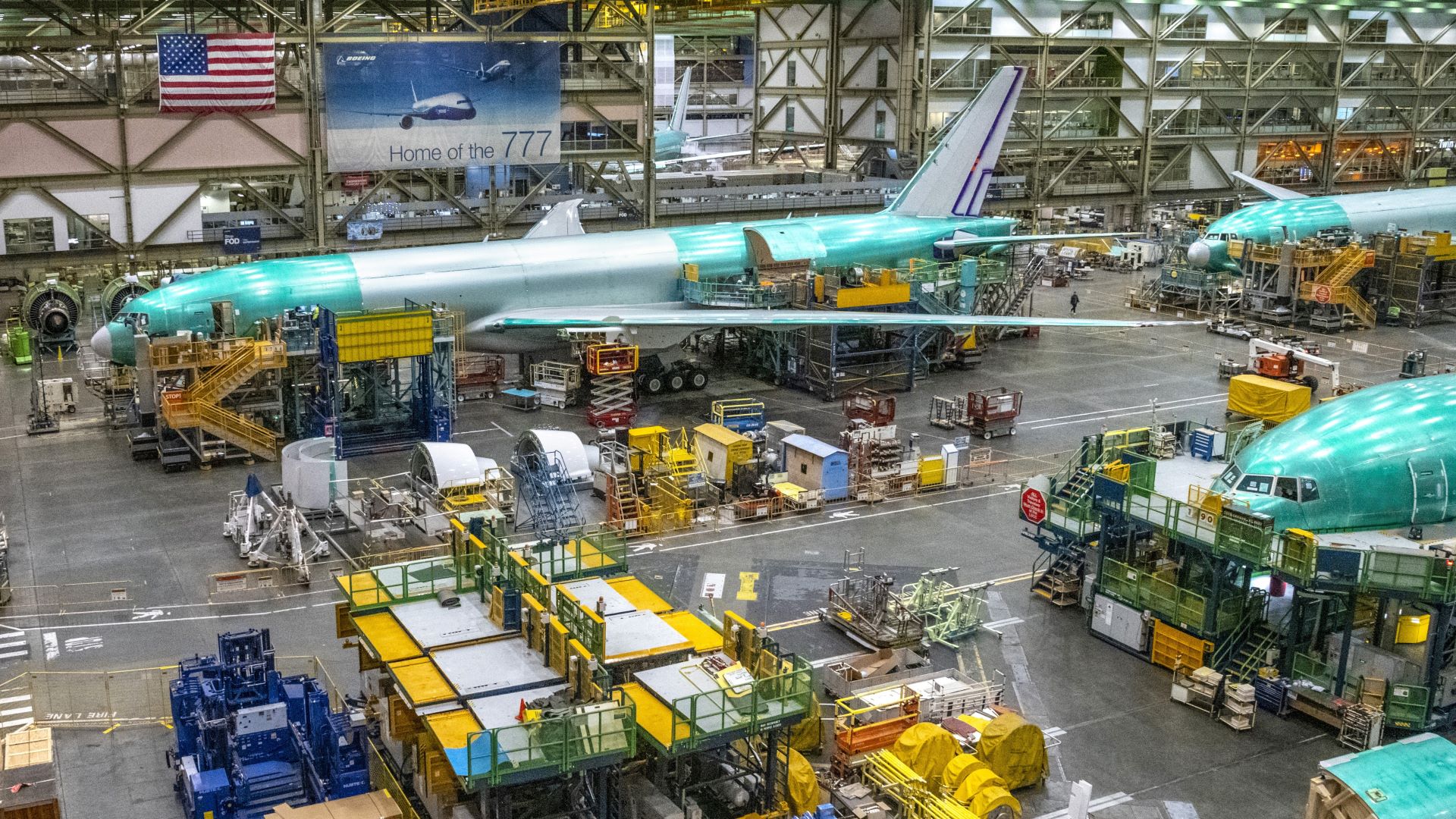
Boeing on Monday officially began production of the 777-8 freighter by drilling the first hole into a wing spar, while Airbus reached another milestone in building its new A350 freighter as the companies gear up competition for sales of large cargo jets.

The developments come after Boeing (NYSE: BA) recently downgraded its 20-year forecast for air cargo volumes to 3.7% compounded annual growth from 4.1% in its 2024 commercial market outlook. Boeing also predicts total freighter aircraft entering the market by 2044 will be 2,900, up slightly from the 2,845 projection in last year’s report.  

The lower traffic forecast reflects a higher annual growth in the 2024 base year of 11% and lower long-term economic estimates, Boeing spokesman Ted Land explained. The airfreight market experienced a strong recovery in 2024, driven by cross-border e-commerce demand, after an 18-month downturn. 

Boeing projects a 67% increase in the global freighter fleet by 2044, including 885 large widebody aircraft like the 777-8 and the A350 — up from 810 in the prior estimate. Total freighter production increased by 55 units despite a drop of nearly 100 narrowbody freighters over 20 years. 

Boeing attributes the change to growing demand for the payload and range of widebody cargo jets to support increased supply chain diversification and cross-border e-commerce at a time when airlines are accelerating retirement of older aircraft, new production has been slowed by post-pandemic supply chain backlogs and government certification for emerging 777 conversion companies has been delayed. Meanwhile, the market is oversupplied with narrowbody converted freighters. 

The analysis shows fewer factory-built freighters entering service than estimated last year, with 955 newbuilds versus 1,945 passenger-to-freighter conversions.

777-8 production begins

The U.S. aerospace giant announced that manufacturing of the first 777-8 freighter began Monday at a plant in Everett, Washington, with a specialized robot drilling holes in the wing spar and filling them with fasteners. Spars are the backbone of a wing, serving as a critical support structure. Each wing has two spars — one in the front and one in the rear.

The 777-8, now scheduled for first commercial delivery in 2028, will be the world’s largest twin-engine freighter. Boeing says the plane will have 30% better fuel efficiency and emissions, with nearly identical payload and range capabilities, compared to the aging 747-400. The 777-8 also offers 25% better operating costs per ton and much quieter engines. Technical specifications include a maximum revenue payload of 123.7 U.S. tons, with main-deck capacity for 31 pallets, and a maximum range of more than 4,400 nautical miles.

Machinist Casey McDowell operates the controls of a robot to drill the first hole into a 777-8 wing spar. (Photo: Boeing)

The 777-X program, which includes a passenger variant, was launched more than a decade ago, but has faced a series of technical and regulatory delays. The company began taking orders in January 2022 and now has 59 firm orders. Qatar Airways is the launch customer, with a firm order for 34 aircraft. Other 777-8 customers include Lufthansa, Silk Way West, Cargolux, ANA and China Airlines. 

To make the 108-foot long composite spars, Boeing machinists in the Wing Center guide machines that apply layers of carbon fiber tape onto large tooling to form the shape of the spar, which is then prepped and hardened through pressure and heat in an autoclave. The spars are then moved onsite for finishing work before they are moved to the main Everett factory. 

Airbus stays one step ahead 

Meanwhile, Airbus announced Wednesday that it has completed manufacturing the first horizontal stabilizer for the A350 freighter at its plants in Spain. The section will be shipped to the Airbus final assembly line in Toulouse in the coming weeks, where it will be joined with the fuselage of the first test aircraft. Airbus is manufacturing two A350 cargo jets for flight testing in 2026 and 2027.

In late May, Airbus finished the first ever set of wings for the A350F.

Airbus benefits from an efficiency standpoint by building the horizontal stabilizer and wings in the same production lines as the passenger version. 

The manufacturer has received 66 orders for the A350 freighter. It expects to begin first deliveries in late 2027 after development delays of its own.

The A350’s main-deck cargo door will also be manufactured in Spain. Made from composite materials, it has the largest door opening of any freighter to make loading and unloading faster and easier. 

Airbus says the A350 will offer at least a 20% reduction in fuel consumption and CO2 emissions compared to large cargo aircraft currently in service. The widebody freighter has a payload of up to 122 tons and a range of up to 4,480 nautical miles. 

Click here for more FreightWaves/American Shipper stories by Eric Kulisch.

Write to Eric Kulisch at ekulisch@freightwaves.com.

Saudi Arabia-based leasing company to buy 10 Airbus A350 freighters

Airbus postpones rollout of A350 freighter until late 2027

China Airlines finalizes deal for 4 Boeing 777-8 cargo aircraft

Stacking Margins, Not Miles – The Growth Mindset Most Fleets Miss

Too many carriers are chasing the wrong scoreboard. They measure success by the number of miles they run, the number of loads they book, or how many trucks they have on the road. But here’s the truth: more miles don’t mean more money—and more loads can sometimes mean more losses. Real growth in this business doesn’t come from working harder. It comes from working smarter. From stacking margins, not miles.

If your strategy is built on chasing volume, you’re on a hamster wheel. You might be busy. You might even look successful from the outside. But your profit and loss statement will eventually expose the truth. You’re not building a business—you’re burning fuel, time, and energy just to stay afloat.

This article is about rewiring your mindset. It’s about getting off the volume treadmill and focusing on the one thing that actually builds wealth in trucking: profit per mile. Not gross. Not rate per mile alone. Not how many loads you touch. Margin. That’s the game.

Why Most Fleets Get It Wrong from the Start

Let’s be real—most carriers start their business with a hustle mentality. They get a truck, find a dispatcher or hit the load boards, and try to keep that truck moving 6 or 7 days a week. They think the more they move, the more they’ll make.

And for a little while, that seems true. But here’s what happens next:

  • The fuel bill eats up half the revenue
  • The driver gets burned out
  • The maintenance costs pile up
  • One bad load puts you in the red
  • You’re cash-flow negative, even though you’re “busy”

Why? Because the model was never built to scale. It was built to run. But running without margin is running toward a cliff.

Let’s Talk About What Margin Really Means

Margin isn’t just what’s left over. It’s the purpose behind every mile you run. And it comes down to three things:

1. What You Book It For
Are you just accepting loads because they’re available? Or are you choosing freight that fits your lane strategy, customer base, and pricing power?

2. What It Costs to Move
Most carriers don’t know their cost per mile down to the penny. If you don’t know your baseline, you can’t improve your margin. You’re negotiating blind.

3. How Efficiently You Operate
Deadhead, dwell time, driver turnover, empty miles between loads—all of that cuts into your margin. Tight systems build profit. Loose ones bleed cash.

Here’s the kicker: you can make more profit moving 1,200 miles a week with strong margins than someone moving 3,000 miles with weak ones. But you’ve got to change how you think.

The Dangerous Trap of Volume Thinking

Let me show you how volume thinking hurts growing carriers:

You Take Any Load
Your dispatcher sees a $3,000 load and jumps on it. It looks good. But it’s 1,500 miles. It burns 250 gallons of fuel. The rate looks high, but after fuel, driver pay, tolls, and lost repositioning miles, your profit margin is paper thin.

You Don’t Control the Lane
When you chase spot freight in random markets, you lose all leverage. Now you’re not just chasing a load—you’re chasing a way out of that load’s destination. You lose margin on both ends.

You Grow Without Systems
You add trucks because your revenue looks big, but you don’t have a process to monitor each unit’s margin. Now you’ve multiplied your overhead and made your problems bigger—not better.

You Burn Out Your Team
Long miles, inefficient planning, poor rest cycles—your drivers leave or disengage. And turnover kills margin more than anything else.

The Power of Stacking Margins

Now let’s flip the script. Let’s talk about what stacking margins looks like:

Intentional Lane Planning
You focus on short to mid-haul freight in repeatable lanes. You know your top customers and top regions. You can forecast fuel, time, and detention risk. That allows you to price with purpose.

Profitable Load Combinations
Instead of just looking at a load in isolation, you think like a chess player. You ask: What’s my next move after this? Maybe a $900 short haul tees you up for a $1,700 local move that gets you home early. Together, they create a $2.60 per mile average and minimize deadhead. That’s margin stacking.

Driver-Centric Planning
You design schedules around efficiency, rest, and repeatability. The driver stays engaged, your turnover stays low, and your cost per mile stays consistent. Margin isn’t just financial—it’s operational.

Customer-Focused Strategy
You shift from “how do I fill the truck?” to “how do I solve a shipper’s problem?” That shift opens the door to higher rates, less competition, and consistent volume. Margin follows value.

Real-World Margin Play: Two Fleets, Two Outcomes

Fleet A runs 5 trucks, 3,000 miles per week each. Their rate per mile averages $2.10. Their operating cost is $1.80 per mile.

  • Revenue per truck: $6,300
  • Cost: $5,400
  • Profit per truck: $900

Fleet B runs 5 trucks, but only 2,000 miles per week. Their rate per mile averages $2.60. Their cost per mile is $1.70 because of fewer miles, better lanes, and tighter planning.

  • Revenue per truck: $5,200
  • Cost: $3,400
  • Profit per truck: $1,800

Same size fleet. Lower miles. Double the profit.

Which fleet would you rather run?

How to Shift Your Strategy Toward Margin

1. Know Your True Cost Per Mile
Not just fuel. Include insurance, maintenance, payroll, IFTA, subscriptions, everything. Break it down monthly, then weekly. Then compare it to what you’re booking.

2. Evaluate Every Load by Margin, Not Just Gross
Before you accept a load, ask: What’s my estimated profit after costs? If you’re just looking at top-line revenue, you’re playing a losing game.

3. Use Tools to See the Full Picture
Track lane profitability. Monitor deadhead. Build dashboards that show your average loaded vs empty miles, gross revenue vs margin, profit per hour. The data tells the truth—if you know how to read it.

4. Train Your Team to Think Like You Do
If your dispatcher only thinks about “what pays the most,” you’ve already lost. Train them to plan ahead, look for backhauls, and evaluate full-trip margin. Incentivize margin, not miles.

5. Build Long-Term Shipper Relationships
When you serve a consistent customer, you reduce risk, improve planning, and stabilize your revenue. That gives you leverage and lets you focus on efficiency instead of scrambling.

Final Word

The mindset that built your business—grind, hustle, stay moving—is not the mindset that will grow your business. Scaling in trucking isn’t about booking more loads. It’s about booking smarter loads. Loads that protect your bottom line, maximize your assets, and let you breathe.

Stacking miles keeps you busy. Stacking margins builds wealth.

So stop asking how many loads you can run this week. Start asking how much profit you can generate per load. That shift alone will take your fleet from surviving to scaling—without burning out your trucks, your drivers, or yourself.

Let’s get to work.

Historic order for U.S.-built LNG carrier could test new rules 

Headlines heralded the announcement this week of an order for a liquefied natural gas (LNG) vessel to be built at a Philadelphia shipyard, the first of its kind in the U.S. in almost 50 years. 

Hanwha Ocean and Hanwha Philly Shipyard, companies under a related corporate structure, will construct the ship under a joint-build model, following a contract placed by another group firm, Hanwha Shipping, with an option for one additional vessel. 

It’s a complicated situation that aims to comply with tougher U.S. restrictions, part of the Trump administration’s revitalization of the domestic maritime sector.

“This initiative aims to meet the growing demand for U.S. LNG carriers crewed by U.S. mariners that comply with rigorous U.S. Coast Guard standards,” Hanwha Ocean said in a release. “These ships represent a resurgence in U.S. shipbuilding capabilities, buoyed by recent U.S. trade policies that require a growing percentage of LNG exports to be transported on U.S. vessels.”

The new rules proposed by the United States Trade Representative are aimed at blunting China’s dominance of shipping and shipbuilding. They require, among other things, that 1% of all U.S. LNG exports to be transported aboard a U.S. flagged and crewed vessel beginning in April 2028.

The Hanwha order would seem to fit that requirement, but the transaction was years in the making. After Daewoo Shipbuilding & Marine Engineering was acquired in 2023, Hanwha Shipping was formed in 2024. Hanwha Philly Shipyard was created several months later after the facility was acquired from Norwegian firm Aker.

Furthermore, the U.S. vessel requirements specifically require U.S.-built vessels beginning in April, 2029. It’s not clear whether the Hanwha ship will still qualify. And if it does, observers wonder how that will resonate through the global shipbuilding industry.

“If Hanwha leverages their shipyard in Korea while meeting the USTR’s LNG export “U.S.-built” vessel requirement, then what happens when a U.S.-owned company places a similar order for a new jointly-constructed vessel with an allied yard?” said James Ligthbourn, founder of U.S. financier Cavalier Shipping. “Could that theoretical vessel be Jones Act eligible? And could it be delivered at a competitive international cost?”

Published reports have estimated the price of the Hanwha order at $250 million, roughly in line with the cost of a ship built in Korea. Lightbourn noted that vessels built in the U.S. can run about five times more than that of vessels built in Asia.

“There are billions of dollars of Jones Act fleet value at stake, depending on what it really means for a vessel to be “U.S.-built,” he said. “Hanwha’s latest LNG carrier could be the vessel that clarifies that definition.”

Hanwha Ocean said it became the world’s first shipbuilder to produce and deliver its 200th LNG carrier earlier this year. 

Find more articles by Stuart Chirls here.

Related coverage:

Trans-Pacific shippers’ turn to pause as box rates end slide

“It all unraveled quickly”: Family-owned business laments tariff and trade chaos

Drewry: Ocean rates fall for fifth straight week

Port of Oakland containers off 10% as ‘recalibration’ hits ocean supply chain

Feds axe truck speed limiter mandate citing data gaps

trucks on highway with speed limit 60 sign

WASHINGTON — Proposals that would have limited speeds for large trucks to as low as 60 mph lacked enough safety and economic data to justify moving forward, according to federal regulators.

FMCSA and the National Highway Traffic Safety Administration, acting on a directive issued by Transportation Secretary Sean Duffy in June, canceled the two proposed rulemakings: the first issued 2016 under the Obama administration – by request from the American Trucking Associations, Schneider National, and others – and a followup proposal issued in 2022 under the Biden administration.

The rule would have applied to trucks with a gross weight of over 26,000 lbs.

“In light of significant policy and safety concerns and continued data gaps that create considerable uncertainty about the estimated costs, benefits, and other impacts of the proposed rule, FMCSA and NHTSA have decided to withdraw the proposal,” the agencies stated in notices posted on Wednesday.

The controversial rulemakings, which generated over 16,000 public comments, pitted large trucking companies and safety advocates against independent truckers and smaller carriers.

As with safety groups, large carriers touted the proposed safety benefits of slower speeds. Large fleets have also been investing in speed limiters to improve their vehicles’ fuel economy.

But independent truck drivers saw the mandate as an attempt to be forced into closer competition with their larger rivals by slowing their transit times and increasing their equipment costs. Smaller carriers also argued that mandating truck speeds would actually make roads less safe.

“By establishing a one-size-fits-all federal mandate restricting heavy-duty CMVs [commercial motor vehicles] to a speed separate from passenger vehicles, this regulation would create dangerous speed differentials between CMVs and other cars” and thereby increasing the likelihood of crashes, wrote a group of 17 associations, including the Owner-Operator Independent Drivers Association, in a January letter to President Trump days before he took office.

The 2016 proposed rule analyzed engine speeds mandates of 60, 65, and 68 mph. At a 65 mph set speed, the proposed rule would save between 63 and 214 lives annually, according to the agencies, which they monetized at between $716 million and $2.4 billion, using 2013 data, and result in $848 million in fuel and emissions savings based on then-current price estimates.

However, given recent advances in crash avoidance technologies such as automatic emergency braking (AEB) and forward collision warning (FCW) systems, “NHTSA and FMCSA believe a portion of the crashes that they assumed would be mitigated by speed limiters may also be mitigated by AEB and FCW systems,” the agencies stated.

In addition, they asserted, “it remains unclear whether implementing the [rule] would lead to a net increase in crashes, including those involving motorists striking the rear of CMVs at a device-limited speed, which NHTSA and FMCSA have been unable to quantify,” they stated. “Research varies on the topic of speed differentials and their impact on crash rates.”

FMCSA and NHTSA gave several other reasons for their decision to withdraw the rulemakings, including:

  • Uncertainty related to daily driving distance limits imposed on the industry, and the resulting effect of a potential increase in the overall number of trucks on the roads to compensate for the lost freight-hauling capacity.
  • Inability to estimate the economic value lost due to the depreciation of goods as a result of slower travel speeds, particularly to time-sensitive deliveries such as those in the agricultural industry.
  • Inability to account for the costs of potential delays to other vehicles unable to pass slower moving heavy vehicles.
  • Undercutting states’ ability to set speed limits deemed appropriate on their roadways.

Click for more FreightWaves articles by John Gallagher.

Trans-Pacific shippers’ turn to pause as box rates end slide

While trans-Pacific shippers fatigued from the Great Tariff War step back, the market has seen a pause in plunging container rates just as the peak season is supposed to be getting underway. 

Spot rates on various trade routes have seen dramatic shifts, said analyst Xeneta in a market update, reflecting broader industry challenges and responses.

Market average spot rates for container shipping on July 18 for the Far East to U.S. West Coast route stood at $2,313 per forty foot equivalent unit (FEU), while the rate to the U.S. East Coast is higher at $4,314 per FEU.

A deeper dive shows that West Coast prices have seen no change as of mid-July, halting a steep decline amounting to 28% over the first few days of this month. The U.S. East Coast rates have similarly seen a decline, dropping 7% since July 14, and a 26% fall since the end of June. Overall, the drop to the West Coast stands at 58% since peaking on June 1, whereas the rates into the East Coast decreased by 35% over the same timeframe.

These dynamics suggest shifts in trading priorities and logistical strategies. The notable variance between trading routes — the gap between the West and East Coast lanes — has inflated to $2,000, nearly double that on June 1, which was $1,155. This enlarged gap spotlights the pronounced economic adjustments facing these trades.

“Sentiment has turned and rates are falling despite the higher U.S.-China tariffs still being on hold, and the deadline for the rest of the world extended into August,” said Emily Stausboll, Xeneta’s senior shipping analyst, in a note. “Shippers can’t frontload forever, no matter what happens with the tariffs, so the longer term direction for rates was always going to be downward.”

Capacity reduction by carriers on trans-Pacific trades has somewhat mitigated weakening rates on U.S.-bound routes, yet carriers are fighting an uphill battle to stabilize rates further by year’s end.

The figures for Far East to North Europe and Mediterranean routes are $3,410 and $3,853 per FEU, respectively. Interestingly, the North Europe to U.S. East Coast route records a much lower average rate of $2,011 per FEU.

In contrast, the Far East to North Europe trade has experienced an 18% surge in spot rates since June and a 78% increase from late May. This rise is strongly tied to ongoing congestion at North European ports, driven by a spate of new high-capacity additions earlier this year, combined with labor disruptions and logistical hurdles like low water levels in the Rhine river. However, the Far East to Mediterranean trade diverges from this path, instead mirroring the downtrend mirrored in American markets.

“This is an ebb and flow of capacity across global supply chains as carriers seek out the higher rates, but by adding this capacity they risk ruining the party for themselves on the more profitable trades,” said Stausboll.

Find more articles by Stuart Chirls here.

Related coverage:

“It all unraveled quickly”: Family-owned business laments tariff and trade chaos

Drewry: Ocean rates fall for fifth straight week

Port of Oakland containers off 10% as ‘recalibration’ hits ocean supply chain

China could block sale of port terminals: Report 

Trump reaches trade deals with Japan, Indonesia, the Philippines

President Donald Trump and Japanese Prime Minister Shigeru Ishiba said on Tuesday that they have agreed to a trade deal that will include a 15% tariff on all U.S. imports from Japan. 

As part of the trade agreement, Japan will invest $550 billion into the U.S. and will open its economy to American automotive goods and rice. 

“Perhaps most importantly, Japan will open their Country to Trade including Cars and Trucks, Rice and certain other Agricultural Products, and other things,” Trump posted on Truth Social.

Japan is the fifth-largest U.S. trading partner in goods, according to U.S. Census Bureau. Two-way trade between Japan and the U.S. was $227.34 billion in 2024, with Japan running a trade surplus of nearly $70 billion.

Ishiba said the deal will benefit both countries.

“I believe this will contribute to Japan and the United States working together to create jobs and promote high-quality manufacturing, thereby fulfilling various roles on the global stage moving forward,” Ishiba told reporters in Tokyo, according to The Japan Times.

The 15% tax on imported Japanese goods is a reduction from the 25% rate that Trump said he would impose in a recent letter to Ishiba that would start Aug. 1.

The new agreement is good for Japanese auto giants like Toyota, Honda and Nissan, which previously had a 27.5% levy on cars and pickup trucks exported to the U.S.

The Trump administration still has a 25% tariff on imports from factories and suppliers in Canada and Mexico, excluding goods that fall under the United States-Mexico-Canada Agreement.

The Trump administration said Aug. 1 is the deadline for the U.S. and its trade partners to make deals to avoid various tariff rates that Trump announced in dozens of letters sent in recent weeks.

Trump also reached trade agreements with the Philippines and Indonesia on Tuesday.

The U.S. will reduce its tariff rate on goods from the Philippines to 19%, without paying import taxes for what it sells there. The previous duty rate on products from the Philippines was 20%.

The Philippines is the 33rd ranked U.S. trading partner in 2024, with two-way trade totaling around $23.5 billion in 2024.

Key imports from the Philippines are semiconductor devices and computers, auto parts, electric machinery, textiles and garments, wheat and animal feeds, coconut oil, and information technology/business process outsourcing services, according to Philippine authorities.

The White House also announced a trade deal on Tuesday with Indonesia, which includes a 19% tariff on all imported goods from the island nation. Trump officials said Indonesia will not charge tariffs on U.S. imported goods.

U.S. trade with Indonesia totaled $38.3 billion in 2024. Key U.S. imports from Indonesia include electrical machinery, solar panels, palm oil, leather shoes and cocoa butter.

SeaCube Cold Solutions partners with The Wonderful Company to expand cold chain footprint in California

SeaCube Cold Solutions is strengthening its presence in the U.S. Southwest with the announcement of a new partnership with The Wonderful Company. Under this agreement, SeaCube’s refrigerated container operations will establish a primary depot in Shafter, California, located at The Wonderful Company’s logistics center.

The Shafter facility will serve as the central California hub for SeaCube’s cold chain services, providing both storage and maintenance and repair for its refrigerated containers. Positioned within California’s Central Valley, one of the most important agricultural regions in the country, the depot offers critical proximity to key food producers and distributors.

“Partnering with The Wonderful Company at the Shafter depot marks a significant step in strengthening our presence in a key logistics corridor,” said James Armstrong, Senior Vice President of SeaCube Cold Solutions. “We’re excited to launch operations at the Shafter, California depot, where we are establishing a significant refrigerated container presence to support not only California’s Central Valley but also a 250-mile radius. This location strategically extends our reach across the West Coast, including Arizona and Nevada.”

SeaCube Cold Solutions is an affiliate of SeaCube Container Leasing, a company with more than three decades of experience in refrigerated equipment. That legacy translates into both operational reliability and a deep understanding of cold chain logistics, elements that are becoming increasingly critical as temperature-sensitive supply chains grow in complexity. With the addition of the Shafter depot, SeaCube now claims full coverage across the Southwest region, an important milestone as demand for flexible, on-demand reefer storage continues to rise.

Unlike traditional fixed cold storage infrastructure, SeaCube’s portable reefer containers provide scalable cold storage capacity where and when it’s needed, particularly valuable in agricultural regions like the Central Valley, where volumes can swing dramatically depending on the season. The Shafter facility is designed to accommodate those fluctuations, offering customers a way to expand or contract their storage footprint without the commitment of brick-and-mortar solutions.

“SeaCube’s portable cold storage solution offers tremendous flexibility during seasonal market fluctuations. We are pleased to have their support and involvement in the Wonderful Logistics Center,” said Sepehr Matinifar, Vice President of Logistics Services at The Wonderful Company.

The depot also benefits from its location within a less congested logistics park, allowing for more efficient truck flows and easier access to major West Coast markets. In addition to serving the agricultural heartland of California, Shafter offers a convenient base to reach the densely populated Los Angeles basin as well as neighboring states like Arizona and Nevada. SeaCube is currently the only refrigerated container operation at the Shafter site, giving it a first-mover advantage in what could become a critical logistics hub for the region’s cold chain.

As food logistics and temperature-controlled shipping continue to evolve, the partnership between SeaCube Cold Solutions and The Wonderful Company represents a forward-looking investment in infrastructure, flexibility, and regional connectivity.