Nothing can stop falling trans-Pacific container rates: Analyst

Ocean container spot rates on the benchmark Far East-U.S. route moderated their steep declines that saw an average 53% drop since June to destinations on the East and West coasts.

The latest update from shipping consultant Xeneta has market average spot rates from the Far East to U.S. West Coast at $2,098 per forty foot equivalent unit (FEU), down 3% from July 31, and $3,311 to the East Coast, 9% lower in that time.

Those declines compared to a 62% decrease to the West Coast since June 1, and 53% to the East Coast since June 15, after falling a further 9% since June 31, to $2,015 per FEU.

“Carriers have taken action to arrest the plummeting average spot rates on the trans-Pacific trade to the U.S. West Coast through strong capacity management, with blanked sailings now almost double the level in mid-June,” said Peter Sand, Xeneta chief analyst, in a research note.

“The dramatic spot rate decline has slowed in August so the stronger capacity management is having some success for carriers, but this is limited and not enough to stop the downward trajectory in coming months. 

“With significant overcapacity in the global container shipping fleet and a muted forecast for demand, keeping spot rates elevated will be like holding back the tide, no matter how hard carriers try.”

The four-week rolling average of blanked sailings from the Far East to the U.S. West Coast has increased from 30,000 TEUs per week on June 22 to 57,000 TEUs on August 1.

And because no change in supply chains occurs in a vacuum, logistics providers have observed that the increased blankings have contributed to an uptick in serious ongoing congestion issues at some of the busiest Chinese container ports. That’s led to loaded boxes sitting on the docks, they said, as shippers use the ports as de facto warehouses while awaiting vessel capacity. 

Xeneta said market average spot rates from the Far East to North Europe were $3,330 per FEU; and $3,372 from the Far East to the Mediterranean.

Far East to North Europe rates flattened after increasing 78% between May 31 and July 1, and prices are down 2% since then. Average spot rates from the Far East to the Mediterranean have declined a further 7% since July 31, and 26% since June 15.

The spread in average spot rates on Far East trades to North Europe and the Mediterranean are near equal at $42 per FEU. On June 1 that number was $1,765.

Since its container volumes to Europe remained strong through much of the summer, some observers have speculated that China was selling goods at drastic discounts, to keep its factories running after U.S. tariffs amounted to an embargo with its most important trading partner.  

Find more articles by Stuart Chirls here.

Related coverage:

Savannah containers post best FY since pandemic

Maersk raises guidance on higher Q2 volumes 

Container rates unmoved by latest tariff deadline

Shipbuilder sued by owner, operator of ship in deadly Baltimore bridge collapse 

Union Pacific upping West Coast ports-to-Chicago intermodal stakes

Union Pacific will launch faster domestic intermodal service next month linking California’s Inland Empire with Chicago.

UP (NYSE: UNP) says the new high-priority Z-train service between its Inland Empire Intermodal Terminal and Global 2 in Chicago will be up to 20% faster “than current industry options,” with a transit time of just over three days.

“As we continue expanding IEIT, this service will deliver consistent, reliable, and truck-competitive transportation, challenging the norms of over-the-road shipping and competing head-to-head with team driver truck services,” Kenny Rocker, UP’s executive vice president of marketing and sales, said in a statement.

A BNSF spokesman says the railway’s fastest Z-train schedules from San Bernardino, Calif., to Chicago are 49 hours.

UP’s new trains will launch on Sept. 3, initially offering service five days per week. The hotshots will run on the  Los Angeles & Salt Lake route  from the Inland Empire to Salt Lake City, and from there to Chicago via the Overland Route.

The faster schedule is among several UP has launched since Jim Vena became CEO in August 2023. UP has slashed transit times by two days for its premium domestic Z trains that link Southern California with Chicago. It also took a full day out of the Eagle and Falcon Premium service that links Mexico with Chicago and, via Canadian National (NYSE: CNR), Detroit and points in Canada.

UP opened the Inland Empire terminal in 2021 with a capacity of 45,000 lifts per year. The terminal, adjacent to the West Colton hump yard, has since been expanded to 120,000 annual lifts.

The Inland Empire terminal location is key for UP. Containerized imports are trucked from the ports of Los Angeles and Long Beach to Inland Empire warehouses for transloading into domestic containers before riding the rails to inland destinations.

The West Colton terminal is within 10 miles of most of the 625 million square feet of warehouse space in the Inland Empire. Previously, UP’s nearest terminal in the Los Angeles Basin was 37 miles away at City of Industry.

By reducing the dray distance, the Inland Empire Intermodal Terminal reduces customers’ costs and allows UP to compete more effectively with BNSF’s busy — and much larger — San Bernardino intermodal terminal just a few miles away. San Bernardino handles more than 2,000 containers per day, or more than 730,000 annually.

Subscribe to FreightWaves’ Rail e-newsletter and get the latest insights on rail freight right in your inbox.

Related coverage:

Grain, automotive keep U.S. rail traffic ahead of 2024

Planned US-Mexico rail route advances with environmental report
Infrastructure fund pays $1B to acquire largest US regional railroad

Efficiencies, demand aid Freightcar America earnings

Tech Roundup: Cold chain welcomes on-demand expedited freight bookings

The Tech Roundup is a weekly rundown of advancements and news in the FreightTech space. This week: Reefer Van Network brings freight on demand, Trinity Logistics has a new solution combating fraud, and Shiplify gives visibility into accessorial charges. 

Reefer Van Network launches on-demand expedited bookings. 

In a big leap forward for cold-chain logistics, Reefer Van Network (RVN) launched a game-changing customer portal that allows shippers to book both dry and temperature-controlled vans and small trucks on demand, any time, any day. 

Located in Knoxville, Tennessee, RVN is positioning itself as the leading expedite partner for cold-chain freight. RVN has a mission to strip away traditional inefficiencies and inject speed, transparency, and responsiveness into perishable‑goods logistics, which it hopes to accomplish with the new platform.

Founder Alex Winston explains it succinctly: “Businesses need fast, easy access to shipping solutions that get their freight picked up on demand, and delivered on time and on temp. Our portal gives them exactly that. It’s one more step toward our goal of making cold chain freight more responsive, transparent, and dependable.”

According to Future Market Insights, “The global temperature-controlled packaging solution market is expected to rise from USD 13.8 billion in 2025 to USD 23.6 billion by 2035, growing at a CAGR of 5.5%. In 2024, the market stood at USD 13.1 billion, reflecting resilient year-on-year demand, primarily driven by the life sciences, food, and chemical sectors.”

RVN’s portal is especially unique in  its strategic filling of a long-standing market gap. Traditional Less‑Than‑Truckload (LTL) services often fall short, too slow, too unreliable, or unavailable on short notice. 

Full Truckload (FTL) options may offer speed, but they’re usually oversized and costly for smaller cold‑chain shipments. RVN’s solution is a scalable middle ground: small, refrigerated vans and box trucks available around the clock, tailored to the size and needs of the shipment.

The portal also serves up much-needed transparency: users gain real‑time visibility into their shipments, receive proactive updates, and can rely on 24/7 customer support. As Winston puts it, “This isn’t just a booking tool—it’s a gateway to a better shipping experience. When timing and temperature matter most, RVN delivers.”

Trinity Logistics debuts a new load verification tool to combat rising scam activity

The Transportation Intermediaries Association (TIA) published its report “State of Fraud in the Industry,” which found nearly one in four freight brokers lost over $200,000 to fraud in just six months. Most of those losses hit small and mid-sized brokerages.

Stepping up to the plate to combat to help combat scams affecting brokerages is Trinity Logistics. The 3PL has introduced a new load verification tool that helps carriers safeguard themselves from fake load activity in the freight industry. 

“Trinity created the load verification tool as a direct response to the rise in fraud targeting carriers,” said Kristin Deno, Operational Risk Analyst at Trinity in a news release. “Scammers have unfortunately impersonated trusted brokers, like Trinity, in an effort to trick carriers into taking fake loads. This tool gives our Carrier relationships a simple and secure way to confirm a shipment is legitimate – before they ever roll a truck.”

Accessible directly via Trinity’s website, carriers enter the Trinity load number and their company’s DOT or MC number into an encrypted online form. Within seconds, the tool validates whether the load is genuine and backed by Trinity. This simple verification step empowers carriers to protect their time, equipment, and operational integrity before dispatching any truck.

Shiplify Launches ROI Calculator to Tackle Accessorial Fee Confusion

In a move aimed at bringing greater transparency and profitability to the freight billing process, Shiplify has launched its new Accessorial ROI Calculator, a digital tool designed to help logistics professionals better understand the true impact of accessorial charges on their margins. The tool is being positioned as a way to reduce billing disputes, protect profits, and strengthen relationships across the supply chain.

Accessorial fees, charges for services like liftgate usage, residential delivery, or detention. are often underestimated or misunderstood, leading to surprise costs, disputes between partners, and eroded profit margins. Shiplify’s calculator aims to change that by giving users upfront, real-time visibility into how these extra charges affect the total cost of a shipment. The tool uses a blend of proprietary data and industry benchmarks to provide accurate estimates before a load is tendered or delivered.

“Accessorial charges are one of the biggest sources of frustration and confusion in logistics billing,” said North Winship, President of Shiplify. “Our ROI Calculator empowers users to evaluate the impact of these charges in advance—helping them plan smarter, avoid friction, and keep their margins intact.”

The tool is intended for use by shippers, carriers, and third-party logistics providers alike, offering each party a clear picture of expected costs before invoices are issued. That clarity, helps reduce the kind of post-delivery disputes that slow down payments and strain relationships.

“Without clear visibility into and proactive management of these accessorials, businesses are left vulnerable to financial surprises and disputes, hindering strategic planning and impacting customer trust,” Bart De Muynck, Founder, Bart De Muynck Strategic Advice said in a news release

Finding Your Niche – The First Step in Growing with Intention

Let’s get one thing straight. The fastest way to stay broke in this industry is to chase every load that pops up on the board. Small carriers aren’t failing because of lack of hustle. They’re failing because they’re running without direction. When you try to haul everything for everybody, you lose your edge—and your profits. Fuel costs climb, your drivers burn out, and your name doesn’t stick with a single shipper or broker.

That’s where a niche changes the game. A niche helps you control your margins, improve planning, and build a reputation that brings you repeat freight. It’s not about doing less—it’s about doing one thing better than anyone else in your lane. When you double down on your strengths and learn what works for your trucks, drivers, and freight profile, you stop wasting time and start building leverage.

Why a Niche Matters More Than Ever

In 2025, freight is volatile. Fuel’s high. Broker margins are tight. And competition is fierce, especially from new authorities willing to haul for peanuts. If you’re running a one-truck operation or a small fleet, you can’t win by playing the volume game. You have to outsmart the big carriers. That means becoming the go-to carrier for a specific kind of freight in a specific lane. That kind of focus doesn’t just improve profits—it simplifies your whole operation.

A solid niche gives you: 

– Better rates because shippers trust your consistency. 

– Smoother operations with less downtime or deadheading. 

– Simpler planning—no scrambling to find your next load. 

– Repeat business that doesn’t rely on spot market chaos. 

– Stronger negotiation power with brokers who know your value. 

– Predictable weekly revenue you can build a business around.

Do you want to be one of 500 carriers chasing the same dry van freight at $1.60 a mile—or the only carrier a shipper calls for 200-mile reefer runs that pay $2.90 and reload in the same yard?

Where Many Carriers Get It Wrong

Too many carriers don’t think about niches until they’re in trouble—rates are in the tank, trucks are sitting, or drivers are quitting. That’s backward. You don’t wait for chaos to get strategic. You plan to prevent it. When you treat your business like a business instead of a hustle, you stop reacting and start building systems that protect your bottom line.

What happens without a niche: 

– You burn fuel on inconsistent routes. 

– Your drivers jump from load to load with no rhythm. 

– Equipment gets misused or overloaded. 

– Brokers don’t remember you—and shippers don’t call back. 

– Dispatching turns into daily firefighting instead of forward planning. 

– Driver retention drops because there’s no stability.

A carrier who narrows their focus early can scale with confidence, not chaos. It’s the difference between growing intentionally and grinding blindly.

Step 1 – Audit Your Own Load History

Before you look outside for answers, look at your past 30-60 days of loads. Your best niche may already be hiding in plain sight. Your dispatch records, rate confirmations, and fuel receipts tell a story. You just have to look.

Ask: 

– Which lanes paid the most per mile? 

– Which customers paid fast and didn’t cause headaches? 

– Which loads kept you close to home or minimized deadhead? 

– Which freight types fit your gear best? 

– What times of day or week delivered the smoothest hauls?

Break down those numbers. You might find your dry van runs from Memphis to Nashville consistently net better than your longer hauls. That’s a clue. You may discover your reefer loads out of mid-sized plants pay better and load faster than big distribution centers. Follow the data.

Step 2 – Know Your Equipment and Driver Capabilities

Every niche has its own equipment and handling demands. If you’re running one reefer and a driver who hates overnight runs, don’t chase seafood hauls across states. You’ll burn out fast.

Define: 

– What is your trailer optimized for (reefer, dry van, flatbed)?

 – What lanes fit your hours of service best? 

– What kind of freight can your team consistently handle with quality and care? 

– Where do your drivers prefer to run—and where do they hate going? 

– What maintenance patterns show which loads wear your trucks hardest?

Don’t overextend. Know your limits and match your freight accordingly. Smart carriers maximize what they already own. It’s not about buying more—it’s about using what you’ve got better.

Step 3 – Scout Local, Not National

You’re not Walmart’s primary carrier—and you don’t need to be. Instead, hunt for consistent regional freight that’s under everyone else’s radar. National lanes are crowded. Local ones often pay better and move faster.

Try this:

 – Search “[your city] + industrial warehouses” on Google Maps.

 – Look up your local economic development board—they list manufacturers. 

– Drive industrial parks and take notes on inbound/outbound traffic. 

– Call brokers and ask what freight needs coverage consistently. 

– Visit truck stops and talk to other carriers about under-the-radar shippers.

The key? Find shippers moving repeat loads within 200 miles. That’s manageable, repeatable, and profitable. It also helps you build strong regional branding.

Step 4 – Ask Your Drivers for Intel

Your drivers see the docks. They talk to shipping clerks. They know where they sit for hours and where they get loaded in 30 minutes. Don’t let that intel go to waste.

Tap into that: 

– Ask where the freight flows consistently.

 – Ask who’s always short on trucks. 

– Ask which shippers seem to respect time and service. 

– Ask which areas have better fuel access and parking.

Their insights can uncover backhauls, underserved lanes, and better-paying freight your routing software missed. Good dispatch starts with good field info.

Step 5 – Test the Niche for 30 Days

You don’t need to overhaul your business overnight. Test a niche like you test new equipment: run it, track it, and evaluate. Don’t just go by feel—go by facts.

– Pick 2-3 shippers or brokers tied to your niche. 

– Track profit, fuel cost, detention, and driver feedback. 

– Compare your average net per mile to your overall baseline. 

– Look at time saved in dispatching or route planning. 

– Watch for consistent rate trends—not just one lucky week.

If your test shows better profit margins and smoother operations, scale it. If not, test another lane or freight type. Don’t guess—track, compare, and adjust.

Step 6 – Brand Yourself Around the Niche

Once you find a niche that works, own it. Don’t hide it in your DOT profile—put it front and center. Your identity in the market should reflect your niche. That’s how you attract better freight.

How to stand out: 

– Add a niche tagline to your email: “Reliable reefer carrier, Chicago to Detroit.” 

– Tell brokers exactly what you specialize in on the first call. 

– Post your equipment, lanes, and availability weekly on LinkedIn or load boards. 

– Ask repeat customers for reviews and post them on your website. 

– Use consistent lane branding on your invoices, email signature, and rate sheets.

Consistency builds memory. Memory builds referrals. Referrals build long-term revenue.

Step 7 – Watch for Red Flags

Not all niches are worth the time. 

Look out for: 

– Freight with high rates but long dwell times.

 – Shippers who don’t pay on time. 

– Lanes with no reliable backhauls.

 – Freight that beats up your equipment. 

– Loads that burn out your drivers or violate HOS rules.

A profitable niche isn’t just about gross revenue—it’s about net, ease of operation, and sustainability. If the freight makes you money but drains your team or destroys your truck, it’s not worth it.

Final Word

In a market flooded with new authorities and unstable rates, the fleets that survive and grow won’t be the ones hauling the most loads—they’ll be the ones hauling the right ones. Your niche isn’t a limitation. It’s your power play. It lets you work smarter, plan cleaner, and build a brand that sticks.

So stop chasing everything. Start mastering something. Whether it’s reefer loads from Bakersfield to Vegas, auto parts from Ohio to Detroit, or LTL between Dallas and Houston—pick your lane, own it, and grow with purpose.

Your business doesn’t grow when you say yes to everything. It grows when you become the best at something one shipper can’t live without.

Find your niche. Lock it in. That’s how you build a business that lasts.

US Postal Service loss widens to $3.1 billion as inflation bites

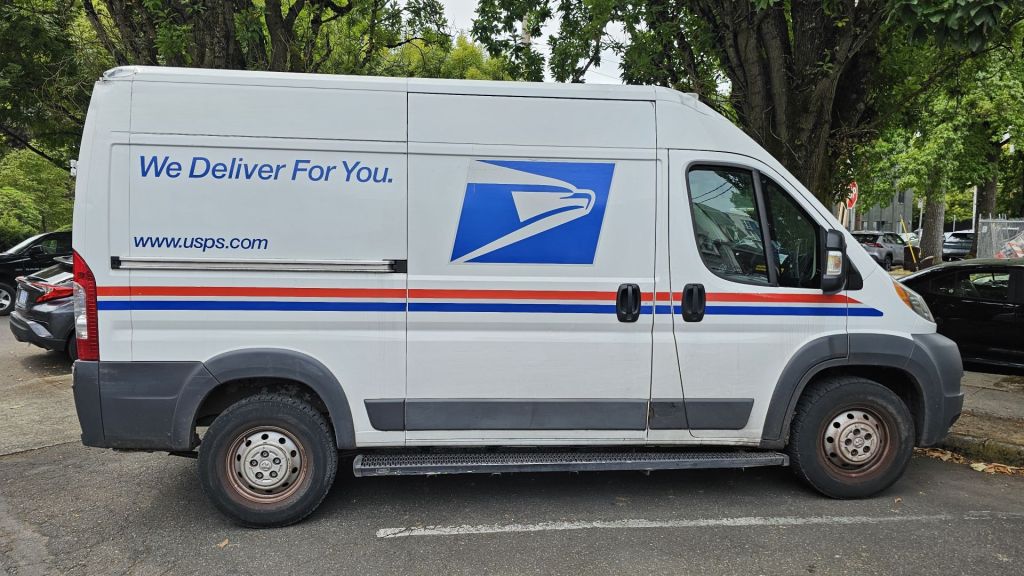
A modern USPS delivery van sits in a parking lot.

The U.S. Postal Service’s adjusted operating loss widened by $522 million to $1.6 billion for the fiscal year third quarter as expenses increased nearly 3% and first-class mail revenue fell $86 million on a 5.4% decline in volume.

The agency posted a net loss of $3.1 billion compared to $2.5 billion for the same quarter last year, according to the latest financial report. It previously projected a full-year loss of $6.9 billion after posting a rare net profit in the first quarter.

A highlight for the Postal Service was the 39.6% growth in volume for the new Ground Advantage budget product, which replaced first-class package services in 2023 and offers two-to-five day service standards for packages up to 70 pounds. Ground Advantage revenue increased 31% to $4.1 billion. During the first nine months of the fiscal year, Ground Advantage volumes were up 25.7% to 2.9 billion pieces.

Postmaster General David Steiner, who has been in his post for three weeks, told the board of governors on Thursday that Delivering for America, the 10-year modernization and cost-reduction strategy created by predecessor Louis DeJoy, is sound and just requires good execution to achieve its goals. 

“We will strive to align our costs to revenue on a consistent, long-term basis. To do so, prioritizing strategies to drive operational efficiencies and generate sustained revenue growth will be key,” he said. “Service improvement will be a top priority for me and the management team and we will remain committed to continuous improvement in our operational performance. Our recent transformation and modernization efforts have brought the Postal Service closer to private sector logistics practices. Both the pricing and product strategies have improved our competitiveness. We will continue to aggressively pursue those strategies, but we’ll need to do more to fully unlock the strong revenue growth for the long term.”  

Management said that first-class mail performance improved during the third quarter. The Postal Service delivered 90.6% of all first-class mail on time, up from 86.4%, with delivery taking an average of 2.6 days compared to 2.8 days during the same period last year. 

Non-cash workers’ compensation adjustments of $237 million, due to actuarial recalculations and other factors, contributed to the bigger net loss.

The Postal Service, which is celebrating its 250th anniversary, has lost more than $6.2 billion through the first nine months of the fiscal year, or $144 million more than last year for the same period. Many employee and retiree benefit costs are mandated by law and cannot be altered without legislative change, and some of these costs have historically increased at a higher rate than inflation, resulting in years of losses. 

Operating revenue was essentially flat year over year at $18.8 billion. Losses were $1.6 billion when excluding expenses not controllable by management. 

“America needs a financially strong Postal Service to continue to meet the needs of the nation far into the future. To restore our financial strength, we must continue to evolve amid a changing business environment so that we can provide high-quality service at a reasonable cost. Growing our revenue and cutting our costs to serve is the only path to financial health,” Steiner said in a news release accompanying the financial report.

Shipping and packages revenue increased $58 million, or 0.8%, despite a volume decline of 114 million pieces, or 6.5%, thanks to higher rates. Lower volumes are partly related to large customers like UPS insourcing last-mile delivery. Through three quarters, parcel volumes are down 4.6% year over year. Bulk advertising mail revenue decreased $29 million, less than 1%, even as volume increased 0.5%. First-Class mail revenue declined 1.4%, with price increases offsetting the full impact of the volume decline.

David Steiner (Photo: USPS)

In mid-July, the Postal Service raised prices for stamps and packages by about 7%, depending on the type of product. 

Mail volumes, representing first-Class mail and marketing mail, have declined 49% between 2007 and last September, the end of the 2024 fiscal year. Marketing mail has been challenged by commercial mailers’ increasing use of digital and mobile advertising and higher prices for print media production.

Inflation played a large role in operating expenses increasing by $613 million, year over year, to $22 billion, the Postal Service said. 

Transportation expenses were flat during the quarter and decreased 6.6% during the nine months ended June 30, as the agency reaps the benefits of its transformation plan.

A 5.8% increase in quarterly trucking expenses was offset by the decline in air cargo after the Postal Service shifted from FedEx to UPS as the primary provider of domestic air transport. The state-owned company shipped fewer packages and letters by air and reduced spending by 43% in the first three months after UPS took over a primary air cargo contract from FedEx, the Office of Inspector General recently reported

Air transportation expenses decreased 13.5% and 20% for the three and nine months ended June 30, primarily due to lower service standards enabling the Postal Service to shift more volume to less-expensive highway transportation, along with lower jet fuel prices.

Trucking costs increased in the third quarter as the postal operator relied more heavily on freight auctions, which offer more flexibility amid a major network realignment of processing centers  but also have a higher average rate per mile than contract rates. The decrease in highway costs for the nine-month period reflects how the streamlining effort has reduced facilities, which in turn has eliminated underutilized transportation trips and improved truck fill rates. The Postal Service said it is also benefiting from lower average diesel fuel prices compared to the prior year, and optimization of peak-season contracts. 

Keep US Posted, an advocacy group of nonprofits, newspapers, greeting card publishers and other interests, said the Postal Service’s losses demonstrate the Delivering for America plan needs a major correction. 

“Today’s financial results provide even more proof that new Postmaster General David Steiner needs to lead the U.S. Postal Service away from DeJoy’s ‘tax and spend’ strategy. Steiner should take the losses as an opportunity for meaningful change, and discard massive and frequent rate hikes, service reductions and the prioritization of packages over mail,” the group said in a statement.

Amber McReynolds, chair of the board of governors, urged policymakers to address the systemic financial imbalances — constrained liquidity, inflexible pension and benefit frameworks, a statutory debt ceiling, and an outdated workman’s compensation system — that impede the Postal Service from operating more nimbly and profitably. 

The board of governors has five members and four vacancies. Governor Roman Martinez urged President Donald Trump to nominate more individuals to serve on the board so it can properly handle its duties. 

Trump withdrew his nomination of John LaValle, who previously served as White House liaison to the Energy Department, on Aug. 1. He has also nominated waste and recycling executive Anthony Lomangino to serve on the Postal Service board.  

Click here for more FreightWaves/American Shipper stories by Eric Kulisch.

Is Canada Post too big to fail?

New US postmaster faces heavy lift stabilizing finances

USPS hikes parcel rates and stamps by 7%

CO.LAB calls for startups in Sustainable Mobility Accelerator program

Photo of Chattanooga, Tennessee

CHATTANOOGA, Tenn. — The Company Lab (CO.LAB) recently announced it is looking for its next cohort of companies to become part of its Sustainable Mobility Accelerator program.

The program runs for six weeks, during which participants work in-market, focusing on customer acquisition strategies and pilot implementations. While relocating permanently to Chattanooga isn’t required, several past participants have established operations in the city after completing the program.

Tasia Malakasis, CEO of CO.LAB, spoke with FreightWaves about the company’s 16-year history of helping startups scale through its unique accelerator program.

The accelerator, part of CO.LAB’s 16-year history of supporting entrepreneurship, now focuses specifically on mobility innovation, capitalizing on Chattanooga’s unique freight ecosystem where an estimated 85% of the nation’s goods pass through its highways.

“About three years ago, we made the decision to focus on what we believe very strongly is the competitive advantage for this region,” Malakasis told FreightWaves. “The way we define sustainable mobility is the future-forward movement of people, goods, energy and data.”

What distinguishes CO.LAB from traditional accelerators is its corporate matching approach. “The differentiator for this program hinges on the fact that we don’t accept a team into our program unless we can match them with a corporate partner for potential pilot or first-class customer opportunities,” Malakasis explained.

“The difference is we’re going to get you into a market and help you scale, meaning we’re making those customer connections and getting you here for a pilot. So, it’s a very different model, and I think that’s one that’s incredibly distinctive and very supportive for a startup,” added Malakasis.

Chattanooga is known as the “Silicon Valley of Freight,” a moniker given by Revolution founder Steve Case due in part to its unique concentration of freight, technology and supply chain companies.

The city ranks first in the nation among all metropolitan cities regarding the volume of freight moving through it by truck, according to a study by Cambridge Systematics. Through this “Freight Alley,” it is estimated that over 80% of all U.S. freight travels through Chattanooga due in part to the convergence of three Interstates – I-75, I-24 and I-59.

For CO.LAB, this concentration of industry expertise and freight has created fertile ground for mobility startups seeking to connect with established companies. Another benefit is the intersection of energy and telecommunications infrastructure via the Tennessee Valley Authority and EPB, Chattanooga’s electric power board.

Through EPB’s gig-speed and quantum-enabled grid, the city is home to the country’s first commercial quantum network. That infrastructure hosts the nation’s largest urban testbed for connected vehicle infrastructure, with 120 smart intersections spread across the city. These intersections contain advanced technology being tested through research initiatives at the University of Tennessee at Chattanooga.

CO.LAB’s ultimate vision is to establish Chattanooga as one of the top destinations for mobility innovation in the United States.

For this latest cohort, CO.LAB is looking for startups with traction (post-revenue or in-market pilots) in these specific areas:

  • Connected & Autonomous Vehicles (CAVs)
  • Supply Chain, Logistics & Freight Tech
  • Smart Infrastructure & Intelligent Traffic Systems
  • EVs, Charging, Battery Tech & Grid Optimization
  • AI/IoT for Urban Mobility & Infrastructure
  • Micromobility & Mobility-as-a-Service (MaaS)
  • Mobility Data & Predictive Analytics

To apply, visit https://thecompanylab.org/sustainable-mobility-accelerator/

Trade expert predicts 200% surge in tariff-fraud crackdowns

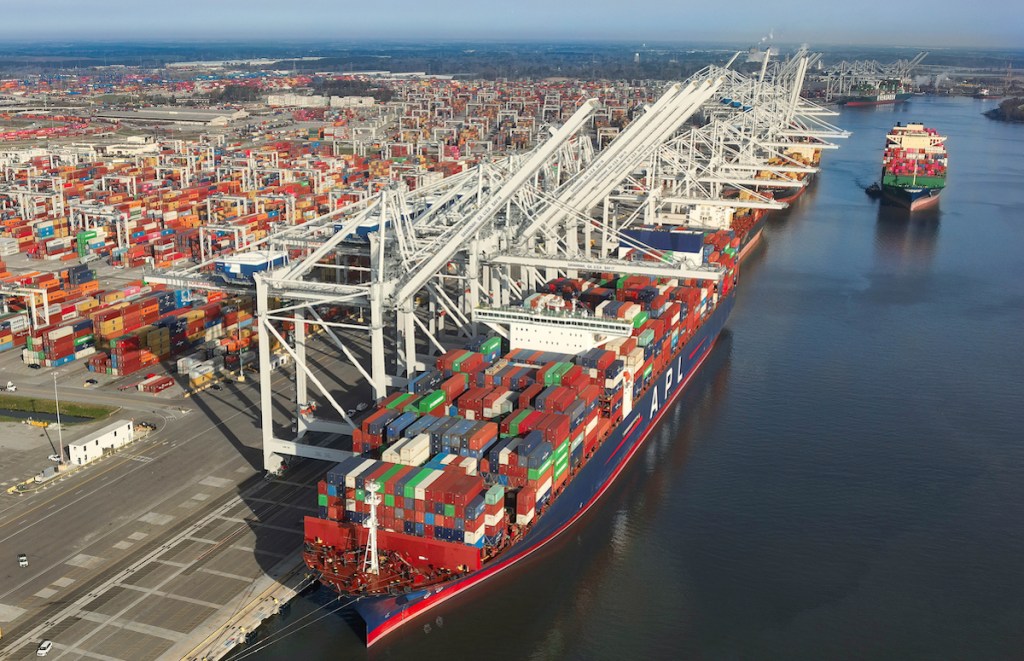
Container ship at port

As another round of tariffs kicked into gear on Thursday, trade expert Rennie Alston warned importers that regulators will be doubling down on ensuring that the growing list of tariffs imposed by the Trump administration are properly paid.

“Today every importer is paying more tariffs than they did prior to 12:01am this morning -– it’s challenging to stay abreast of them,” Alston, CEO of customs consultant Alston Group, told attendees at a supply chain summit hosted by Jarrett, a 3PL. 

Alston speaking at Jarrett’s supply chain summit Thursday. (Photo: Jarrett)

Alston was referring to the latest slate of tariffs the administration announced last week that went into effect on Thursday. Along with those and previous tariffs, Alston said, has come a level of compliance scrutiny from the government – specifically the U.S. Department of Justice (DOJ) – that he has not seen before.

“What is new, over the last year, is direct communications from the Department of Justice on issues in which the [customs compliance] matter is referred from customs to the Department of Justice for immediate enforcement action.”

Alston, a licensed customs broker and an advisor to the administration as a member of U.S. Customs and Border Protection’s Commercial Customs Operations Advisory Committee, said that CPB is more closely scrutinizing import documents to check for accurate information on merchandise value, origin country, or whether importers are disguising the country of origin through transshipments.

“Circumvention of tariffs in my professional opinion will be the number one revenue generating penalty that supersedes valuation and record keeping [penalties], which had been the number one and two [penalty categories] over the last 20 years,” Alston said.

“I anticipate that Department of Justice activity is going to increase by 200% as a result of tariffs and the reaction of the trade community.”

Kirti Reddy, a partner with the law firm Quarles & Brady, told FreightWaves earlier this year that the speed and size of the new taxes on America’s trading partners would likely generate a higher number of cases prosecuted under the False Claims Act.

“Especially with the tariffs being so steep, companies and individuals might be inclined to figure out how they’re going to meet their costs” by circumventing compliance, she said.

One such evasion tactic “evolving right before our eyes,” Alston said, is Modified Delivery Duty Paid, or MDDP – “a blatant scam” from CBP’s perspective, he said.

“It is where a company talks you into allowing someone else to be the importer of record, and the foreign supplier says, ‘don’t worry about the entry, I’ll be the importer, you just keep buying from me and don’t worry about what I declare to customs’.”

This is fraud, Alson warned, emphasizing the responsibilities of all involved in the transaction no matter whose name was on the fraudulent declaration.

Customs brokers can help importers understand the ramifications of misinterpretations on customs documents, he said, because CPB takes the position that such compliance errors are intentional.

“Understand that your actions are critical to your company’s ability to sustain itself, because penalties could be far beyond the value of the merchandise.”

Click for more FreightWaves articles by John Gallagher.

Opposing strategies put brokerages on top

The recent earnings reports from C.H. Robinson and RXO provide a unique look into how two prominent players in the freight brokerage industry are navigating a challenging market. While both companies have faced similar market conditions, each has adopted unique strategies that reflect different priorities and approaches to maintaining profitability and growth.

C.H. Robinson reported a boost in profitability despite a drop in total revenue, attributed to the divestiture of its European Surface Transportation business. Their adjusted operating margin saw a notable increase, rising to 31.1%, a significant leap from earlier periods. Additionally, productivity gains have been significant at C.H. Robinson, as evidenced by an 11.2% reduction in headcount while maintaining a steady revenue stream. C.H. Robinson remains focused on increasing efficiency and effectiveness through a leaner workforce and the implementation of advanced technologies, such as agentic AI.

On the other hand, RXO has embraced a growth-oriented strategy, particularly evident in its Less-Than-Truckload (LTL) operations. While their revenue experienced a noteworthy increase compared to the previous year, RXO’s gross margins declined slightly from 19% to 17.8%. Despite the compression in margins, RXO’s decision to invest heavily in its LTL segment has paid off, with volume growth soaring by 45% year over year

This strategic focus on LTL is seen as a key driver for their future profitability due to its stable EBITDA contributions across market cycles. RXO has successfully leveraged technology to improve productivity and reduce costs, aligning with its overarching strategy to scale profitably.

When directly comparing the performance of the two companies, each showcases distinct strengths in particular areas. C.H. Robinson has excelled in maintaining profitability by reducing personnel costs and maintaining a sharp focus on technology to navigate the freight market. On the other hand, RXO’s strategy has been characterized by aggressive growth in specific segments and has shown an ability to adapt rapidly to new market opportunities, as seen in their expanding LTL business.

Both companies have emphasized the role of technology in gaining a competitive edge, yet their implementations differ. C.H. Robinson continues to capitalize on its tech stack to differentiate itself in the marketplace. By doing so, it manages to weather market fluctuations while enhancing productivity internally and externally. 

Meanwhile, RXO pursues technological integration through acquisitions, such as the merger with Coyote Logistics, to streamline operations and gain efficiency, which has enabled them to improve brokerage margins incrementally despite a tough market.

The opposite approaches offer lessons in resilience during uncertain economic times. C.H. Robinson’s focus on internal productivity and efficiency contrasts with RXO’s strategy of expansion and technological integration for scaling operations. 

Both paths have yielded tangible benefits, but the overall success will depend largely on how these strategies align with future market conditions.

Leadership perspectives have become the North Star for each company’s future guidance. At C.H. Robinson, CEO Dave Bozeman has been leading through a phase of consolidation, emphasizing a disciplined reduction in headcount without compromising operational capabilities. This positions C.H. Robinson to potentially capitalize quickly on any market upturn. 

RXO’s Drew Wilkerson, on the other hand, is navigating the company through a period of expansion, particularly in sectors like LTL that he believes could offer sustained growth and less volatility compared to traditional freight segments.

Both companies are giants in the 3PL and freight broker industry. They represent a broader picture of what others in the space are dealing with, just without the over $1 billion in revenue on a balance sheet. 

Q2 earnings season has continually shown that those getting creative with solving problems, adopting new technology, and focusing on efficiency remain at the head of the pack. 

Savannah containers post best FY since pandemic

The Georgia Ports Authority moved 5.7 million twenty foot equivalent container units (TEUs) in fiscal year 2025, an increase of 8.6% or 450,000 TEUs compared to the previous fiscal year.

The fiscal period ending June 30 was the Port of Savannah’s second-busiest year on record, after the pandemic year of FY2022, when GPA handled 5.76 million TEUs.

“Georgia Ports continues to grow U.S. East Coast market share and with the shifting trade patterns in Asia and  India, that bodes well for our future,” said Griff Lynch, president and chief executive of Georgia Ports, in a release.  

Savannah’s volume grew at a 4.5% compound annual growth rate for fiscal year-to-date compared to 2016, ahead of the 2.7% increase for the entire U.S. container port market.

Savannah moved 410,400 TEUs in June as GPA terminals averaged more than 475,000 TEUs per month in the fiscal year. March, April and May each totaled more than 500,000 TEUs.

The Port of Brunswick ro-ro hub handled 870,775 units of autos and heavy equipment in FY2025, unchanged from the record 2024 fiscal year.

The authority will start construction in the current fiscal year on the new $100 million Colonels Island Berth 4, slated to open in 2027.

In the past decade, Georgia ports have completed $3.2 billion in infrastructure projects and over the next ten years, GPA plans to invest another $4.5 billion in capacity improvements, including five big ship berths in the next eight years. Two big ship berths are currently being upgraded in Ocean Terminal, and will be ready 2027-2028. Three big ship berths are planned for Savannah Container Terminal from 2030-2034.

In fiscal 2025, GPA completed $470 million in projects, including:

  • Brunswick: Roll-on/Roll-off expansion that added 640,000 square feet of warehousing in support of processing autos and heavy equipment, and 122 acres of ro/ro storage.
  • Savannah: Garden City Terminal Warehouse to streamline Customs  inspections by doubling warehouse space and expanding refrigerated cargo capabilities.
  • Savannah: Eight new ship-to-shore cranes, the largest on the U.S. East Coast.

Also in fiscal year 2025, the GPA Board approved an additional $472 million for new projects, including:

  • Brunswick: Colonels Island Southside Rail Phase 1
    • Doubles rail capacity from five to 10 trains per week. Increases port’s annual rail capacity from 150,000 autos to more than 340,000.
  • Brunswick: Colonels Island Berth 4
    • Adding a fourth berth for ro/ro cargo to meet growing demand.
  • Savannah: Ocean Terminal Redevelopment
  • Will add annual capacity of 1.5 million TEUs, and a highway overpass to Route 17, designed to keep terminal truck traffic from impacting local neighborhoods.

Find more articles by Stuart Chirls here.

Related coverage:

Maersk raises guidance on higher Q2 volumes 

Container rates unmoved by latest tariff deadline

Shipbuilder sued by owner, operator of ship in deadly Baltimore bridge collapse 

China trade fight weakens Matson earnings

LTL proving to be big growth engine at RXO

In a freight market that is not offering any help to its truckload operations, 3PL RXO Inc. has found a short-term savior: its growing LTL business.

In a quarterly earnings report that on major financial numbers reflected the reality of the ongoing freight recession, RXO executives in their earnings call with analysts boasted of the big gains it is making in its push to grow LTL activities on both an outright basis and as a percentage of the company’s total operations.

RXO’s (NYSE: RXO) overall brokerage volume growth was up 1% year over year, which CEO Drew Wilkerson noted still exceeded the Cass Freight Index, which contracted more than 3% for the quarter.

But for RXO, its LTL brokerage volume was up by 45% year-on-year, and it follows a 26% growth in the first quarter.

“We continue to win in this area because we make LTL shipping easy for our customers,” Wilkerson said.

The CEO said RXO has made a push in its LTL operations by investing in “cutting edge technology that improves productivity and reduces costs for our team while giving LTL customers complete visibility.”

Wilkerson said RXO has relationships with “nearly all the LTL providers in North America.”

“Growing our LTL business is a key part of our company strategy, because it provides a stable source of EBITDA with strong margins across market cycles,” he said.

In his comments on the call, Jared Weisfeld, RXO’s chief strategy officer, said LTL activities were 32% of all brokerage volume in the second quarter. That was up 1,000 basis points from a year ago, he said, and was the highest level in RXO history.

Not surprisingly, when phone lines were open to questions from analysts, one of the first was about the ongoing trend of LTL being a growing share of the RXO business.

Wilkerson said the change grows out of “the relationships we have on the truckload side. These are customers who have been with us a really long time, and they’re large customers, and they come to us and they say, LTL is a small piece of our overall transportation spend. I’m working with a few of the national players, but I’m having to go into different platforms, and I’m having to look for claims, lost shipments, damages, all of those things.”

Familiarity with RXO platform a key plus

But Wilkerson said since these customers are familiar with RXO and in particular its online platform RXO Connect, they see that as a logical step to move some of their LTL business–which might be a small percent of their overall freight spend–onto that platform. 

“They think if we can put everything on RXO Connect and now we can start capitalizing on some of the capacity from the regional players as well, this can be something that gives us better visibility,” he said.

Wilkerson also drove home the message that the latest numbers are not an aberration. “LTL is going to be part of our growth story for a long time,” he said. “We’re just getting started.

He reviewed the company’s data. LTL volume recently had been just about 10% of overall brokerage volume. It’s now more than 30%. “I want that volume to get up over 50%,” he said.

What he described as the inherent stability of LTL relative to truckload “adds to margins.” Gross profit per load, according to Wilkerson, “doesn’t have the volatility that truckload does. So it’s good stable EBITDA for us as a book of business.”

Wilkerson brought in an unusual benchmark for the LTL business: the price of a candy bar. Snickers, in particular. 

The Snickers analogy

An analyst noted that despite the excitement about LTL, its gross profit per load has moved down slightly in recent months, according to a table in RXO’s presentation. The size of the gross profit per load was not disclosed, but the graphic on its movement showed LTL brokerage volume at RXO soaring and gross profit moving down slightly in the last two quarters.

“I don’t think you can walk outside of your office in New York and buy a Snickers bar for how little gross profit per load is down whenever you look at it sequentially,” Wilkerson said.

(The author of this article, not having bought a Snickers bar in New York recently despite residing a train ride away from Manhattan, is unaware of how much it costs. But you can buy a box of 40 of them on Amazon for $51.90 before any shipping or taxes. You can also do the math).

But that is a positive, Wilkerson said. “That’s the beauty of the LTL business,” he said. The RXO chart showing little change in the gross profit per load shows that “it is very, very stable on what it does.”

Some of the RXO LTL business that it has recently onboarded, Wilkerson said, has been for relatively short length of haul distances. “So that means your revenue per load comes down, and therefore the gross profit per load is a little bit lower on those, but it’s still a good margin percentage,” he said. “It’s highly automated and accretive.”

Among other key points made on the call:

–With the completion of merging the technologies of both RXO and the legacy Coyote Logistics brokerage–acquired by RXO in the third quarter of last year–efficiencies are starting to develop in many areas. Weisfeld said the company’s “buy rate”–what it pays to secure capacity–has improved by about 30 to 50 basis points “in a period where rates were inflationary. So that yield is a significant cost avoidance.”

–Truckload brokerage volume declined 12% year on year, Wilkerson said. But he said truckload gross margin was 14.4% in the quarter, which was above the midpoint of the company’s projections. Gross profit per load in truckload was up 7% sequentially, which Wilkerson said was the strongest sequential increase at RXO in three years. It is expected to rise in the third quarter as well. Technology enhancements and the productivity gains that go along with that are the primary drivers of that improvement, he added.

Weisfeld said a slowdown in automotive activity accounted for about 25% of the decline in truckload brokerage volume. “RXO is uniquely exposed to the current automotive headwinds,” he said.  

–The split between contract and spot business at RXO was 73% for contract and 27% for spot. “We continue to operate in a prolonged soft freight environment with minimal spot opportunities,” Weisfeld said. 

More articles by John Kingston

In brief comments, Trimble CEO introduces new product for matching capacity with shippers

At C.H. Robinson, improved profitability, productivity and a lot fewer workers

Each driver’s payout in Lytx Illinois biometrics case will be between about $650 and $850