SONAR Unveils Redesigned Supply Chain Intelligence Platform with New Risk and Efficiency Quadrant

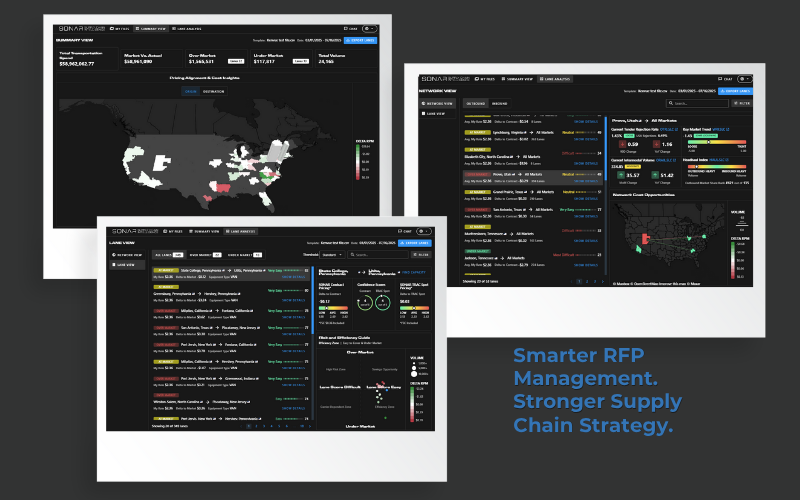
A completely redesigned experience for SONAR’s Supply Chain Intelligence (SCI) has been launched allowing SCI to deliver faster insights, deeper market intelligence, and more actionable guidance for shippers managing their RFPs.

The updated platform merges the previous Opportunity View and List View into a single, powerful page called Lane View. This consolidation allows users to drill into lane-level insights efficiently, see market performance across both Intermodal and Truckload, and access pricing benchmarks, guidance, and scoring within one streamlined interface.

Embedded in the new Lane View is a quadrant-based guidance system for risk and efficiency. This feature helps prioritize RFP strategy by categorizing lanes into four zones:

  • High Risk Zone: Lanes that are difficult to cover and where you are over market.
  • Carrier Dependent Zone: Lanes that are difficult to cover and where you are under market.
  • Savings Opportunity: Lanes that are easy to cover where you are over market.
  • Efficiency Zone: Top-performing lanes where you are under market and lanes are easy to cover.

These zones highlight where to focus time, renegotiate, or reallocate volume.

Additionally, the update introduces enhanced Summary and Network Views for sharper high-level visibility. Users can better understand where they are overpaying or underpaying across their network with clearer visuals and aggregated scoring. New market-level maps and improved filters help spot areas of concern or opportunity and enable faster diagnostics. The new SCI helps unlock greater RFP savings and lane performance with smarter, visual prioritization, allowing users to reduce risk, boost service, and easily spot network inefficiencies.

To explore the redesigned experience, log in to SONAR and navigate to the SCI module. For a personalized walkthrough, contact your account manager or cs@gosonar.com.  To learn more about SONAR, visit gosonar.com and request a demo.

ArcBest CEO Judy McReynolds to retire

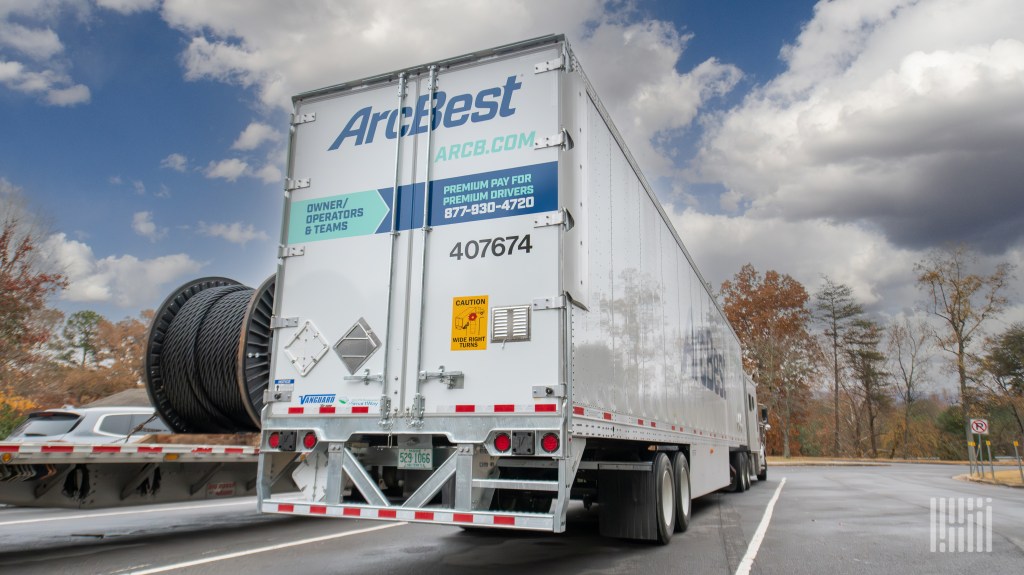
ARCB Rearview of an ArcBest trailer at a truckstop

Trucking and logistics provider ArcBest announced that CEO Judy McReynolds will retire at the end of the year, with company President Seth Runser set to succeed her on Jan. 1. McReynolds will continue to serve as the company’s chairman after the transition.

“Since her appointment as CEO in 2010, Judy has led ArcBest through transformative change, delivering outstanding results and building a strong foundation for the future,” said Steven Spinner, the board’s lead independent director, in a Thursday news release.

McReynolds has served at ArcBest (NASDAQ: ARCB) for 28 years and was tapped to lead the company in 2010. She’s credited with executing five acquisitions, navigating major industry disruptions and advancing several innovations, like the company’s material handling offering, Vaux.

During her tenure, ArcBest’s annual revenue has more than doubled to $4 billion and its adjusted earnings before interest, taxes, depreciation and amortization has grown to over $300 million. The company has also transitioned from being a predominantly asset-based, less-than-truckload carrier to a full-service trucking and asset-light logistics provider over than time.

McReynolds was elected as the company’s chairman in 2016.

“It has been a tremendous honor to lead ArcBest and work alongside such a talented and committed team,” McReynolds said. “Seth has played a pivotal role in ArcBest’s evolution into a leading integrated logistics company, helping to deliver record results while steering the team through unprecedented change. I have complete confidence in his leadership and ArcBest’s continued success.”

Photo: Judy McReynolds and Seth Runser (Credit: ArcBest)

Runser will continue in his role as president and will also become a member of the board at the beginning of the year.

He’s been with the company for 18 years, starting as a management trainee and holding various leadership roles since. He was tapped to lead LTL subsidiary, ABF Freight, in 2021 and became ArcBest’s president in August 2024.

“Over the past 18 years, Seth has consistently demonstrated exceptional leadership and achieved strong results,” Spinner said. “His strategic insight and operational expertise have been instrumental in fostering innovation and advancing ArcBest’s customer-centric approach as a leading logistics partner.”

The announcement caps several recent leadership changes at ArcBest.

In May, ArcBest announced former C.H. Robinson (NASDAQ: CHRW) brokerage head Mac Pinkerton will join the company on Jan. 5 to lead operations at its struggling asset-light logistics business.

ArcBest announced 30-year company veteran Eddie Sorg as its new chief commercial officer at the beginning of the year.

Matt Godfrey succeeded Runser as president of ABF last August.

“Judy has shaped ArcBest’s culture and championed the customer-led approach that defines who we are today and uniquely positions us to serve our customers using various modes of transportation across our integrated suite of solutions,” Runser said. … “I am committed to carrying that legacy forward and leading ArcBest into the future.”

More FreightWaves articles by Todd Maiden:

Report: Investment firm advising Union Pacific on potential rail merger

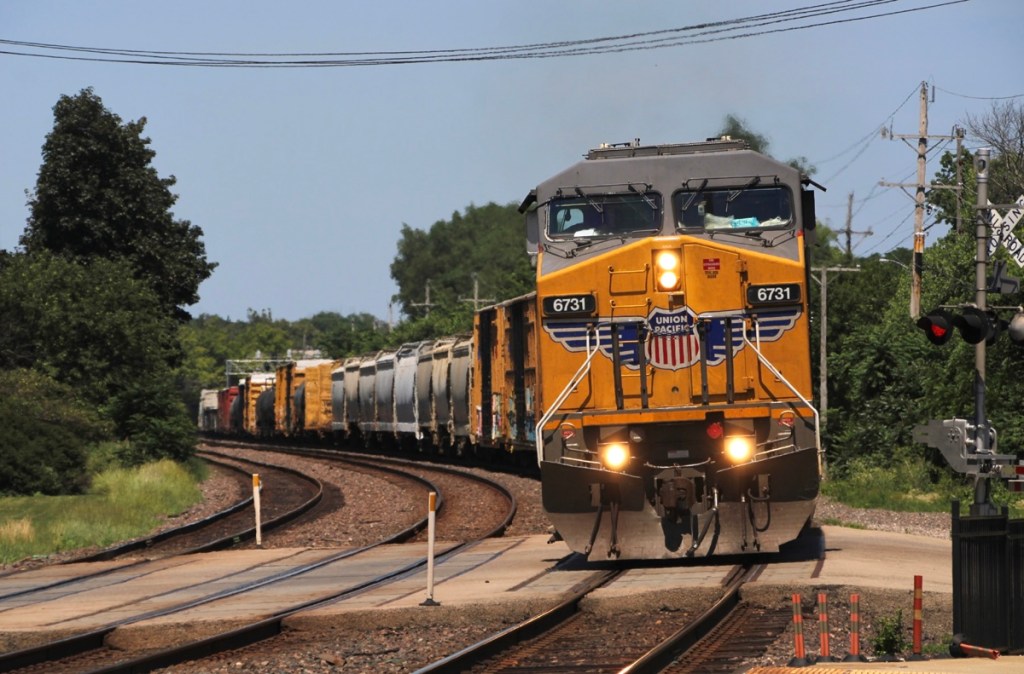
Union Pacific is working with Morgan Stanley investment bankers to provide guidance on the potential acquisition of another Class I railroad, the online publication Semafor reported on Wednesday, citing people familiar with the matter.

Union Pacific (NYSE: UNP) and Morgan Stanley (NYSE: MS) declined to comment to the media outlet. CSX and Norfolk Southern stock prices surged on the news, while UP’s declined.

Union Pacific Chief Executive Jim Vena has touted the potential benefits of a transcontinental merger while acknowledging the regulatory obstacles to any deal.

The Surface Transportation Board adopted more rigorous merger review rules in 2001 after rapid consolidation in the industry during the 1990s, including the Burlington Northern-Santa Fe and Union Pacific-Southern Pacific mergers as well as the CSX (NASDAQ: CSX)-Norfolk Southern (NYSE: NSC) deal to carve up Conrail.

The 2001 review rules — which require a merger to enhance competition and be in the public interest — remain untested. The 2023 merger of Canadian Pacific (NYSE: CP) and Kansas City Southern was judged under the old merger rules thanks to an exemption that was granted to KCS, the smallest Class I, in the 2001 rules.

The STB is currently split along party lines, with two Republicans and two Democrats on the board. Analysts don’t expect a third Republican member to be nominated and confirmed before 2026. And if two Class I railroads were to propose a merger, analysts say any deal would not be hatched until after a third Republican is seated on the board.

Subscribe to FreightWaves’ Rail e-newsletter and get the latest insights on rail freight right in your inbox.

Related coverage:

BNSF, UP settle dispute over Salt Lake City intermodal service

Washington rail short lines on Jaguar buy list

BNSF launches new expedited LA-Houston intermodal service

CSX cuts dozens of management jobs

New US postmaster general faces heavy lift stabilizing finances

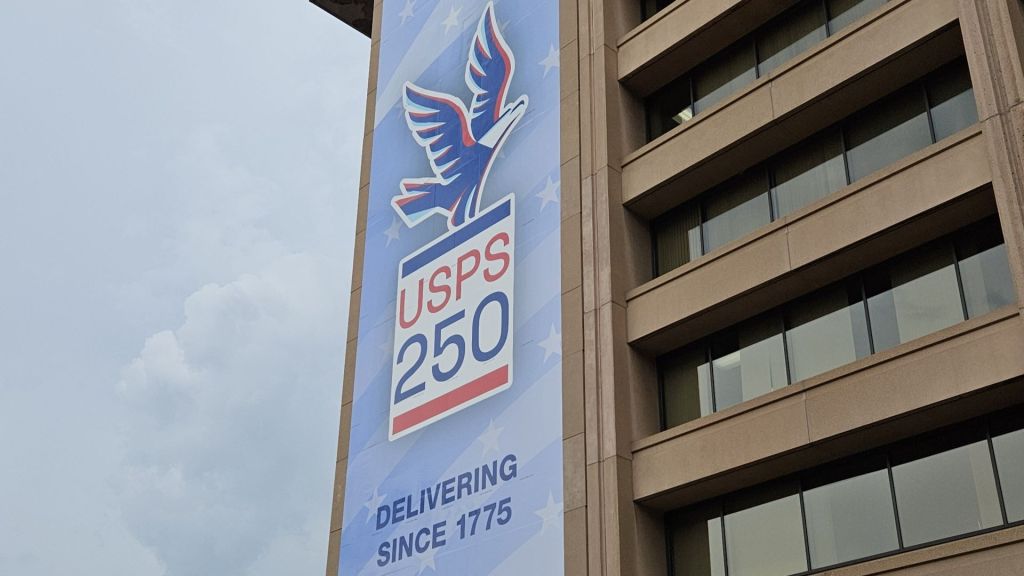
Large blue sign on side of a high-rise building, with the USPS eagle to celebrate the USPS's 250th anniversary.

David Steiner officially took the helm of the U.S. Postal Service on Tuesday amid calls to pull the plug on his predecessor’s restructuring plan and concerns in some quarters that his previous role at FedEx could motivate outsourcing of parcel delivery.

Steiner inherits an agency with 533,000 employees that deliver 112.5 billion pieces of mail each year. Among the challenges he faces are a righting an organization that persistently bleeds red ink, including a projected $6.9 billion loss for the current fiscal year, and degraded service related to network downsizing. 

The mail system’s board of governors voted on July 8 to appoint Steiner, 65, as the 76th postmaster general after announcing in early May that he was the preferred choice, pending background and ethics checks. The Postal Service disclosed the vote result in a document filed with the Securities and Exchange Commission, but did not issue a news release about the vote or his first day on the job.

Steiner is the highest paid chief executive in the agency’s history, with a salary of $346,780, according to a separate regulatory filing. The board also gave Steiner a relocation bonus worth 50% of his salary. His total first-year compensation, not including other benefits, is more than $520,000.

Predecessor Louis DeJoy was making $336,399 before being forced out of office by the White House in March. His total compensation, including perks and bonuses, was $561,000.  

Douglas Tulino, who served as acting postmaster general since DeJoy’s March 24 departure, has returned to his prior role as deputy postmaster general. The board in May raised his salary to $342,280 and granted him a $100,000 retention bonus. 

The president of the United States only makes $400,000 per year and the vice president is paid $253,500, but Steiner and Tulino’s salaries are much smaller than they could earn in the private sector for similar roles. 

Some postal unions and other groups have expressed concern that Steiner has a conflict of interest because FedEx is a Postal Service vendor and competitor. Their chief concern is that Steiner could support calls for greater outsourcing, or even privatizing the parcel business. House Democrats, for their part, have questioned whether Steiner would fight to maintain the postal operator’s independence as President Donald Trump centralizes more government power in the White House.

Trade associations representing non-profit and advertising mailers, as well as large parcel shippers, have called on Steiner to scrap DeJoy’s 10-year turnaround plan aimed at reducing structural costs and improving delivery service. They argue that financial losses have continued and that service has deteriorated.

Steiner lays out agenda

In a letter to employees on Thursday, Steiner said his priorities include continuing service improvement, operating in a financially self-sustaining manner, and strengthening the Postal Service’s reputation, brand and culture. 

“I am convinced that a strength of the Postal Service resides in our structure as a self-financing independent entity of the executive branch, functioning much like a business but with a public service mission. I am confident that we will be able to demonstrate that the Postal Service can operate successfully under this structure in meeting the financial and service performance expectations of the nation, and in so doing justify and preserve our independence far into the future.

“While I certainly bring the perspective of an outsider, I know the Postal Service well enough to see that there is much to build upon in the years ahead. Recent transformation and modernization efforts have brought the Postal Service substantially closer to private sector logistics practices, and pricing and product strategies have improved competitiveness. Fully realizing the potential of this progress will be a priority,” he wrote.

Large mailers also want Steiner to put the brakes on price increases for stamps and parcel service. DeJoy’s “Delivering for America” plan focused on raising revenues, in addition to cutting costs. The average price of various Postal Service products increased 7% on Tuesday. Since 2021, the Postal Service has increased the price of a first-class stamp seven times, but critics say price hikes have driven away customers and resulted in less revenue. 

If such escalations continue, the price of a single stamp could be $1.19 by 2030, Keep US Posted — which represents nonprofits, newspapers, greeting card publishers, magazines, catalogs, forestry and recycling interests, and small businesses — said in a letter to Steiner dated July 3. 

The U.S. Postal Service has recorded net losses in 18 of the past 20 years because of regulatory handcuffs that limit financial and operational options, and declining mail volumes as customers shift to digital communications. Congress in 2022 relieved the Postal Service from the burden of pre-funding retirement benefits decades in advance. 

“The Delivering for America plan has not only disrupted the lives of millions of Americans, many of whom rely on the mail for essential communication, but it has also eroded public trust in the institution by jeopardizing the Postal Service’s ability to fulfill its mandate of universal service. Postage increases and service delays also add to the burdens facing individuals and businesses, especially at a time when many are facing economic challenges and depend on an affordable, reliable Postal Service,” Keep US Posted Executive Director Kevin Yoder wrote to Steiner.
(This story was updated at 4 p.m. ET)

Click here for more FreightWaves/American Shipper stories by Eric Kulisch.

Write to Eric Kulisch at ekulisch@freightwaves.com.

RELATED STORIES:

USPS hikes parcel rates and stamps by 7%

US parcel market to grow 36% by 2039, Pitney Bowes says

Postal Service board names FedEx official as CEO before vetting complete

Accounting change, higher labor costs drive $3.3B Postal Service loss

ATRI report examines evolving truck driver demographics

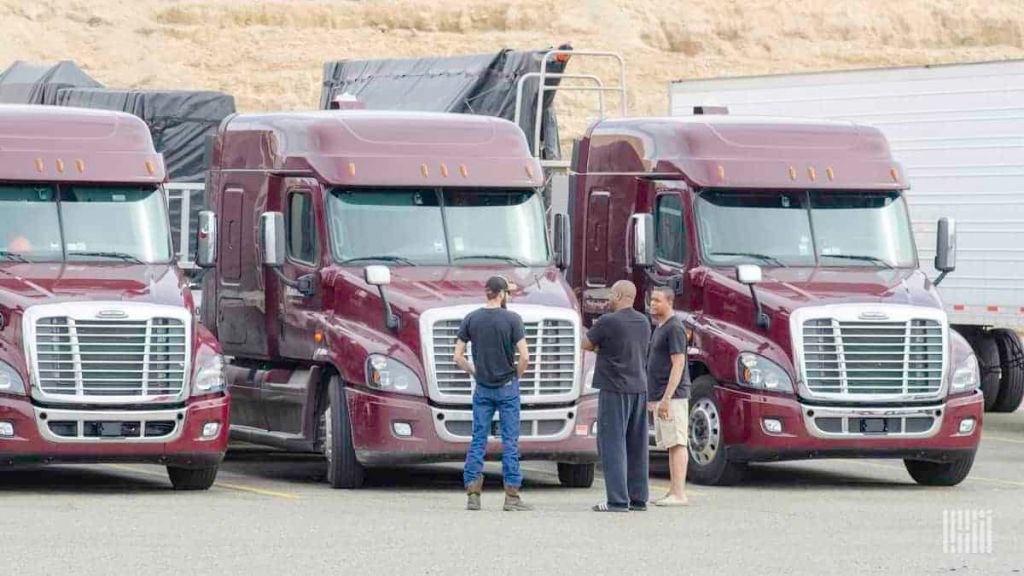
truck drivers talking in front of trucks at a truck stop

A new report from the American Transportation Research Institute (ATRI), released Tuesday, looks at two decades of changes in truck driver demographics to identify untapped recruitment pathways, as fleets grapple with turnover and hiring hurdles. The report, titled “Evolving Truck Driver Demographics: Issues and Opportunities,” pulls data from government sources, historical surveys and a fresh 2024 ATRI poll of 1,242 drivers.

Key findings show an aging workforce, with the average driver age rising from 42 in 1995 to 47 in 2024, driven by baby boomer retirements and fewer young entrants. ATRI notes opportunities to attract millennials and Gen Z through youth training programs and by recruiting from other transportation roles. Barriers to both generations include declining teen licensing rates that may deter CDL applicants.

Gender disparities remain. While women make up 47.1% of the total labor force, they comprise just 8% of truck drivers in 2024, up from 4% in 1995 but stagnant in recent years. Of female CDL holders, just 37% possess a Class A CDL, required for over-the-road trucking.

The report recommends targeting women in non-driving trucking jobs or those holding Class B and C licenses, alongside family-friendly policies to support later-life entrants and those with dependents.

Racial diversity has improved since 2014. People of color now constitute 37% of drivers versus 28% of the broader workforce, though white drivers still dominate at 63%. Breaking down the details, white drivers fell 14 percentage points from 77% in 2014 to 63% in 2023. Black, Hispanic and Asian drivers saw growth. Black drivers rose from 15% to 23%, Hispanic drivers grew from 19% to 23%, and Asian drivers rose from 2% to 4%.

Employment classifications show a surge in owner-operators and independent contractors, growing 67% since 2003 to over 500,000 — a potential headwind exacerbating for-hire fleet shortages.

ATRI suggests adjusting recruitment based on these trends, including boosting women in independent roles. Education levels among drivers lag the general labor force, with only 6% holding bachelor’s degrees, but rising credentials signal potential for targeted upskilling.

Looking ahead, the report explores underrepresented pathways, including former foster youth and justice-involved individuals. Foster alumni, numbering 437,000 annually aging out, often lack support but find trucking’s independence appealing. ATRI recommends job fairs, mentorship and scholarships. For justice-involved people — 70 million with records — a survey of 112 carriers shows 75% hire those with misdemeanors after five years, but violent felonies remain barriers.

Opportunities include pre-release CDL training, second-chance policies and tax credits like the Work Opportunity Tax Credit to reduce recidivism and fill gaps. Overall, ATRI emphasizes that demographic insights can help adjust driver recruitment strategies to lower turnover (averaging 94% in long-haul).

June preliminary net trailer orders surge

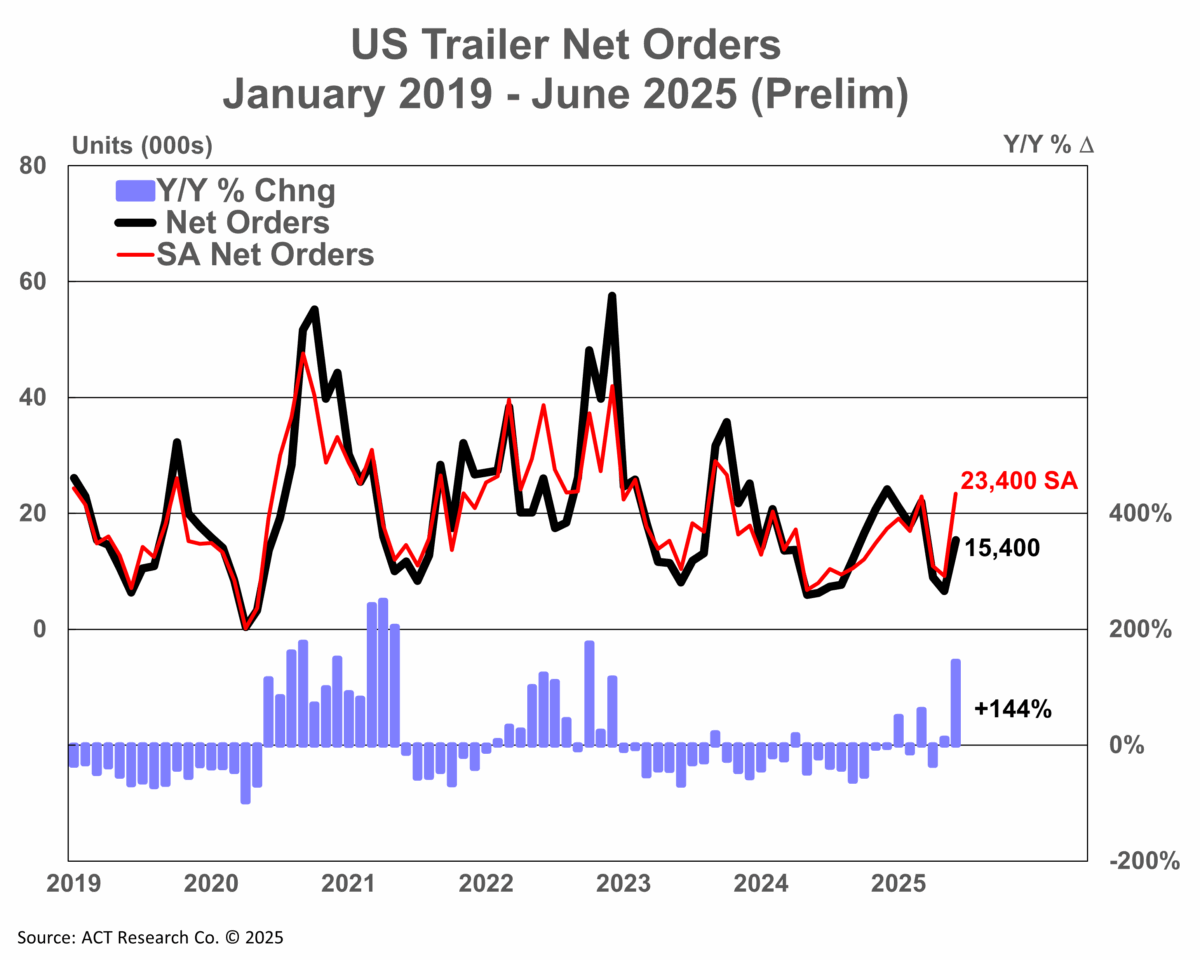
ACT Research recently released its June preliminary net trailer orders which showed an increase of 8,800 units from May to June. The 133% month-over-month increase was paired with a 144% higher order intake at 15,400 units compared to June 2024.

“Lower June net order intake was expected, as it is one of the weaker order months of the annual cycle, so June data surprised to the upside. That said, OEMs have been sharing for the past several months that amid the lower order placements, they have seen a flurry of quotation activity,” said Jennifer McNealy, director CV market research & publications at ACT Research in the release. 

McNealy speculated that the demand spike may be a pull-forward in advance of anticipated price increases. White the news is good in the near-term, there remains concern that weak for-hire carrier profitability remains an ongoing headwind to stronger demand.

You’re halfway there! To read the rest of the Loaded and Rolling newsletter, subscribe below. It’ll be delivered to your inbox every Thursday at 2pm eastern.

Most recent episode

Fernride launches first driverless terminal tractor operations in Europe

Fernride autonomous terminal tractor

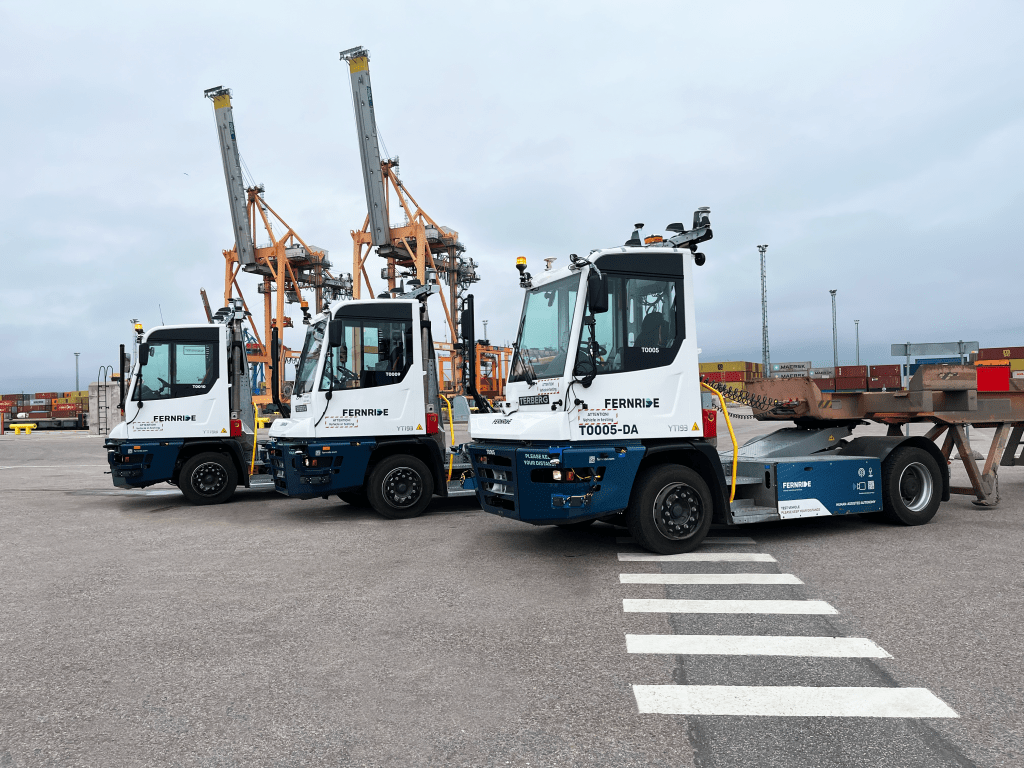
Fernride has become the first European company to operate terminal tractors without safety drivers while generating commercial revenue. The autonomous yard deployment is in the Estonian seaport of Muuga at HHLA TK Estonia terminal near Tallinn, Estonia’s capital.

The milestone came after the company received TÜV SÜD certification under the EU Machinery Directive and approval from the Estonian Transport Administration.

“This is a defining moment not only for Fernride but for the entire autonomous logistics industry in Europe,” said Hendrik Kramer, CEO and co-founder of Fernride, in a press release. “Meeting Europe’s most stringent regulatory standards took a remarkable effort, and I’m incredibly proud of our team’s dedication and precision throughout this journey.”

The TÜV SÜD certification confirms that Fernride’s autonomous vehicle platform meets EU standards for safety, cybersecurity and system reliability for the vehicle, sensors, computers and software. The certification also establishes a pathway for CE compliance and industrial deployment across Europe.

In an interview with FreightWaves, Kramer said the driverless deployment is six years in the making, a process that is part of its larger ambition to build a generational tech company in Europe focusing on the autonomous driving space.

Unlike U.S. autonomous trucking operations that still use safety drivers, Fernride’s system operates with no personnel in the vehicle cabin. Instead, the company employs a 1:4 ratio model where one remote operator monitors four autonomous trucks simultaneously, intervening only when necessary.

Kramer told FreightWaves, “In Europe it’s the other way around. Without that permission you are not allowed to operate without a driver in the cabin and therefore this audit and the certification have been very important to us, since now we have proven to the customers, ourselves, our investors and politicians that you can do this in Europe.”

“Entering the phase of driverless terminal transport marks a significant milestone—not just for our collaboration with Fernride, but for the future of terminal operations,” said Riia Sillave, CEO of HHLA TK Estonia, in the press release.

The system’s design includes continuous over-the-air updates, with AI learning from edge cases encountered during operations. Remote operators can issue simple commands or take full remote control during unusual situations, such as when a bird blocks the truck’s path. Kramer noted that the remote operators are driver managers, not safety drivers in the traditional sense, since there are no drivers in the cab.

Fernride’s technology is powertrain-agnostic, supporting both diesel and electric vehicles through retrofitting existing tractors. The Estonian terminal tractors are diesel but Kramer added, “We also have tractors with EV. Both options exist in the market. We can also retrofit the system into existing tractors. So we want to stay quite agnostic to the powertrain and what kind of tractor decisions are made by the customers.”

The company monetizes its technology through an annual software-as-a-service subscription model, with plans to improve operator-to-vehicle ratios to 1:6 next year and 1:8 by 2027. The company currently operates three trucks with one remote driver manager. Over the next year, the company is looking to expand to two driver managers for six vehicles and 24/7 operations.

“It’s like an enterprise software solution where we have an annual software as a service subscription so that [customers] can use the system.” Kramer added that there is a business case for one operator to four trucks. He added that the remote operator can also be the customer’s personnel. Currently at the terminal, they use truck drivers who are trained to also become remote operators.

Looking ahead, the goal is to help train customers adapt to the new operational realities that autonomous yard vehicles unlock.

“This is precisely what the coming year will focus on,” said Kramer. “Over the past three years, we’ve deployed our team to customer sites, where they’ve shared operational expertise. We’ve tested, iterated and operated our trucks there, with Fernride employees now handling those vehicles. Next year, we’ll train customer operators and service teams, allowing us to exit the terminals while offering remote technical support through a hotline for assistance as needed — without on-site personnel.”

At the end of the day, Kramer noted that autonomous development remains highly tied to customer willingness to test the new technologies, with gradual gains over radical transformations.

Kramer added, “Some of our engineers would have preferred a ‘big bang’ approach — deploying six autonomous tractors fully operational right away. But it’s much better for the customer to proceed in gradual steps: Prove it works, add a small increment, prove that works, and continue building to 100% without disrupting any operations.”

Illinois trucking company to close operations Friday

Forest View, Illinois-based trucking company Chicago Suburban Express will go out of business on Friday.

A company official confirmed on a phone call with FreightWaves Wednesday that the company is shutting down, but declined to provide a reason.

According to the trucking company’s website, the business was founded in 1963 and started with five trucks. Chicago Suburban Express, also called CSX, is led by executive partners Doug McClement, Jerry Hickey and Doug Stephan.

CSX offers same day pickup and truckload shipment services for Illinois, Wisconsin, Indiana and part of Missouri.

The company employed 41 drivers and operated 33 power units as of September 2024, according to SAFER data. CSX hauls interstate general freight, metal, chemicals and paper products.

According to SAFER, motor vehicle authorities put four CSX vehicles out of service over the past two years, including one for a hazmat violation.

Duffy urges more American dollars invested in US infrastructure

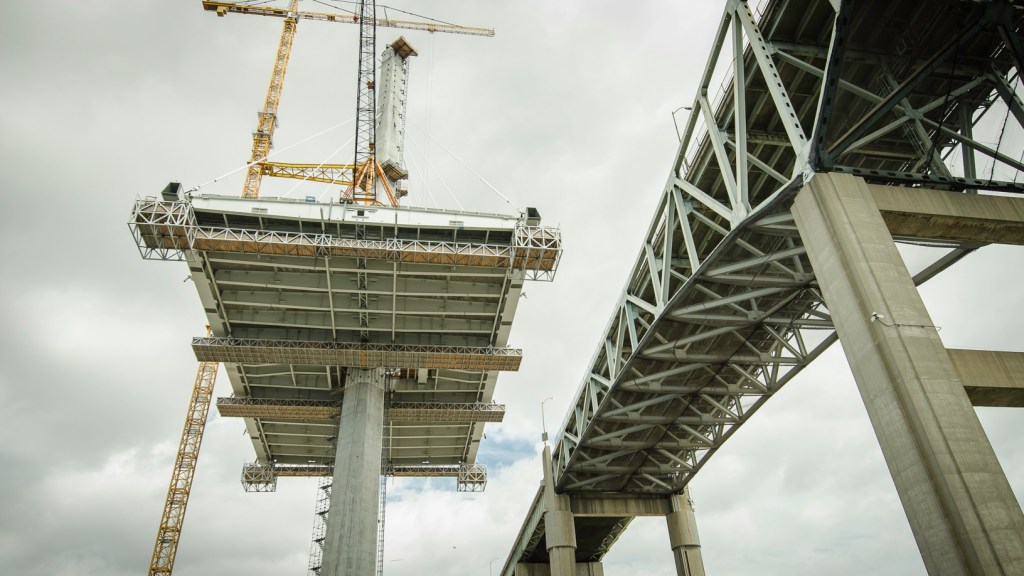
bridge being built

WASHINGTON — Transportation Secretary Sean Duffy told a new group of advisors that he wants to rely more on American investors to maintain and expand the country’s transportation infrastructure.

“What we see in a number of our projects is an opportunity for private capital,” Duffy said during the first meeting of the DOT Advisory Board, held at the White House on Wednesday.

Duffy speaking to advisory board members at the White House on Wednesday. Credit: DOT

“But it’s frustrating because there’s a lot of foreign private capital, and it seems like pretty good returns that they’re making on American infrastructure. It would be great if we could get [more] American private capital into American infrastructure and see those returns go to American investors.”

Duffy told the 12 board members that it’s also “important for our group to think about how we can innovate, how we can spend money more effectively and more efficiently.”

The board members were selected from dozens of nominees to help guide DOT’s approach to overhauling freight and passenger transportation systems and how they’re funded. 

“This team will be essential to executing President Donald Trump’s bold agenda to build big, beautiful things again and I could not be more excited for what is to come,” Duffy remarked in a press release before the meeting.

The following advisory board members were appointed for two-year terms:

  • Gregg Reuben (Chair), CEO, Centerpark.
  • Steven Lefton (Executive Chair), president and CEO, Kimley-Horn.
  • Peter Bartek, founder and CEO, FTS Rail.
  • Michael Capasso, CEO, C.A.C. Industries.
  • Stephen Dickson, former administrator, Federal Aviation Administration.
  • Todd Ehmann, senior international captain, United Airlines.
  • David Horner, partner, Hunton Andrews Kurth LLP
  • Brigham McCown, chair and founder, Alliance for Innovation and Infrastructure.
  • Francis Sacr, principal, Lorne Infrastructure.
  • Trent Morse, deputy assistant to the President.
  • Mark Tedesco, CEO, Academy Bus.
  • Robert Valentine, senior managing director, Macquarie Infrastructure Fund.

Click for more FreightWaves articles by John Gallagher.

BNSF, UP settle dispute over Salt Lake City intermodal service

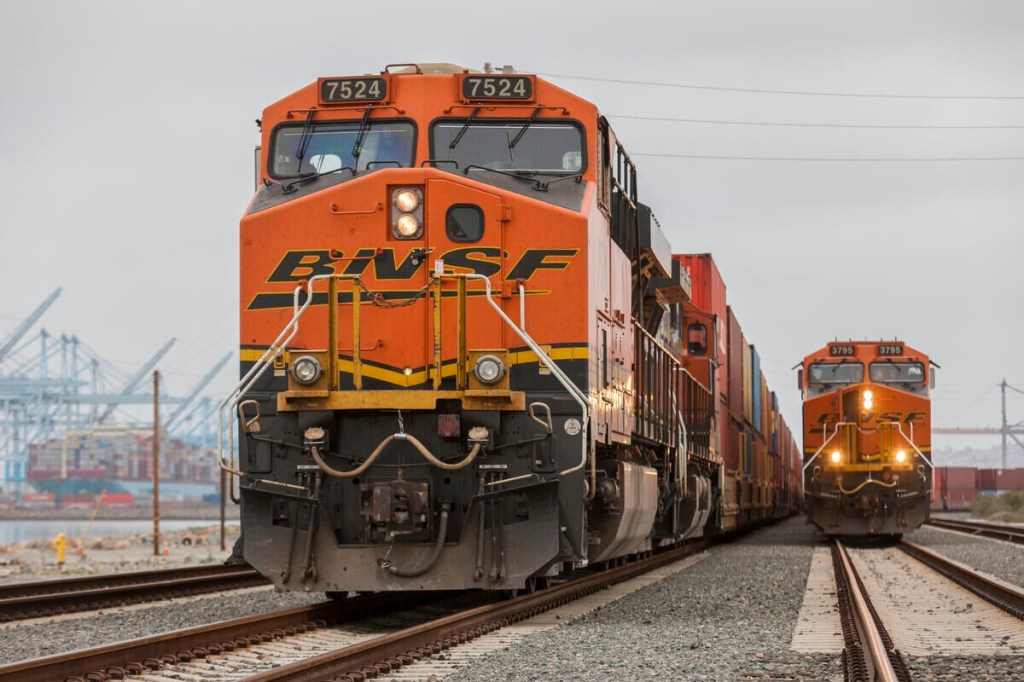
BNSF Railway and Union Pacific settled their Salt Lake City trackage rights dispute Tuesday prior to a scheduled meeting with federal regulators.

The deal allows BNSF to begin international intermodal service between Southern California ports and a new intermodal terminal on the Salt Lake Garfield & Western Railway.

In a filing posted on the Surface Transportation Board website Wednesday, the railroads asked the board to dismiss BNSF’s request for an emergency order that would have required UP (NYSE: UNP) to accept the new trackage rights trains.

“BNSF is proud to announce its new intermodal service between California and Salt Lake City. We have reached an agreement and service is currently underway,” spokeswoman Kendall Sloan said in an email to Trains. “This new product offers the capacity to meet market demand and will grow as we move forward. We look forward to serving our customers with this expanded capacity and service.”

The filing did not provide details about the deal the two Class I railroads reached, including what route the trains will take or how many trains will operate per week.

“Union Pacific is pleased with the settlement, which allows us to ramp up service over time and enables Union Pacific and BNSF to efficiently serve our customers,” spokeswoman Jill Micek said in an email.

Last week UP told regulators that it did not oppose BNSF using its trackage rights. But the railroad said it would be unable to handle the trains until it could hire and train additional train crews, which would take months. UP also said the traffic would have to follow the railroad’s directional running pattern, with the eastbound running on the former Southern Pacific main line via Donner Pass in northern California and the westbound using the former Western Pacific through the Feather River Canyon, also in the northern part of the state.

Union Pacific contended that the BNSF trackage rights agreement imposed as a condition of its 1996 acquisition of the Southern Pacific would require BNSF to pay for its share of a 2009 clearance project that UP funded so that the Donner Pass route could handle domestic double stack trains.

BNSF, however, told regulators that the trackage rights agreement stipulation regarding funding clearance work applies only to hi-cube domestic double-stack containers – not to the international containers the new service would handle for liner customers CGM CMA and Mediterranean Shipping Co.

BNSF also had requested that the trains run via the former Western Pacific in both directions, and that the service be allowed to start immediately. The terminal on SLGW opened July 7, and BNSF, its customers, and Utah inland port officials had hoped the service would begin last week.

The STB last week ordered the railroads to participate in a July 15 technical conference where the board would be able to gain more details about the proposed service. The board, in a decision today, approved the railroads’ request to drop the case.

Related coverage:

Washington rail short lines on Jaguar buy list

BNSF launches new expedited LA-Houston intermodal service

CSX cuts dozens of management jobs

UPDATE: CPKC denies KCS wrongdoing as rail union polls members on strike

FMCSA nominee details safety, enforcement plans

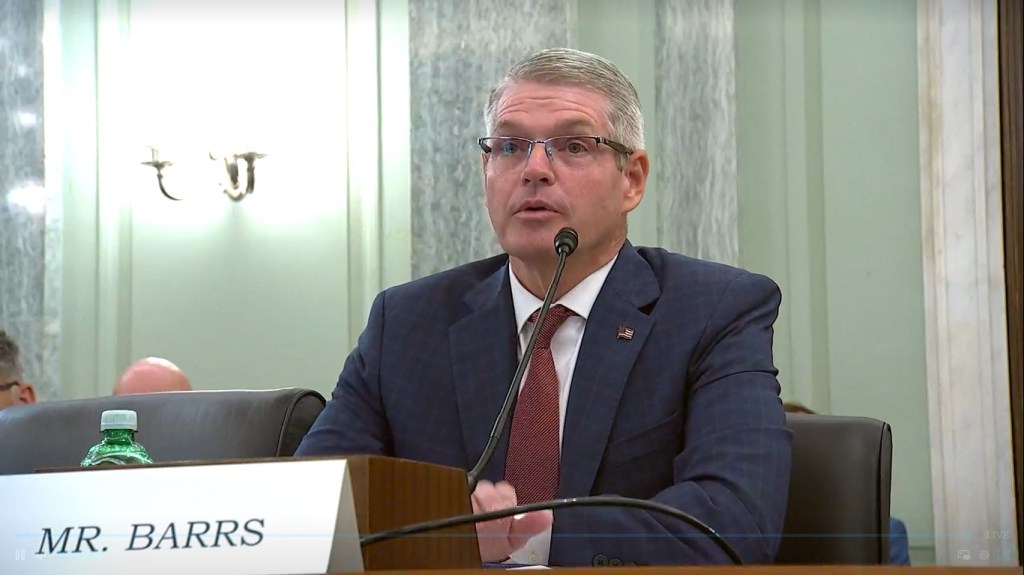
Derek Barrs at nomination hearing.

WASHINGTON — FMCSA nominee Derek Barrs told lawmakers that his law enforcement experience will inform his leadership at the agency on a range of issues, including the Trump administration’s recent crackdown on truck drivers who lack skills in speaking and reading English.

“I have been a roadside inspector and have inspected commercial motor vehicles, and understand the difficulty it places on me as the inspector having to communicate with someone who cannot communicate with you,” Barrs testified at his nomination before the Senate Commerce Committee on Wednesday.

“If I want to do a full inspection of that vehicle and have to get under and check brakes, I need to be able to communicate with that driver – not only for the sake of roadway safety but for me as the inspector.

“So it’s extremely important for that driver to be able to at least have a conversation, understand the commands, and understand our road signs for safety. That’s where I believe my experience comes into this, understanding the effects on roadside inspection.”

A Florida native, Barrs, who was nominated to be FMCSA administrator in March, served as the FMCSA lead for the agency’s Motor Carrier Safety Assistance Program during his time with the Florida Highway Patrol.

He is also a member of the American Trucking Associations’ Law Enforcement Advisory Board and the Florida Trucking Association.

Freight fraud and DOT retaliation

Sen. Ted Cruz, R-Texas, told Barrs that his state is dealing with Mexican truck drivers being issued fraudulent CDLs, coming into the U.S. and potentially operating illegally.

“Ensuring drivers are qualified and safe has got to be the utmost importance of what we’re doing with commercial vehicle safety,” Barrs responded.

“If confirmed I’m committed to addressing this particular issue, I’ve worked closely with the Texas Department of Public Safety throughout my career and understand this is concerning, and will work closely with you to make sure all drivers in our country are safe.”

Barrs also assured Cruz that he would also tackle freight and CDL fraud by continuing work to update FMCSA’s motor carrier registration system, including by requiring more thorough identity verification for driver applicants and cracking down on violators.

“This is a nationwide problem that is causing major issues within the trucking industry and the economy,” Barrs said. “I look forward to working with you on this and working with our partners to ensure bad actors are penalized or they go to jail. We can work with different agencies to make sure that can happen.”

Sen. Maria Cantwell, D-Wash., told Barrs she’s concerned about the potential chilling effect that a new policy being proposed by the U.S. Department of Transportation could have that would allow modal agencies to discipline their own inspectors for ruling against motor carriers in enforcement cases. She asked Barr to commit to making sure there’s “no political interference” with regard to such enforcement policies.

“Inspectors and officers working within FMCSA have a diligent job to do in making sure they can carry out the missions and place these bad actors out [of service],” Barrs said. “It’s extremely important to me that we make sure we do that.”

Autonomous vehicles and underride protection

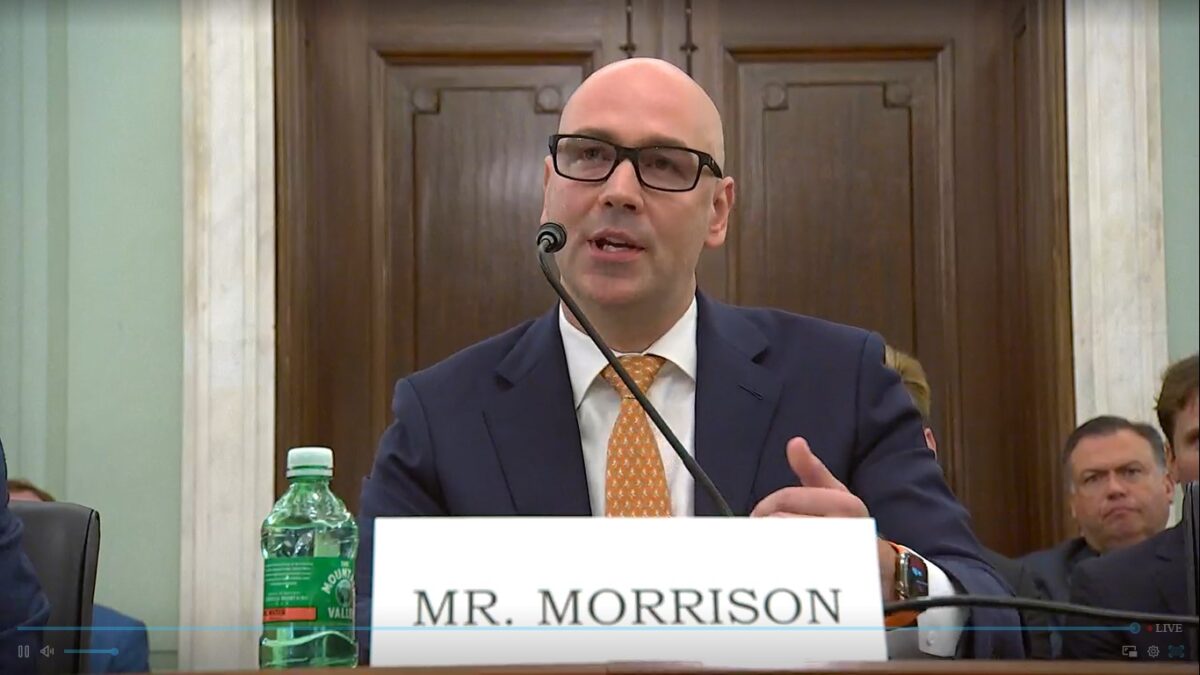
Barrs and Jonathan Morrison, who was also questioned at the hearing on his pending nomination to be administrator of the National Highway Traffic Safety Administration, were asked about how they would oversee the rollout of autonomous vehicle technology.

Morrison testifying on Wednesday. Credit: U.S. Senate

Barrs pledged to look into allowing warning triangles and other roadside safety devices required to be deployed manually be replaced with electronic beacons that can be deployed remotely.

The technology is considered a necessity in paving the way for autonomous trucks, but FMCSA has so far denied requests to allow such technology to be exempted from current regulations.

Morrison, who told the committee he planned to increase his agency’s engagement with industry to develop regulations on autonomous deployment, was also asked about NHTSA’s previous analysis on truck side underride guards, and the agency’s determination that the cost to install them exceeded the benefits.

“Unfortunately to reach this estimate, NHTSA makes assumptions in their analysis that excludes whole categories of preventable deaths of vulnerable road users such as bicyclists, pedestrians and motor cyclists,” said Sen. Ben Ray Lujan, D-N.M.

Lujan asked if Morrison would commit to including such road users in cost benefit analyses and any future rulemakings on side underride guards.

“I will work with the economists at NHTSA and make sure everything appropriate is being considered,” Morrison responded.

Click for more FreightWaves articles by John Gallagher.