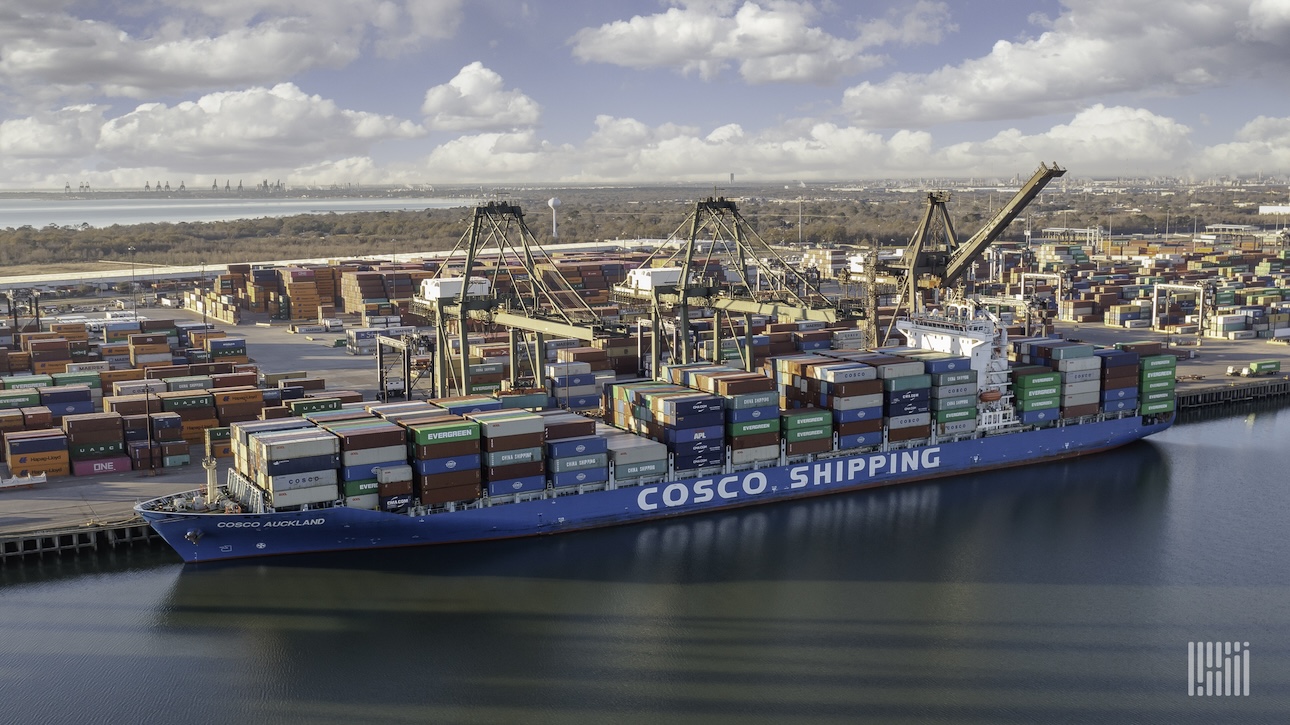
Walmart pulls full-year guidance, insists it will gain share

In a surprising move, retail giant Walmart announced Wednesday that it is withdrawing its earnings and revenue guidance for the current fiscal year, citing uncertainty surrounding the Trump administration’s newly imposed tariffs on Chinese imports. The decision comes as the world’s largest retailer grapples with the potential impact of escalating trade tensions on its bottom line.

On Feb. 20, America’s largest retailer had called for net sales growth of 3%-4% and adjusted operating income growth of 3.5%-5.5% for fiscal year 2026.

The retraction of financial forecasts is a rare step for Walmart, known for its stable and predictable performance. This move underscores the far-reaching consequences of the ongoing trade dispute between the United States and China, which has sent shockwaves through global markets and supply chains.

Chief Financial Officer John David Rainey stated in a press release, “Given the fluidity of the current trade environment and the potential for further tariffs, we believe it’s prudent to withdraw our earnings guidance at this time.” He added that the company remains committed to providing updated forecasts as soon as it can reasonably assess the impact of the tariffs on its business.

Approximately two-thirds of the goods Walmart sells in the United States are grown, made or assembled in the U.S., with products of Chinese and Mexican origin dominating the remaining third.

The Trump administration’s tariffs on Chinese goods, which now cover a wide range of consumer products, pose a significant challenge for retailers like Walmart that rely heavily on imports from China. The tariffs are expected to increase costs for many everyday items, potentially forcing retailers to either absorb these costs or pass them on to consumers through higher prices.

Interestingly, the tariffs may also have unintended consequences for some of Walmart’s competitors, particularly emerging e-commerce players like Temu and Shein. These companies, known for their ultra-low prices, have been rapidly gaining market share by sourcing products directly from Chinese manufacturers and selling them to U.S. consumers at steep discounts.

The new tariffs could level the playing field between Walmart and these upstart competitors. Temu and Shein may find it challenging to maintain their price advantage as the cost of importing goods from China rises. This could provide an opportunity for Walmart to reclaim some of the market share it has lost to these aggressive newcomers.

Despite the uncertainty surrounding specific earnings numbers, Walmart’s management team remains optimistic about the company’s ability to navigate these challenges and even grow its market share. CEO Doug McMillon emphasized the company’s scale and diversified supply chain as key advantages in weathering the storm.

“We have a long history of adapting to changing market conditions,” McMillon said during a call with investors. “Our size and relationships with suppliers give us the flexibility to source products from multiple countries and regions. This puts us in a strong position to mitigate the impact of tariffs and continue offering competitive prices to our customers.”

Walmart’s confidence stems from its ongoing investments in e-commerce, grocery delivery and in-store technology. These initiatives have helped the company stay relevant in the face of fierce competition from Amazon and other online retailers. The company believes that its omnichannel approach, combining physical stores with a robust online presence, will continue to resonate with consumers even in an uncertain economic environment.

Moreover, Walmart’s management team points to the company’s track record of thriving during economic downturns. They argue that in times of financial uncertainty, consumers often turn to value-oriented retailers like Walmart, potentially driving increased foot traffic and sales.

The retraction of earnings guidance has sent ripples through the retail sector, with many investors and analysts viewing Walmart as a bellwether for the industry. Other major retailers are now under pressure to reassess their own financial forecasts and strategies for dealing with the tariff situation.

Walmart’s decision to withdraw its guidance reflects the high level of uncertainty facing businesses in the current geopolitical climate. As the retail giant adapts its strategies to this new reality, it remains to be seen how successful it will be in maintaining its market position and protecting its margins.

As recession fears grow, so do expectations of plunging freight demand

Imports may fall sharply in second half

Port of Los Angeles Executive Director Gene Seroka said he expects at least a 10% year-over-year drop in container volume at the port in the second half. I found that to be especially noteworthy because his comments seemed to be a departure from his more bullish remarks in previous months.

Seroka expects a drop in import volume to be driven by the aftermath of a pull-forward as shippers worked to get ahead of tariffs the past several months – an option primarily available only to large shippers. That pull-forward led to port volumes that were about 15% higher in recent months than what is normal. Now, inventories appear to be getting bloated, particularly in upstream locations such as California’s Inland Empire. An executive at Flexport recently said the warehouses it operates went from being about 50% full to about 75% full. As the year progresses, shippers will look to reduce inventory of 2025 model-year items in preparation for the rollout of 2026 merchandise. 

Daily ocean bookings for U.S. imports have started to trend down in recent days. While April is typically a slow month, the drop in the coming weeks may be unusually severe. (Chart: SONAR)

The SONAR chart above, which measures ocean shipments at the point of overseas origin, shows how much more difficult the year-over-year comp becomes starting in June and July. The implication for the domestic freight markets is that carriers may see a commensurate drop in rail intermodal and truckload demand originating from port cities, particularly those that are heavily dependent on imports, such as Savannah, Georgia. Along similar lines, some analysts also expect a lackluster peak season for container shipping.

Ocean spot rates for China-to-U.S. lanes are around their lowest levels since the start of the Red Sea attacks. (Chart: SONAR)

De minimis exemption revoked for Chinese e-commerce shipments

I found this FreightWaves article to be a helpful and detailed update on the removal of the de minimis exemption, which promises to have major impacts on the apparel, airfreight and parcel industries. The latest is that President Donald Trump ordered an end to the duty-free treatment of small-dollar shipments from China and Hong Kong, effective May 2. At that time, low-value goods will be subject to all duties imposed on Chinese goods, including all the newly unveiled tariffs. In addition, items sent through the international postal system will no longer qualify for the de minimis exemption.

The large Chinese e-commerce companies, such as Shein and Temu, don’t use postal channels in bulk because of slow delivery times and reliability issues. For now, the de minimis exemption remains in place for other countries, but that may change once officials are confident Customs and Border Protection is set up to process and collect tariffs globally for low-value items.

Air cargo rates from Shanghai have finally fallen to pre-pandemic levels. (Chart: SONAR)

The Stockout show

(Image: FWTV)

On Monday’s The Stockout show, I discussed the reactions to “Liberation Day” by the consumer packaged goods and retail industries. The CPG industry, through the Consumer Brands Association (CBA), argues that most of its products are already manufactured domestically and the industry already sources inputs and ingredients from domestic sources when possible. However, numerous ingredients can only be sourced internationally because they are reliant on specific growing conditions. So, the CBA wants the administration to fine-tune its approach to exempt certain ingredients.

Meanwhile, the National Retail Federation expects sales growth in 2025 to be no better, and likely worse, than last year. It argues that the retail industry has faced high tariffs for many years that disproportionately impact the apparel industry. Despite those fees, less than 3% of apparel is made in the U.S., providing evidence that even higher tariffs won’t bring back manufacturing. Monday’s show is available on The Stockout YouTube channel.

US threatens retaliation over carbon tax on ocean shipping

The United States is threatening to take action against nations that agree to a global carbon tax on ocean shipping.

Member states of the International Maritime Organization are meeting in London this week to discuss an agreement on decarbonization of seagoing vessels by 2050.

The IMO has proposed a per-ship penalty of as much as $150 per ton of particulate emissions. Supporters say this is the most effective means to narrow the cost gap between diesel and alternative fuels such as methanol, ammonia and liquefied natural gas. Opponents claim those charges could double fuel prices for container ships and raise costs for the United States, the world’s largest market for containerized imports.

Washington in a statement to IMO members called the carbon tax an economic burden that would drive global inflation, and called for a halt to negotiations by the United Nations agency. The statement threatened reciprocal measures against nations that agree to the tax but did not offer further details.

The U.S., which is not attending the meeting, had been a longtime proponent of the decarbonization plan, most recently under the Biden administration. 

At the same time, the IMO was reportedly losing support for its proposal amid efforts by China and Middle East nations that favor a cap-and-trade system of credits over a carbon tax.

The U.S. statement was first reported by Lloyd’s List.

Find more articles by Stuart Chirls here.

Related coverage:
United States reverses course on proposed port fees for Chinese ships

Ocean shipping carbon tax could gouge US consumers, say opponents 

Expect ‘subdued’ peak container season in wake of tariffs, says analyst

Port of LA’s Seroka says tariffs to cut container volumes by 10%

White Paper – Shaping the Future of the Supply Chain: Integration, Automation, and Growth

The global supply chain is undergoing rapid transformation, driven by geopolitical shifts, evolving trade policies, and accelerating technological advancements. FreightWaves and DP World conducted a comprehensive survey of more than 100 supply chain leaders to understand how carriers, shippers, and brokers are navigating these changes and what strategies will define success in the years ahead.

Discover Key Insights on:

  • Geopolitical Shifts & Tariffs- How businesses are navigating trade tensions and mitigating tariff-related costs.
  • Sustainability in Logistics- Why efficiency and route optimization are key to balancing sustainability and cost savings.
  • Hybrid Logistics Models- The rise of integrated 3PL and freight forwarding solutions for operational flexibility.
  • The Technology Adoption Gap- The challenges companies face in fully adopting automation, data integration, and visibility.
  • Small Business Struggles- Why small and mid-sized businesses are falling behind in global competition and tech adoption.

Download the white paper today for exclusive insights into tomorrow’s supply chain success.

Past as prologue: Packaging industry fears repeat of 2018-19 tariffs’ impact

The packaging industry doesn’t make a lot of the products you buy. It makes a lot of the products you buy deliverable.

And that takes materials – lots of materials: paperboard, plastic, steel and aluminum, to name a few.

So it’s not surprising that stakeholders are more than a little nervous about President Donald Trump’s newly imposed tariffs, which stand to boost the prices not only of finished products but of materials used to manufacture packaging for everything from soft drinks to chemical containers.

“The recent tariffs have led to industry-wide price increases, directly affecting global suppliers that serve U.S. customers,” packaging supply company Evergreen wrote in a blog post on Thursday. “Domestic suppliers, who often rely on imported raw materials like aluminum and steel, are also affected. For instance, new tariffs are projected to add $22.4 billion to the cost of steel and aluminum imports, impacting various industries, including packaging.”

Lessons from recent history

Even if the full impact of the new tariffs is not yet clear, packaging manufacturers don’t have to look far into the past to find a basis for concern.

The trade war between the U.S. and China in 2018-2019, when the first Trump administration imposed tariffs on steel and aluminum imports, “reshaped cost structures, supply chains, and long-term strategies,” Mohamed Dabo writes in an article for online news outlet Packaging Gateway.

As with the current tariff regimen, the previous levies were intended to bring more manufacturing back to U.S. soil – a goal that according to Dabo went largely unmet, at least in the packaging industry. That was partly because despite surging aluminum and steel prices resulting from the tariffs, there was too little production capacity domestically to meet demand.

“US production of aluminium, for instance, couldn’t keep up with the growing need for packaging products, particularly in the beverage sector,” Dabo writes. “As a result, packaging firms continued to rely on imports, but at significantly higher prices due to the tariffs.”

And packaging companies in the United States did not significantly reduce their reliance on nations including Italy and Germany that have long been leaders in specialized packaging machinery.

U.S. exports were affected as well. China’s retaliatory tariffs hit American agricultural goods and, thus, the need for packaging for agricultural exports. “The knock-on effect was felt throughout the entire packaging value chain,” Dabo writes.

Frequently, packaging firms could not pass on to consumers the rising costs related to the trade war, cutting into profits.

Anticipated impacts

With regard to the current tariffs, a few of the impacts on the packaging industry, according to Evergreen, include:

  • Increases in the cost of metal food cans, beverage cans and metal closures.
  • Effects on prices of both raw materials and finished products in the industrial chemicals sector, “particularly in the production of metal drums, chemical cans, and aerosol cans used for chemical storage and transport.”
  • Higher costs for breweries and the beverage alcohol industry as a whole because of a 25% tariff on imported canned beer and empty aluminum cans.

Strategies for staying profitable

Evergreen recommends that packaging companies anticipate rising prices, supply gaps and extended wait times. They should be flexible in sourcing materials and should partner with suppliers that are staying on top of the rapid changes in tariff policies.

Dabo also points to agility and resilience as crucial. Some businesses, he writes, reconfigured their supply chains and embraced automation to defray higher costs in the wake of the 2018-19 trade war.

“Companies that were able to pivot and diversify their sourcing strategies, forge new supplier relationships, and quickly adjust their pricing models have been able to weather the storm,” he adds. “Those that were slow to adapt, however, continue to struggle under the weight of higher costs and a fragmented global supply chain.”

Related:

Is the future of packaging reusable?

4 SONAR charts to watch for tariff impacts

Following the most recent escalation of the U.S.-China trade war – in which levies on Chinese goods rose to 104% – carriers and shippers alike are wondering how domestic freight flows will be affected.

Here’s how to know the score in just four easy charts:

Maritime: Rough seas ahead

SONAR: Inbound Ocean TEUs Volume Index, all global ports to U.S. ports: 2025 (white), 2024 (blue), 2023 (pink) and 2022 (green).
To learn more about SONAR, click here.

Since recovering from February’s lull caused by Lunar New Year, ocean bookings have been remarkably strong this year. While the volume of twenty-foot equivalent units headed to U.S. shores is not quite in line with the barn-burning 2022, bookings averaged 2.7% higher year over year in the first quarter of 2025 and are presently up 5.6% y/y.

Keep in mind that the span between booking and unlading is roughly six weeks – including lead times, delays at the port of origin and/or discharge, and, of course, the actual transit.

Also, the above chart reflects a 14-day moving average of bookings based on their estimated date of departure — a look at bookings based on the date they were made already betrays a fairly substantial decline.

In other words, the strength in bookings today will not translate into domestic freight volumes until May at the earliest.

There is a growing concern among analysts, however, that this performance was achieved by robbing Peter to pay Paul. Shippers have been bracing for these tariffs since the reelection of President Donald Trump last November, which has led to a massive frontloading of imports.

As can be seen in the above chart, maritime’s peak season does not usually ramp up until late summer.

Gene Seroka, executive director at the Port of Los Angeles, has predicted that volumes at the United States’ busiest port will decline 10% y/y in the back half of 2025 because of this pull-forward effect. Freightos’ analysis has similarly forecast a “subdued” peak season this year.

If booking volumes remain at today’s levels over the coming months – or, more improbably, if a typical peak season rally transpires – it will keep domestic freight markets stable.

If, on the other hand, bookings start to tumble as they did in 2022, it will likely spell another trucking recession just as the industry is struggling to recover from the previous one.

Intermodal: Eating truckload’s lunch

SONAR: Total U.S. outbound loaded intermodal volume: 2025 (white), 2024 (blue), 2023 (pink) and 2022 (green).
To learn more about SONAR, click here.

Rail intermodal has gained massively at the expense of dry van truckload volumes and looks to continue doing so for the foreseeable future.

The two primary reasons behind intermodal’s gain in market share are time and cost. Intermodal volume has risen massively along certain dense corridors, such as those transcontinental lanes outbound from Los Angeles where intermodal has a distinct cost advantage over long-haul trucking.

On a per-mile basis, the national average dry van contract rate stands at $2.33. The average intermodal rate is 30% cheaper at $1.62.

But time is the other key factor at play. 

The tariff-induced frontloading of imports has all but eliminated the time sensitivity of many shipments. If imports are not lingering in coastal warehouses, shippers are slow-walking them on the rails, which serves as a means of stashing inventory without renting warehousing space at exorbitant rates.

Rail carriers have also gone some way to improve their service after the catastrophic failures of recent years, making this mode more viable for shippers. 

All in all, loaded intermodal volumes are up 9.9% y/y. If this growth continues over the coming months, it will be an ominous sign for truckload demand, especially the dry van and long-haul segments.

Truckload: Having its lunch eaten

SONAR: Outbound Tender Volume Index: 2025 (white), 2024 (blue), 2023 (pink) and 2022 (green).
To learn more about SONAR, click here.

If you can remember how the truckload market fared in 2023, you’ll know that any comparisons made with that year are unfavorable, to say the least.

Unfortunately, 2023 is an apt benchmark for how truckload demand is currently performing. Although last year saw some impressive growth in freight volumes – even outshining 2022 for a few weeks – 2025 has seen a major regression, thanks in part to intermodal’s aforementioned growth.

It goes without saying that demand is highest when shippers need freight to move quickly to its final destination. But given the sheer abundance of inventory that is loitering in warehouses or on the rails, no such urgency is being felt.

That said, early April is a historically soft period for truckload demand, as bulky durable goods for the summer shopping season – think outdoor furniture and the like – are not yet being moved closer to consumption centers. 

Still, the market is suffering from weak demand even after accounting for seasonal trends: National dry van volumes are down 9.5% y/y at present.

Unlike the ocean market, the domestic truckload market will likely see a peak season to some degree, given the fact that certain freight is simply not suitable for the rails. But the strength of this peak will depend mostly on the continued health of the U.S. consumer, which is precarious – as it has been, albeit, for several years.

Moreover, any market tightness that will result from this peak season will probably be localized to certain regions and equipment types, unlike the broad rally of 2020-21.

Rates: A fistful of reasons to hope

SONAR: National Truckload Index, Linehaul Only: 2025 (white), 2024 (blue), 2023 (pink) and 2022 (green).
To learn more about SONAR, click here.

Yet just because the forecast for truckload demand looks grim, that doesn’t mean carriers are sure to suffer.

The main reason behind FreightWaves’ calling for an industry recovery in 2024 was the much-needed shedding of excess capacity from the marketplace – a trend that has continued into 2025.

Tender rejection rates, which track trucking capacity relative to demand, have been shockingly stable in recent months. At the time of writing, carriers are rejecting 6.09% of loads moving under contract, which usually implies their confidence in securing spot-market alternatives at higher rates.

Compare this level to 2024, when only 3.61% of contracted loads were being rejected, or even 2023’s 2.87%. Needless to say, the pricing power pendulum is swinging back into carriers’ favor.

Looking at all-in spot rates, however, this shift might not be apparent: The National Truckload Index (NTI) is trending unfavorably in line with 2023-24. But this reading is mostly caused by the declining cost of diesel, retail prices for which have fallen 10.3% y/y.

Ignoring the impact of fuel, then, spot rates are up 10 cents per mile, or 6.2% y/y.

The future of linehaul spot rates depends almost entirely on the rate at which excess capacity continues to leave the market, given that demand is, at best, likely to be stable around current levels.

There is some indication that the rate of carrier exits has slowed: In March, new trucking authorities exceeded those terminated, disrupting a nearly three-year string of net departures. 

Furthermore, used truck prices have bounced off their recent lows and have partially stabilized, implying that carriers are eager to get off the sidelines and get back into the game – a worrisome prospect for rates if demand remains stagnant.

At the end of the day, however, linehaul spot rates will move with tender rejections, which have yet to show signs of returning to the lows of 2023-24.

United States reverses course on proposed port fees for Chinese ships

The United States won’t charge Chinese ships the full slate of proposed port fees for using American ports, and those fees won’t be cumulative.

United States Trade Representative Jamieson Greer at a hearing of the Senate Finance Committee Tuesday told lawmakers that the fees, which are supposed to help jumpstart a revival of U.S. shipbuilding, prompted overwhelming opposition from across the shipping industry.

Stakeholders said port charges as high as $1.5 million per ship per call could raise container rates, snarl services and lead to ocean lines eliminating services to smaller ports. Greer said he had met with some stakeholders, Reuters reported.

“They’re not all going to be implemented. They’re not all going to be stacked,” Greer said.

The fees were proposed in February after an investigation by the USTR found China pressed unfair trade practices as it sought to dominate global container shipping and shipbuilding. 

Port charges could still be implemented by November after further study, the news service reported, quoting unidentified sources.

Find more articles by Stuart Chirls here.

Related coverage:

Ocean shipping carbon tax could gouge US consumers, say opponents 

Expect ‘subdued’ peak container season in wake of tariffs, says analyst

Port of LA’s Seroka says tariffs to cut container volumes by 10%

Tariff backdrop finds ocean rates steady

New Trump tariffs could ‘decimate’ China e-commerce, airfreight demand

Image of an iPhone with Chinese shopping apps highlighted.

The U.S. government dealt another blow to Chinese e-commerce platforms and the air cargo market with Tuesday’s declaration that tariffs on imports from China will be jacked up an additional 50%, jeopardizing demand for their ultra-low-cost merchandise less than a week after duty-free customs privileges were revoked.

As part of his escalating trade war with China, President Donald Trump also imposed more draconian fees on low-value shipments from the country that move through the international postal system.

Trump’s trade actions are “going to decimate airfreight out of China because Temu and Shein’s volumes are going to get hammered” when the rules go into effect on May 2, said Derek Lossing, a former logistics executive at Amazon and founder of e-commerce supply chain consultancy Cirrus Global Advisors, in a phone interview. “Demand is going to dry up. It’s gonna be brutal.”

Trump last Wednesday ended the so-called de minimis exemption and gave notice that postal parcels will face a duty rate of either 30% of their value or $25 per item, increasing to $50 per item on June 1. The stated reason was that the frictionless entry enjoyed by parcels made it easy for criminals to smuggle illicit fentanyl and counterfeit goods into the country. By forcing small-dollar shipments through a formal entry process, the administration says authorities can apply analytics to identify suspicious parcels for inspection.

On Tuesday, Trump hiked the duty rate to 90% and the flat fee to $75. The flat fee slated for June 1 was revised to $150 from $50, according to the executive order. Shippers can choose the percentage rate or the fee route and can change their choice once a month.

Although the amount of the fees is shocking, online marketplaces mostly shun postal services because of slow delivery times. They will be mostly affected by being subject to the new tariff regime, according to logistics experts.

Currently, goods valued at $800 or less and shipped to individuals are exempt from duty payments and detailed documentation for customs clearance. The favorable rules enticed online retailers like Temu, Shein and Alibaba in recent years to fulfill orders from the factory and send them directly to consumer residences instead of shipping in bulk to U.S. warehouses. Many U.S. brands, including Amazon’s new Haul bargain store, have also adopted direct-to-consumer fulfillment from China.

Starting Wednesday, tariffs on Chinese goods will rise an additional 50%, to 104%, as Trump said would happen if China didn’t back down on its own retaliatory tariffs. The new tariff rate stacks on top of 20% and 34% tariffs announced by the administration in recent weeks. Some products subject to tariffs initiated in 2018 could see even higher tariffs, such as medical devices at 225%.

A crackdown on business-to-consumer e-commerce shipments from China has been building for more than a year because of concerns about smuggling and an uneven playing field for domestic retailers selling goods subject to import duty or made in the United States, where costs are higher. On its way out in January, the Biden administration proposed stricter rules on low-value Chinese parcels. De minimis reforms have also gained support on Capitol Hill. But the Trump administration went further and faster, eliminating duty-free treatment for de minimis shipments and using emergency authority to stem the tide of illegal drugs without waiting to complete the normal rulemaking process.

Demand destruction

When it became clear last fall the Biden administration was preparing to change some de minimis rules, consensus in the logistics industry was that the impact on Temu and Shein would be limited because adding $3 or $4 to the price of a super cheap dress wouldn’t deter most shoppers. But the elimination of the de minimis exemption, combined with a massive spike in tariffs, could severely change the business equation for the Chinese players, depending how long Trump sticks with the new trade rules.

The new U.S. tariffs on China mean Americans won’t find the same bargains they are used to at Temu, Shein, Alibaba and other sites. In addition to paying high duties, each parcel will cost $3 to clear customs compared to 10 cents under a special expedited de minimis process currently used by retailers. A dress that cost $30 before will more than double in price under the new rules if all extra costs are passed to customers. 

“As soon as Temu and Amazon have price parity, Temu is not going to be as popular,” Lossing told FreightWaves. “Every time you stack on more costs, demand is going to fall. And then you also start slowing down the supply chain because things are going to get caught up in customs searches and airports are going to become congested.”

The vast majority of de minimis shipments move through air logistics channels. Digital markets in China were the primary engine behind double-digit air cargo growth last year, accounting for nearly two-thirds of volumes on the trans-Pacific lane, according to market researchers.

The air cargo sector was already bracing for a significant decrease in business after the White House made clear in February that de minimis would be banned from duty-free privileges, but Tuesday’s order is likely to destroy much more demand for cross-border e-commerce, experts predict. Airlines are likely to lose volume too as large e-tailers return to a B2B2C model that involves shipping by ocean and fulfilling orders from U.S. facilities. Chinese marketplaces, especially Temu, also have the ability to source more from other countries, but pending U.S. plans to update de minimis rules for the rest of the world could undermine the tactic.

Businesses and economists express hope that the massive tariffs on China – as well as many other countries – are simply a negotiating tactic and that Trump will quickly reduce them. If that happens, the impact on e-commerce and air cargo could be less severe.

Amazon recently began listing more brand name apparel on its Haul storefront, The Information reported on Wednesday. When Amazon launched Haul late last year, the storefront only offered unbranded products from outside sellers that shipped to U.S. shoppers from China with delivery times of more than a week. Apparel bought in bulk from brands like Levis ships from within the U.S. with shorter delivery times than the other goods on Haul. In addition, Amazon earlier this month added a browser-based version of Haul, which had previously only been available on its mobile app. The moves are likely to increase Haul’s appeal as a destination for bargains as barriers to Chinese imports increase, the tech news site said.

China has significant postal volumes to the U.S., according to U.S. Customs and Border Protection and e-commerce experts, but they are dwarfed by shipments moved through commercial air and express transport. Mainstream e-commerce brands don’t use postal services to any significant degree because they take nearly three weeks for delivery compared to about a week using logistics providers. The primary post users are small sellers and individuals.

Some trade compliance experts last week speculated that online retailers might shift some volume to China Post and the U.S. Postal Service because the flat fees offered some cost certainty for higher-value orders, but the new Trump fees likely wiped away that option considering that the average de minimis shipment is worth about $50.

Click here for more FreightWaves/American Shipper articles by Eric Kulisch.

Write to Eric Kulisch at ekulisch@freightwaves.com.

RECOMMENDED READING:

White House pauses de minimis ban on Chinese e-commerce

Air cargo industry jolted by Trump tariffs on Chinese e-commerce

US Customs tightens enforcement on low-value e-commerce trade

Freight industry still lags in technology adoption

Trigent, a technology services organization, recently conducted a survey to assess the technological preparedness and investment priorities of the freight industry. The results, along with insights from an interview with Pratapa Bernard, vice president of strategy at Trigent, showcase both the challenges and opportunities that lie ahead for logistics technology.

The survey results demonstrated that many companies don’t consider themselves fully technologically equipped. While some progress has been made, 16% of respondents still rely on rudimentary tools including Excel spreadsheets and manual phone calls, indicating a gap in digital adoption. Meanwhile, 61% operate with partially automated systems, utilizing a patchwork of disconnected solutions that often lead to inefficiencies and operational silos.

The lack of full automation is not just a technical issue but also a strategic one. Bernard explained that businesses are wrestling with how to integrate disparate technologies into a cohesive system that enhances efficiency rather than complicating workflows that employees are used to.

“A significant portion of respondents know that they have to change. Either they are getting systems in order to do so or are a work-in-progress towards being ready for the technology deployment,” said Bernard. “They are also seeing a lot of consolidation among technology providers as well, which means multiple systems could soon be working together. So I believe people are making do with what they have and getting ready for [consolidation].”

As companies work to modernize, their technology investment priorities reveal a clear roadmap for the industry’s future of integrated systems. According to Trigent’s survey, 37% of respondents cited APIs and ecosystem connectivity as their primary focus. This reflects the growing recognition that seamless data exchange between carriers, shippers and brokers is essential for technology investments to pay off. 

RELATED: Q&A: Can the industry loosen up its data bottlenecks?

Bernard explained that In an industry where real-time visibility and agile decision-making can be the difference between success and failure, API integrations are no longer optional, they are imperative. 

Another takeaway from the survey is the demand for customized transportation management systems. Carriers, in particular, are keen on developing self-service systems that can streamline operations without extra human intervention. These technologies can even help mitigate talent shortages by reducing the need for manual processing.

“When we talk about talent shortages, it’s not just technology-skilled shortages, we are talking about warehouse pickers and handlers and drivers. Companies are asking themselves, where does technology support my workers, knowing I’m not going to be having that many skilled workers to choose from for my warehouse, etc,” said Bernard.

RELATED: Agility Robotics’ humanoid robot reportedly raising $400M

With technology supporting businesses in new offerings, Bernard described seeing many 3PLs moving more toward an integrated 4PL approach. 

“There are so many tech offerings that can easily integrate into your management systems that can help shippers with other things than finding capacity, including inventory management and last-mile logistics. Because 3PLs traditional models are seeing shrinking margins, these integrations help with other avenues of revenue building,” he explained.

Bernard followed up with that, saying that AI will help with these other revenue generators as well. He told FreightWaves that AI is no longer a question of “if” but rather “when” and “how.” Companies are increasingly exploring AI-driven solutions tailored to their specific operational challenges. However, Bernard expressed that the key to successful AI adoption lies not in simply automating existing workflows but in redesigning business processes to fully leverage technological capabilities. 

Trigent advocates a three-pronged strategy for technological advancement. The first component involves embedding AI across multiple facets of logistics operations to enhance decision-making and predictive capabilities. The second focuses on modernizing existing platforms, as businesses must upgrade their legacy systems to support modern technologies and integrations with new digital tools. The third prong calls for reimagining business processes rather than applying technology as a band-aid solution. Companies should fundamentally rethink their workflows and how technology supports them.

“We can learn from Deepseek. They did not look to optimize what was already existing in AI technology. They shoot the fundamentals of how it works. Businesses should do this too. Many say, I don’t have a bucket of money, but I want to get these things automated. Reassess the business and reimagine your entire workflows. That is very critical to you getting the automation piece right,” he said.


SFOO Summit: Carriers need AI agents to keep up with broker tech

Uber Freight’s Powerloop begins offering dedicated tours to carriers

Autonomous dispatcher Bubba AI launches for independent truckers, small carriers

Forward Air flags 10% to 15% revenue impact from new tariffs

A pair of Forward Air trailers at an airport warehouse

Forward Air cautioned investors on Wednesday that 10% to 15% of its 2024 revenue would have been impacted by recently announced tariffs.

The Greeneville, Tennessee-based transportation and logistics company flagged the portion of its $2.5 billion top line as potentially being affected by tariffs announced on April 2.

“After reviewing the preliminary IEEPA [International Emergency Economic Powers Act] details, the Company currently estimates that between 10 percent and 15 percent of its revenue in 2024 would have been from shipments directly transported under its control from the countries potentially impacted by the evolving landscape around the tariff increases announced on April 2, 2025,” a news release said.

It said it’s “unable to estimate the potential tariff impact to shipments handled prior to being transported under our control, including in our Intermodal segment.”

Forward’s (NASDAQ: FWRD) intermodal unit reported $233 million in revenue last year.

The news release also said first-quarter adjusted earnings before interest, taxes, depreciation and amortization is expected to be in a range of $54 million to $59 million when the company reports results on May 7. Forward generated $308 million in adjusted EBITDA in 2024.

Liquidity is expected to improve by $10 million to $392 million sequentially in the first quarter. The company ended the year at a 5.5 times net leverage ratio. It isn’t required to meet the 5.5 times threshold until the fourth quarter of 2026 per its new debt covenant.

Forward’s revenue mix has changed after the January 2024 acquisition of freight forwarder Omni Logistics. Some investors tried to block the transaction given the high debt burden that would need to be assumed. Even Forward attempted to break the deal after pressure from shareholders mounted.

The company is currently conducting a strategic review assessing all options, which include a potential sale.

Shares of FWRD closed Tuesday at $10.50, down 67% on the year and 91% lower than when the Omni deal was announced in August 2023. The stock was off 3.2% in early trading on Wednesday compared to the S&P 500, which was up 0.8%.

More FreightWaves articles by Todd Maiden: