US shipyard for first time 3D printing parts for new aircraft carriers

While the maritime industry puzzles over just how the United States plans to revive its moribund merchant shipbuilding capacity, one shipyard is creating its own processes.

Defense contractor HII (NYSE: HII) announced that its Newport News Shipbuilding (NNS) division successfully 3D-printed and installed a major valve manifold assembly on an aircraft carrier under construction at the Virginia shipyard.

The 5-foot-long, 1,000-pound manifold is designed to distribute fluid shipwide from a pump room on the Gerald R. Ford-class vessel Enterprise.

The builder in a release said the use of certified 3D-printed parts has the potential to speed construction and delivery of military and merchant vessels while improving manufacturing quality for critical components.

Workers at Newport News Shipyard installing the 3D printed manifold. (Photo: Ashley Cowan/HII)

The shipyard collaborated on the manifold with DM3D Technology, a specialist in 3D metal printing based in Auburn Hills, Michigan. Plans call for the production of similar manifolds for the carrier Doris Miller (CVN 81) by the same means instead of traditional casting methods.

The Army, Navy and Department of Defense began working with 3D printing in 2012, evolving from basic prototyping to production of parts for vehicles, aircraft, weapons and other applications. The technology has been especially useful for older equipment where needed parts are long out of production.

“What started as a proof of concept quickly turned into a tangible result that is making a meaningful difference to improve efficiencies in shipbuilding,” said Dave Bolcar, NNS vice president of engineering and design, in the release. “The benefits of this innovation will extend well beyond Enterprise as we incorporate our expertise in additive manufacturing into the fundamentals of shipbuilding.”

The builder was previously certified and approved as a supplier of additive manufacturing components on Naval Sea Systems (NAVSEA) platforms. To date, the shipyard has created more than 55 additively manufactured parts for both new construction vessels and those currently in the fleet, with plans to install more than 200 additional parts this year.

Find more articles by Stuart Chirls here.

Related coverage:

Stay flexible in a convoluted market, experts tell ocean shippers

CMA CGM to invest $20B in US shipping, supply chain capabilities

As tariff window closes, trans-Pacific ocean container rates tumble

Trump says US plans tax breaks, investment in shipbuilding

Former Federal Highway Administration chief counsel now heads FMCSA

DOT headquarters

WASHINGTON — Adrienne Camire has been appointed to lead the Federal Motor Carrier Safety Administration as both deputy and acting administrator, FMCSA announced on Friday.

Adrienne Camire. Credit: FMCSA

Camire, who was chief counsel at the Federal Highway Administration during the first Trump administration, had been named senior adviser at FMCSA by Transportation Secretary Sean Duffy in January.

“Thank you to President Trump and Secretary Duffy for their confidence in me to serve in this role,” Camire said in a statement.

“I am honored to lead FMCSA in its mission to prevent commercial motor vehicle crashes, fatalities, and injuries on our nation’s roads. I look forward to working closely with all stakeholders to advance our shared safety goals.”

In addition to her time at FHWA, Camire “has over 20 years of legal, regulatory and compliance experience within the private and academic sectors,” according to FMCSA.

The FMCSA has had eight Senate-confirmed administrators since it was created in 2000, but during that time 10 other political appointees have led the agency in acting roles.

The longest the agency has gone without a confirmed administrator is three years, between October 2019 when Trump appointee Ray Martinez stepped down and September 2022 when Biden appointee Robin Hutcheson was confirmed. Between those dates Jim Mullen, Wiley Deck and Meera Joshi led the agency in acting roles.

FMCSA has not had a confirmed administrator since January 2024 when Hutcheson left the agency.

Click for more FreightWaves articles by John Gallagher.

Driverless trucking – ‘On the cusp’ of a revolution

Morgan Stanley initiates coverage of Aurora Innovation

(Photo: Jim Allen/FreightWaves)

Autonomous trucking is gaining the attention of Wall Street with Morgan Stanley initiating coverage of autonomous truck technology company Aurora Innovation on Monday. Ravi Shanker, equity analyst at Morgan Stanley, writes that despite taking years longer than expected, “Trucking finally appears to be on the cusp of an autonomous future.” 

Morgan Stanley believes that Aurora is the most sophisticated on-highway, Class 8 autonomous solution among peers, with the April rollout of its commercial driverless operating being a key milestone for both Aurora and the industry. However, equity analysts are more bullish than industry executives, believing that the development of autonomous trucking “has achieved enough escape velocity to be considered a real and credible commercial option for many commercial fleets.”

Shanker writes that if all goes according to plan, the next 12 months will see the industry logging thousands of miles of driverless operations from trucking fleets, placing autonomous trucking in the same “real” category as passenger robotaxi fleets.

Compared to the approximately half-dozen other autonomous trucking companies about to launch driverless commercial operations, Shanker notes that Aurora’s plans for its April driverless commercial launch give it a head start. Morgan Stanley also sees on-highway operations as the most complex task for autonomous trucking compared to peers like Kodiak and Gatik, which are revenue-generating today with adjacent applications like off-highway or last-mile.

While Morgan Stanley deems Aurora the clear leader in the space for now, “We continue to believe that the market will likely end up being divided amongst several players over time.” 

There is a caveat: Aurora’s leadership could allow the company to gain an insurmountable lead over its peers. That would require tying up key OEM, carrier and service partnerships. 

For industry peers, the bright side is that there’s a large total addressable market, or the overall revenue opportunity for a product or service. Morgan Stanley estimates that nearly 90% of the $1.3 trillion U.S. domestic freight transportation market, or about $1.17 trillion, could eventually be accessible to autonomous trucking solutions.

Bot Auto sets ambitious 2025 schedule for driverless freight operations

(Photo: Bot Auto)

Autonomous trucking company Bot Auto announced on Tuesday its plans to schedule continuous driverless commercial freight operations in 2025. The company’s schedule includes a minimum four-month pilot program of regular driverless runs between Houston and San Antonio, hauling cargo for customers.

In an interview with FreightWaves, Xiaodi Hou, founder and CEO of Bot Auto, said this initiative is a major step forward following Bot Auto’s previous successful hub-to-hub demonstration in October. The initiative departs from the industry’s earlier approach of one-off demonstrations, instead focusing on sustained, real-world driverless operations.

“The most predictable breakthroughs are the ones no one predicts,” said Hou. “2025 is going to be a big year. Look at what’s unfolding across our industry so far: Kodiak demonstrating driver-out capabilities in the Permian Basin, Aurora timing their Driver-Out pilot program, Fernride making strides in Europe and now Bot Auto setting our schedule.”
Read the full article here.

Benore Logistics expands hydrogen fleet with Hyundai HTWO trucks

(Photo credit: Emily Moncus)

Benore Logistics Systems announced on Tuesday the addition of 14 Hyundai Xcient hydrogen fuel cell trucks to its fleet. Benore began with four hydrogen trucks and expanded to 14 total in February. This is in addition to the company’s eight electric vehicles. The partnership with Hyundai Motor Group originally came from Benore’s relationship with Glovis, the logistics arm of Hyundai Motor Group. The trucks are being used on dedicated routes in the Savannah, Georgia, area servicing the new Hyundai Motor Group Metaplant America.

“These hydrogen fuel cell trucks represent a significant step forward for Benore and our ability to deliver innovative, sustainable logistics solutions,” said Dennis Kunz, vice president of revenue strategy and operation development. “Our partnerships with both Hyundai and Glovis are key to our company’s mission and the values we prioritize around sustainability and exploring advanced technology.”

The release adds that as part of the partnership, Hyundai Motor Group manufactures the hydrogen trucks while HTWO Logistics, the joint venture between Hyundai and Glovis, oversees deployment of the fleet. Benore then manages the fleet’s daily logistics, “ensuring seamless Just-In-Time and Just-In-Sequence operations that meet the demands of the Glovis EV contract.”

Briefly noted …

Commercial vehicle maker Isuzu North America Corp. recently announced it has selected Greenville County in South Carolina as the company’s new production base in the United States. Isuzu is a subsidiary of Isuzu Motors Ltd., and Isuzu Trucks have been in the North American market since 1984. The 1 million-square-foot facility set on over 200 acres is converting into an assembly plant to produce both internal combustion engines and electric vehicles, with a production capacity of 50,000 units per year. Operations are expected to begin in 2027.


Aurora’s lawsuit against the Federal Motor Carrier Safety Administration is moving forward, with Land Line reporting the company has until April 9 to present its arguments. The FMCSA has until May 9 to respond. Final briefs are due June 20. The lawsuit came about after the FMCSA denied Aurora’s roadside warning device exemption request after Aurora and Waymo filed the petition in 2023.

Most recent episode

Subscribe to the Truck Tech newsletter here.

Downward drift in truck transportation employment continued in February

The February truck transportation employment report was yet another step in a downward slide that has led to an industry stuck in a fairly tight range in the number of people it employs.

Seasonally adjusted jobs in truck transportation are down 15,400 from February 2024. It’s not the biggest year-to-year gap in recent years. But after jobs in the sector plummeted in August 2023 as a result of the closure of Yellow – the first big drop after several years of post-pandemic growth – the number of job holders in truck transportation has continued to drift lower.

After the Yellow closure, the Bureau of Labor Statistics reported truck transportation jobs at 1,531,600. A year earlier, it had been 1,586,900.

Since then, jobs have continued to fall. In the past 14 months, the total has been below the prior month 11 times.

The end result is that the total reported Friday of 1,515,100 jobs in truck transportation is the lowest since October’s 1,514,500. But putting that month aside, the latest numbers are the lowest since July 2021, when the industry was shaking off COVID and going on a hiring binge that ultimately took the figure to a peak of 1,587,700 in December 2022. The total for February is 72,600 jobs fewer than that.

The size of February’s downward move and its total compared to prior months were exacerbated by a revision in the initial January report. January truck transportation jobs had originally been reported as 1,521,900. The revision put that at 1,517,000. The February estimate is 1,900 jobs fewer than that.

The total decline since the December 2022 peak also got a downward push from the annual update by the BLS to its underlying model. The changes, released last month, moved the baseline down significantly.

Although the year-on-year comparison is significantly negative, most of that decline comes from the baseline revision and month-to-month declines reported last summer. Since a job total of 1,516,600 jobs was reported last July, totals have ranged from a low of 1,514,500 in October to 1,517,800 jobs in November.

David Spencer, vice president of market intelligence at Arrive Logistics, in his monthly commentary on the report said the numbers reflect stability and weakness at the same time.

“There was a more positive outlook for trucking conditions throughout the fourth quarter and early January, but seasonal slowdowns in February and clarity around the impact of tariffs brought expectations back down to reality,” Spencer said in an email to FreightWaves. 

But looking at the larger picture, Spencer said there had been “relatively stable overall employment since summer of 2024.”

“Yes, there are ups and downs as sentiment swings back and forth, but ultimately as rates bottomed out, employment has leveled off as well,” he said. “The most likely scenario moving forward is a gradual downward trend in total employment as trucking companies continue to fight off lower levels of profitability and rightsize their operations to be as efficient as possible until we see a meaningful shift in market conditions.”

Mazen Danaf, an economist at Uber Freight, also noted that employment levels may be down from a year ago but have been mostly stable since the summer. When pairing that with the BLS revision in the model announcement last month, Mazen said, there has been “a shift in the narrative resilient supply to a largely completed capacity correction.”

Aaron Terrazas, an economist formerly with Convoy who still tracks the monthly employment data, noted a huge jump in the couriers category. It rose by 23,500, to 1,181,700 jobs from 1,168,200.

Terrazas said it was the fifth-biggest gain in that category since data was first collected in 1990, and three of those were related to COVID. The fourth was the resolution of the 1997 UPS strike.

But Terrazas said the bigger impact of the courier rise could be that in a report that showed an increase of 151,000 jobs, about 13% came from couriers.

“The most obvious explanation for the February 2025 anomaly in my mind is parcel delivery workers returning to payrolls in February after being off payrolls due to weather related disruptions during the mid-January winter storms,” Terrazas wrote in an email to FreightWaves. “If that’s indeed the case, what looks like a big contributor to headline payroll growth in February was actually just a weather distortion, making headline payrolls about 20,000 softer than they appear.”

In other highlights from the report:

  • Warehouse jobs, which have often been subject to wild swings, were quiet. They dropped 3,100 jobs, to 1,837,400, down from 1,840,500. That January figure was revised upward by 2,300. Warehouse jobs are now down by 1,600 from a year ago.
  • Average hourly earnings for production and nonsupervisory employees in truck transportation held steady at $30.16 in January. That data lags the broader figures by one month. Average weekly hours fell to 40.2 for that category from 40.8.
  • Although the February revision model increased its estimate of rail jobs significantly, they are still running well below where they were a year ago. Rail jobs totaled 154,000, down 600 from a month earlier. But a year ago, that total was 157,600.

More articles by John Kingston

Penske Truck Leasing hangs on to investment-grade debt rating from Moody’s

XPO lawsuit against 2 ex-employees gives look into noncompete agreements

‘What did these men do?’ judge asks in throwing out indictment of NFI’s Brown

Ocean carrier CMA CGM commits $1B for US air cargo operation

A white jet with CMA CGM Air Cargo lettering with wheels down for landing.

CMA CGM, the world’s third-largest container shipping line, will open an air cargo hub in Chicago for its cargo airline division and deploy five factory-built Boeing 777 freighter aircraft, operated by American pilots, as part of a $20 billion U.S. shipping, port and logistics investment plan announced shortly after the company’s top executive met with President Donald Trump on Thursday at the White House.

CMA CGM Air Cargo is a small freighter operation established in 2021 to round out the Marseille, France-based company’s freight transportation and logistics offerings. It currently operates four aircraft – three Boeing 777 freighters and one Airbus A330 freighter – according to aviation databases.

The integrated freight company will invest $1 billion for air cargo operations in the U.S., Chairman and CEO Rodolphe Saadé said in an interview with The Wall Street Journal. The five freighters based in Chicago will operate between the United States and Asia, he added. The announcement touted how the investment supports America’s economy, boosts U.S. exports and will create 10,000 jobs.

A CMA CGM media representative responding to questions said she was unable to provide details at this time. Atlas Air said it had no comment about the CMA CGM news. Still, it is possible to infer likely scenarios for the new U.S. fleet.

CMA CGM Air Cargo deploys two 777s and the A330 in the Europe-Asia trade corridor. It launched trans-Pacific service with one Boeing 777, operated by New York-based Atlas Air, early last fall.

The easiest – and most likely – path would be to place four additional freighters with Atlas Air to operate on CMA CGM’s behalf. Establishing an airline with a U.S. operating certificate would be expensive and complicated since federal law limits foreign ownership of U.S. airlines to 25% of the voting stock and requires U.S. citizens to control operations. Atlas Air has a pilot base at Chicago O’Hare International Airport for pilots that fly the Boeing 747.

CMA CGM was scheduled to receive another 777 in the fourth quarter last year for the Asia-U.S. service, but there is no record that the plane has been delivered. Boeing is behind on aircraft deliveries for a variety of reasons, including supply chain delays and a 58-day strike by machinists last fall. CMA CGM has another 777 order that it previously said would be completed by the end of March. CMA CGM Air Cargo’s website now says two 777s will join the fleet this year. Atlas Air is slated to fly all three aircraft.

Under their agreement, CMA CGM Air Cargo provides the metal, and Atlas Air provides crews, maintenance and insurance. The Paris-based freighter airline needs Atlas Air to operate routes across the Pacific because it doesn’t have traffic rights from the United States to transport goods from another country without first stopping in its home country.

It’s also likely that CMA CGM will purchase the remaining two aircraft directly from Boeing rather than lease them because all the company’s 777s so far have been production freighters and the $1 billion investment mentioned by Saadé fits the price tag of multiple new aircraft, with some money left over for hub expenses and to pay Atlas Air. Furthermore, the company has ordered eight all-new A350 freighters from Airbus for delivery later this decade.

It should be noted that CMA CGM’s in-house airline discontinued trans-Atlantic service out of Chicago, Atlanta and Miami in the spring of 2023 to focus on Asia routes.

Thursday’s announcement is less than it appears if CMA CGM simply includes the three Boeing 777s it has already paid for in the Chicago-based fleet. That’s the approach many companies and countries take to placate Trump and ease his demands. Canada, for example, recently committed to more border security measures to stop the small amount of fentanyl entering the United States, but it was essentially the same deal officials made with the outgoing Biden administration. And, as The Wall Street Journal has reported, CMA CGM was already planning to spend hundreds of millions of dollars upgrading several U.S. port terminals it leases to improve container capacity.

Click here for more FreightWaves/American Shipper stories by Eric Kulisch.

Write to Eric Kulisch at ekulisch@freightwaves.com.

CMA CGM outsources new trans-Pacific service to Atlas Air

Stay flexible in a convoluted market, experts tell ocean shippers

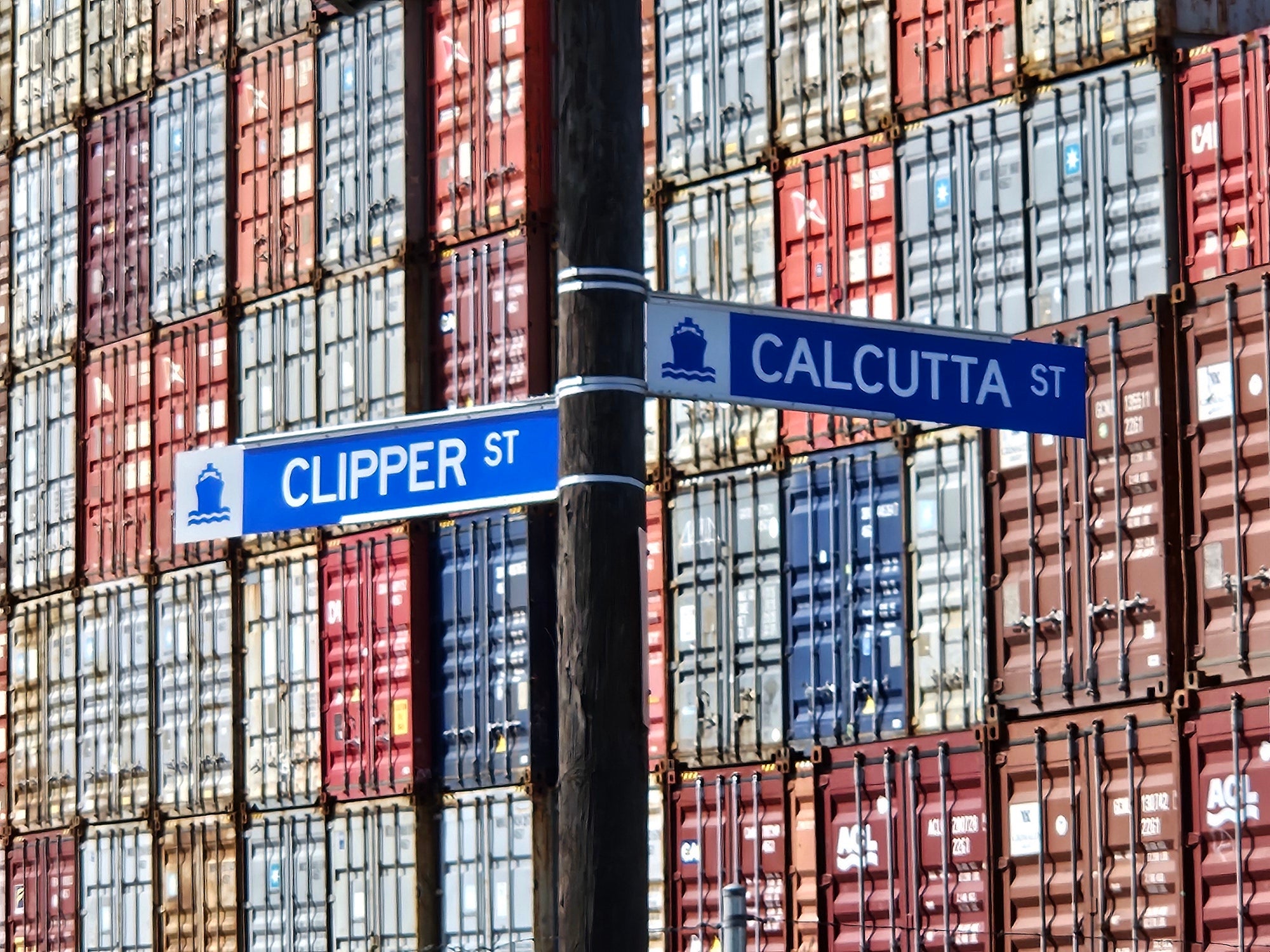
Image shows street signs and stack of containers.

Amid a global supply chain wracked by geopolitical strife, trade wars and parochial upheavals, the prospective return of the world’s largest container operators to the Red Sea-Suez Canal route is good news for most of the Middle East, but could signal leaner times for ocean transport providers, an analyst says.

“The opening of the Red Sea will lead to a drop in container [purchase] prices and freight rates and a massive surge in container availability, putting pressure on NVOCC [non-vessel operating common carriers] in that region,” said Christian Roeloffs, chief executive of marketplace Container XChange, in a March forecast.

The biggest container carriers have diverted services away from the Suez Canal-Red Sea-Gulf of Aden route since early 2024. That was shortly after the start of the Gaza war, when Iran-backed Houthi rebels in Yemen attacked merchant shipping they claimed was linked to Israel.

While Israel and Hamas work through a multiphase ceasefire agreement, shipping executives have said the region is still too unstable to guarantee the safety of ships and their crews. 

The United States on Wednesday sanctioned Houthi leaders they say conspired with Russia to import arms into Yemen and supplied Yemeni fighters for the war with Ukraine. The U.S. also said the Houthis provided safe passage for Russian and Chinese ships through the Red Sea. The sanctions came one day after the U.S. re-declared the rebels a foreign terrorist organization. 

Roeloffs said the return of one carrier to the Red Sea is likely to set off a domino effect, with other carriers to follow. Notably, CMA CGM of France continued to operate scheduled Red Sea services throughout the attacks — often under military escort.

Until then, Roeloffs said logistics providers will play a guessing game with rates and capacity, though not without some new opportunity.

“As supply continues to rise while cargo demand softens, downward pressure on prices is becoming a major challenge,” he said. “Freight rate instability could further increase financial risks for smaller operators. However, shifting trade patterns are also creating new container leasing opportunities, particularly in Southeast Asia and Latin America, where demand is rising amid evolving global supply chains.”

As of Tuesday, average prices for 40-foot high-cube cargo-worthy containers on the Container xChange platform had increased in Europe, Central and Southeast Asia, Latin America west, and Southern Africa. Prices have generally declined across North America, the Middle East, the Indian Subcontinent, northeast Asia and East Africa.

Businesses were advised by participants in a recent webinar hosted by ContainerXChange to stay agile and avoid long-term commitments.

“Uncertainty is toxic for trade, and businesses today are overwhelmed by shifting regulations, unpredictable tariffs and constantly changing trade dynamics,” said Peter Sand, chief analyst, Xeneta. “The best advice? Stay calm, keep your options open, and avoid locking into long-term commitments without a clear upside. 

“The rules of global trade seem to change overnight, making flexibility and real-time insights more critical than ever. Instead of reacting to trade obstacles, businesses should focus on data-driven decision-making, risk management and adaptable logistics strategies to navigate an increasingly volatile market.”

Recent moves by the Trump administration to punish China with import tariffs and onerous port fees are forcing shippers to realign supply chain strategies to accommodate longer-term shifts in demand.

“The uncertainty around tariffs is creating ripple effects across the entire container logistics ecosystem,” said Amanda Marr, chief executive, Hysun Containers, on the webinar. “We’re already seeing enhanced efforts to reroute cargo through alternative markets like the Middle East, Indian Subcontinent and Southeast Asia.”

Those realignments are giving rise to new NVOCC services, boosting demand for containers in Southeast Asia and Latin America.

“Smaller and more agile players have an opportunity to gain market share as trade routes diversify,” said Chief Executive Andrea Monti of Sogese, a container provider in Livorno, Italy.

The cost of tariffs will be an inflationary trigger mostly passed on to consumers, the experts said, with fluctuations in short-term freight rates and vessel capacity adding to market instability.

“Long-term contract rates for trade lanes from China and the Far East to the U.S. East and West coasts have been declining for the past four months,” said Xeneta’s Sand. “While rates remain significantly higher than pre-Red Sea-crisis levels, we’re seeing a clear trend — shippers and forwarders are signing contracts at lower levels compared to the peak in the third quarter last year.”

A proposal by the U.S. to charge port fees of as much as $1.5 million for Chinese-built vessels is expected to disrupt global shipping and increase costs for carriers.

“The proposal will have a far-reaching impact, as every top-six carrier in the world has at least 20% of its active fleet built in China, and 40% of its order book tied to Chinese shipyards,” Sands said. “This isn’t just a hit to individual carriers; it’s a challenge to globalization and free competition. Now, more than ever, businesses must base their decisions on real insights, not speculation.”

Find more articles by Stuart Chirls here.

Related coverage:

CMA CGM to invest $20B in US shipping, supply chain capabilities

As tariff window closes, trans-Pacific ocean container rates tumble

Trump says US plans tax breaks, investment in shipbuilding

After Trump pressure, China sells Panama port terminals to US private equity firm, MSC

Watco acquires Michigan railroad

Shortline holding company Watco is adding another railroad to its stable: Great Lakes Central, the operator of 420 miles of state-owned trackage in Michigan.

Watco already knows the railroad well. It has been an equity investor in the GLC since 2013.

“The Great Lakes Central Railroad has been a vital part of Michigan’s transportation network and both my father, Louis P. Ferris, Jr., and I have been deeply passionate about its role in connecting industries and communities,” GLC Chief Executive Jennifer Ferris said in a statement Wednesday. “Thanks to our tremendous team, GLC has experienced remarkable growth over the years, strengthening our service and expanding our capabilities. With Watco as a long-time partner since 2013, we are confident they will honor the legacy we have built while continuing to serve Michigan’s industries and communities with the same dedication and excellence.”

The rail lines run north from Ann Arbor to Cadillac, with branches to Thompsonville, Traverse City and Petoskey. The GLC interchanges with CSX, Mid-Michigan Railroad, Huron and Eastern Railway, Canadian National, and Watco’s Ann Arbor Railroad, which provides connectivity to Norfolk Southern.

The GLC handles 48,000 carloads annually, including a diverse range of commodities such as soybeans, corn and other agricultural products, fertilizers, plastics, and liquefied propane gas.

“Watco has a long history of working with the Michigan Department of Transportation through its two other short line railroads in Michigan,” Peter Anastor, director of MDOT’s Office of Rail, said in a statement. “We look forward to growing our strong partnership with Watco in preserving and enhancing critical rail service in Michigan, while providing excellent service to customers along the state-owned rail corridor between Ann Arbor and Northern Michigan.”

Watco said the acquisition will expand its presence in Michigan, where it operates the Grand Elk and Ann Arbor railroads.

“We are committed to honoring the history of the GLC and building upon our strong partnership with the Michigan Department of Transportation and our valued customers,” Watco Chief Executive Dan Smith said in a statement. “This acquisition allows us to further support and grow our Michigan customer base, and we look forward to continuing the legacy of excellence that the Ferris family has established.”

Watco will begin operations of the line pending approval by the Surface Transportation Board.

Related coverage:

March opens ahead for rail carloads

Former CN and CP executive to lead Belt Railway of Chicago

Railroads say freight theft cost more than $100 million in 2024

Machinists union ratifies CSX pact

CMA CGM to invest $20B in US shipping, supply chain capabilities

Two big container vessels at port with the city of Los Angeles in the background.

(Updated March 22, 2025 at 11:30 p.m. ET)

France-based container shipping and logistic giant CMA CGM Group on Thursday announced it will invest $20 billion over four years in its U.S.-flag fleet, port terminals, an air cargo airline based in Chicago and warehouses to align with President Donald Trump’s goal of increasing America’s domestic shipbuilding and maritime transportation capacity.

“I am proud to build on our long-standing relationship with the United States through this commitment of $20 billion to the country’s maritime future and logistics capabilities. Over the next four years, we will significantly grow our U.S.-flagged fleet, expand the capacity of key container ports on both coasts, develop state-of-the-art warehousing across the country, and establish a significant air cargo hub in Chicago,” said CMA CGM Chairman and CEO Rodolphe Saadé in a news release. “This will create 10,000 new American jobs and further strengthen our partnership with American customers and public authorities.”

Saadé met with Trump in the Oval Office in Thursday, where he said CMA CGM plans to triple the size of its U.S.-flag fleet from 10 to 30 vessels and will soon announce further investment in U.S. shipbuilding capacity. The investment includes $8 billion for containerships, $7 billion for logistics, $4 billion for ports and $1 billion for air cargo, he told the Wall Street Journal.

Trump recently declared his intention to reinvigorate the U.S. shipbuilding industry and the merchant maritime sector to compete with China and strengthen the military industrial base. Trump sided with union dockworkers in their tense contract negotiations with maritime employers that operate U.S. port terminals, calling out foreign shipping lines for making huge profits from access to U.S. ports. A strike was averted in January when the International Longshoremen’s Association agreed to deal with terminal operators.

“I’d rather see these foreign companies spend [profits] on the great men and women on our docks, than machinery, which is expensive, and which will constantly have to be replaced,” he wrote on his social media site Truth Social. “In the end, there’s no gain for them, and I hope that they will understand how important an issue this is for me.”

CMA CGM said it will help rebuild American maritime capabilities through a series of investments, including 20 more vessels for U.S. subsidiary American President Lines. Saadé suggested in his Oval Office comments that some vessels could come from new construction in the United States, but that capacity is currently very limited. He told the Journal that the ships most likely will be built in South Korean shipyards. APL provides ocean transportation and in-country logistics to the U.S. government and military. It is incorporated in the United States and operates military-useful commercial vessels with U.S. mariners. The French carrier said it will also train and hire more American crew members to operate the new vessels.

In addition, the company promised to develop its existing port infrastructure in New York, Los Angeles, Houston, Miami and Dutch Harbor, Alaska, to improve efficiency and container throughput. It’s unclear if the investments involve physical expansion or container equipment. A news release said the money will accelerate installation of digital technologies and help improve safety for port workers and cargo. CMA CGM controls two container terminals at the Port of New York and New Jersey and a large terminal at the Port of Los Angeles.

Whether the investments fully materialize is an open questions as many companies in the past have made announcements as olive branches to inoculate themselves from any potential vendetta from displeasing President Trump. Stephanie Loomis, a veteran ocean shipping for major logistics providers, called the move a “gesture.” Speaking on the Freight Buyers’ Club podcast after the announcement she said, “it takes three years to build a vessel. I’m hard pressed to think CMA CGM is really going to pay four times as much for a vessel it could get somewhere else.”

Air cargo and warehousing

As part of the investment, CMA CGM’s cargo airline division will open an air cargo hub in Chicago and deploy five new American-made Boeing 777 freighter aircraft, operated by American pilots, to add capacity on key trade lanes. CMA CGM Air Cargo currently operates three Boeing 777s and one Airbus A330. It launched trans-Pacific service with one Boeing 777, operated by Atlas Air, in the fall. The other aircraft between Europe and China/Hong Kong.

The freight transportation conglomerate, which owns Ceva Logistics and Bollare Logistics, also said it will secure warehousing and automotive logistics platforms across the United States to provide more supply chain capabilities for customers.

The company also will open a new logistics R&D hub in Boston, in partnership with American technology partners, focused on advanced robotics and automation solutions that can further optimize logistics services.

Click here for more FreightWaves/American Shipper stories by Eric Kulisch.

Write to Eric Kulisch at ekulisch@freightwaves.com.

Trump backs ILA in port labor standoff

‘Truck Stop Serial Killer’ sentenced

Welcome to the WHAT THE TRUCK?!? Newsletter presented by TriumphPay. In this issue: Truck Stop Serial Killer sentenced and more.

Truck stop true crime


TDOC inmate photo

Hell on 18 wheels — Former long-haul trucker Bruce Mendenhall was sentenced to 65 years in the Indiana Department of Corrections on Monday for the 2007 murder of Carma Purpura, a mother of two that he met at a truckstop. She was one of two victims he is convicted of killing, and he is suspected of nine more murders.

Mendenhall was initially captured all the way back in July 2007 at the TA truck stop on Interstate 24 in Nashville, Tennessee. Detective Sgt. Pat Postiglionet caught the killer after reviewing security footage while investigating the June 2007 death of Sara Hulbert.

When investigators inspected Mendenhall’s rig, they found, “More than 300 items including a rifle, several weapons cartridges, knives, black tape, handcuffs, a nightstick, latex gloves, sex toys and condoms.” Upon testing the items, they found that they were covered in DNA of five women, including Purpura. Unfortunately, the cops were a day late: Purpura had been murdered the day before at a Flying J in Indianapolis. 

Monday’s conviction wasn’t Mendenhall’s first. In 2018 he was found guilty of shooting truck stop prostitute Samantha Winters. She was found dead in a trashcan with a bullet in her head at a truck stop in Lebanon, Tennessee.

Mendenhall may be off the roads, but according to Frank Figliuzzi’s book “Long Haul: Hunting the Highway Serial Killers,” he’s just one of many. Figluuzzi has compiled a list of over 850 murders believed to be linked to long-haul truckers.

New York Post

New York Post reports, “The FBI launched its Highway Serial Killings Initiative in 2009 after analysts noticed a pattern of murdered women — most living transient lifestyles involving drug abuse and prostitution — who had been killed and dumped along the Interstate 40 corridor in Oklahoma, Texas, Arkansas and Mississippi, according to its website.” 

Does this mean you should fear drivers? Hell no. There are over 500,000 long-haul truckers in the U.S. A couple dozen serial killers since the 1970s is still an incredibly small population of the driver pool.

Bad driver

CNN

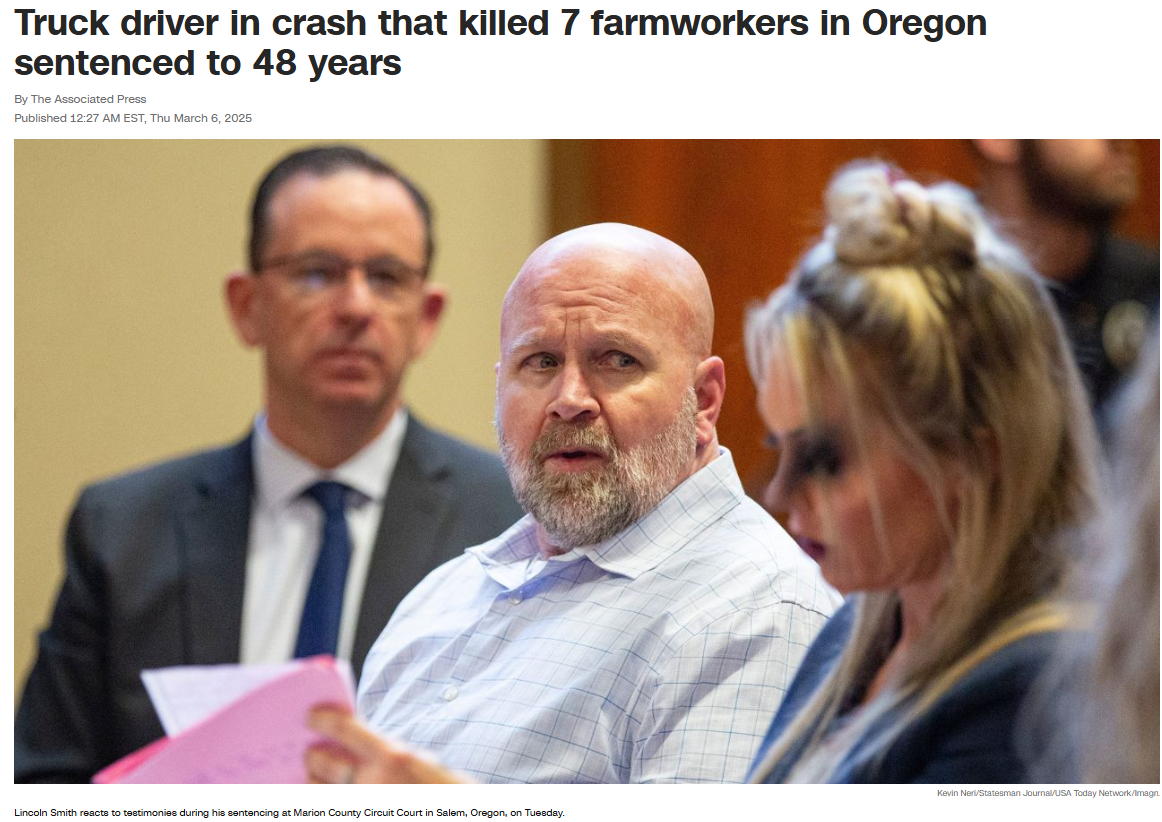
While truck stop serial killers are specifically targeting victims, the other type of driver you have to watch out for is the drugged-out negligent trucker. Lincoln Smith was sentenced to 48 years in prison for crashing into a parked van on Interstate 5 in Oregon that killed seven farmworkers. 


CNN reports, “Testifying at trial, Smith said the effects of drugs he took the night before the crash had worn off and he nodded off at the wheel.” Methamphetamine, fentanyl and morphine were found in his blood. Despite that, jurors acquitted him on drug charges. In February, he was convicted on seven counts of second-degree manslaughter and three counts of assault, as well as reckless driving.

Meme of the week

WTT Friday


Will SHIPS Act make shipping building great again?; hauling the world’s largest train set – Friday on WHAT THE TRUCK?!?, I’m catching up with Dredging Contractors of America’s William Doyle to talk about the SHIPS Act; making shipbuilding great again; and the impact of port fees and tariffs.

We just moved the world’s largest trainset from EnterTRAINment Junction in Cincinnati to Chattanooga, Tennessee, with the help of Elizabeth’s Moving & Storage. We’ll meet Frank Youmans to learn all about the logistics behind this high-touch, white-glove move that took more than 20 trailers.

Plus, all the latest headlines, trends and viral weirdness since our last show.

Catch new shows live at noon EST Mondays, Wednesdays and Fridays on FreightWaves LinkedIn, Facebook, X or YouTube, or on demand by looking up WHAT THE TRUCK?!? on your favorite podcast player and at 5 p.m. Eastern on SiriusXM’s Road Dog Trucking Channel 146.

WTTGear.com

WTTGear.com


The fit – Head on over to WTTGear.com to get our newest merch! Use code WTTFans for 10% off.

Now on demand


American Truckers United exposes labor dumping in trucking; will Trump fix it?

Cargo thefts surge 49%; driver training under Trump; up close with NASA crawler

Registration now open for May Freight Fraud Symposium in Dallas

Be part of the solution that stops freight fraud in its tracks. Let’s cut through the noise and address this issue head-on!

Freight fraud has reached a crisis level, and it impacts everyone in the industry. It’s time for us to come together to address this critical problem and share best practices on how to mitigate it. 

Join us on May 14 in Dallas at the Freight Fraud Symposium, where transportation executives, freight leaders and technology buyers will come together to discuss the issues we all face, share lessons learned, and get insights on the latest technology to help us tackle this problem.Space is limited, so register now to save your spot!

The rest of the noise
Trump pauses tariffs on autos from Canada, Mexico
This Fox News Clip Showing What The Price Of A Truck Will Be After Tariffs Is Going Viral
Tariff impacts on diesel prices will likely hit New England first
Trump says US plans tax breaks, investment in shipbuilding

Thanks for reading, and feel free to forward this to a friend. 


Tweet @ Dooner

Email me

Subscribe to the newsletter

Subscribe to the show

Apple Podcasts

Spotify

YouTube

TikTok

Twitter

Or simply look up WHAT THE TRUCK?!? on your favorite podcast player. Or, if you have SiriusXM, tune in to the show Monday, Wednesday and Friday at 5 p.m. Eastern time on Road Dog Trucking Channel 146.

Exit through the gift shop: WTTGear.com 

Don’t be a stranger,

Dooner

Shoppers fearful of crime at retail locations

A recent nationwide survey by Flock Safety and Zencity reveals a significant shift in consumer behavior due to escalating concerns over organized retail crime. Approximately one-third of consumers see crime at retail locations as a serious issue, prompting many to alter their shopping habits.

The survey highlights that 58% of shoppers now prefer online shopping to avoid potential in-store crime incidents. Furthermore, among those who have witnessed retail crime firsthand, 63% are more inclined to shop online, underscoring the direct impact of these experiences on consumer preferences.

In response to rising theft, retailers have implemented measures such as locking merchandise, leading to longer wait times for customers. Notably, 51% of consumers report waiting over five minutes to access items in stores with locked merchandise, which may further deter in-store shopping.

The survey also indicates strong public support for technology-driven security solutions. Over half of the respondents believe that license plate recognition cameras effectively deter retail theft, and 62% feel that recorded security video enhances store safety. This sentiment is particularly pronounced in major metropolitan areas, where 52% of consumers advocate for technological interventions to combat retail crime.

The findings suggest that retailers that adopt advanced security technologies may not only reduce crime but also restore consumer confidence in the safety of in-store shopping. As Michael Simon, chief strategy officer at Zencity, observes, “American consumers want to feel safe while shopping and are eager for retailers to adopt new technology to restore a safer, more welcoming, and more convenient shopping experience.”

(GIF: Tenor)


Rail theft on the rise 🛤️

Cargo theft from U.S. Class I railroads exceeded $100 million in 2024, according to the Association of American Railroads. The industry is dealing with a 40% increase in thefts, with more than 65,000 reported incidents last year. Organized criminal groups are increasingly targeting freight shipments, and many suspects are armed, raising concerns about the safety of law enforcement.

The AAR reports that fewer than 1 in 10 theft attempts result in an arrest, and many of those arrested are repeat offenders. One railroad even noted that a single individual was arrested 17 times. The industry is calling for tougher penalties for cargo theft, as well as more resources for federal prosecutors to combat the crime effectively.

Additionally, the AAR is advocating for the passage of a bill introduced in 2024 by U.S. Reps. David Valadao and Brad Schneider, which would improve coordination between federal agencies like the Department of Homeland Security and the FBI to address supply chain theft. While the bill did not pass last year, the push for stronger legislation continues as freight theft remains a growing concern.Learn more about the rise of rail theft here.

(GIF: Tenor)

International package hackers 📦

Thirteen individuals have been charged as part of an international theft ring targeting cell phone shipments.

Over the past year, an investigation led by Glen Rock Police, Homeland Security, the FBI and other agencies uncovered a scheme involving the theft of valuable electronic devices. The ring used automated scripts to scrape data from FedEx and a major U.S. cellular provider’s tracking systems, while bribing employees to provide confidential customer information. This intelligence allowed the group to identify valuable packages and steal them during delivery.

The thefts spanned multiple locations, including Glen Rock, New Jersey, and involved a multilayered operation, with dispatchers selling delivery information and runners stealing the packages.

Those charged face multiple counts, including wire fraud and conspiracy to transport stolen goods.

Learn more about the allegations here

(GIF: Tenor)

Registration now open for May’s Freight Fraud Symposium in Dallas 🎉

Be part of the solution that stops freight fraud in its tracks. Let’s cut through the noise and address this issue head-on!

Freight fraud has reached a crisis level, and it impacts everyone in the industry. It’s time for us to come together to address this critical problem and share best practices on how to mitigate it.

Join us on May 14 in Dallas at the Freight Fraud Symposium where transportation executives, freight leaders and technology buyers will come together to discuss the issues we all face, share lessons learned and get insights on the latest technology to help us tackle this problem.

Space is limited, so register now to save your spot!

(GIF: Tenor)

Lawmakers look at expanding FMCSA’s power to rein in cargo theft

3PL Summit: Truckstop reflects on 30 years of fighting freight fraud

Cargo thefts surge 49%; driver training under Trump; up close with NASA crawler