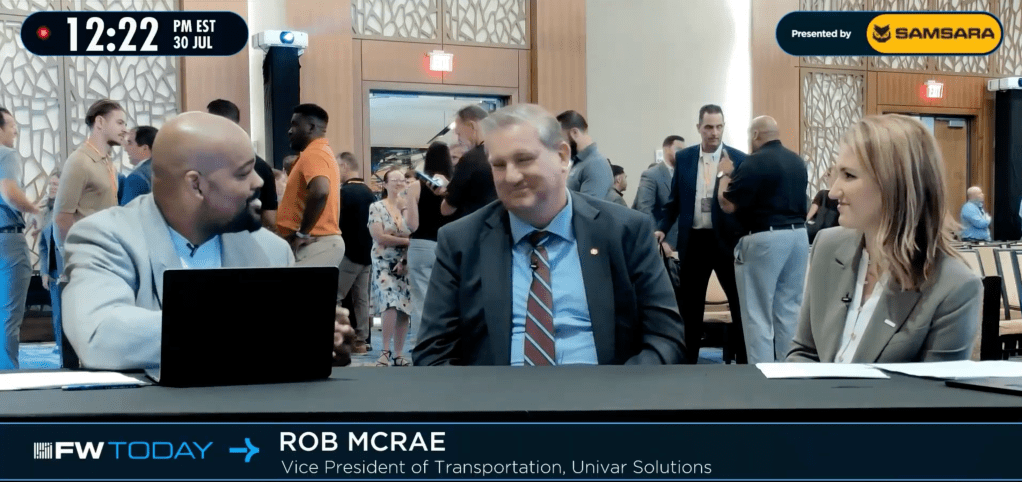

RPM Freight acquires Dealers Choice Auto Transport

RPM Freight Systems, a major player in finished vehicle logistics, announced Thursday morning that it has acquired West Palm Beach-based Dealers Choice Auto Transport. Dealers Choice has an auto transport business focused on high-touch, white-glove services like driveaway and enclosed transport, with some concentration in the luxury / exotic car segment. This transaction positions RPM as a vital link between large-scale logistics operations and specialized dealership services. RPM Freight Systems is backed by Trive Capital and Bluejay Capital. Terms of the deal were not disclosed.

Founded 12 years ago, RPM Freight has carved out a niche in the logistics industry by concentrating on the finished vehicle sector. While initially a traditional freight brokerage, RPM has evolved to focus significantly on vehicle transportation, particularly prioritizing automotive original equipment manufacturers (OEMs). As John Perkovich, President of RPM, explains, “RPM started to get laser-focused on OEMs, in the auto-hauling space.” This acquisition aligns with RPM’s ongoing mission to solidify its position in the vehicle logistics realm, supporting its ambitious goal of eventually moving five million vehicles annually.

Dealers Choice Auto Transport, renowned for its expertise in handling high-end cars, adds a valuable layer to RPM’s offerings. Specializing in “white glove” service, Dealers Choice has built a stellar reputation over more than two decades by providing unparalleled service to luxury vehicle retailers across North America. Their focus on enclosed car shipping ensures that vehicles like Maseratis, Porsches, and Lamborghinis receive the utmost care and attention during transport.

In an interview with FreightWaves, Perkovich said that if RPM moves metal, Dealers Choice “moves art,” comparing its driveaway, storage, and enclosed transport services to the white-glove handling that unique works of art get.

The merger of RPM’s expansive logistics network with Dealers Choice’s specialized expertise is expected to yield substantial benefits for both companies’ clientele.

According to the press release, “This strategic acquisition combines two industry leaders, uniting RPM’s expansive logistics network and technology platform with the deep expertise and high-touch customer service Dealers Choice has cultivated over more than 20 years.” The combined strengths of these entities are anticipated to enhance operational efficiency and provide clients with comprehensive, transparent service, bolstering RPM’s reputation for solving complex logistics challenges.

A significant aspect of this acquisition is the integration of Dealers Choice’s specialized carrier network with RPM’s logistics expertise, promising greater efficiency and visibility for customers. This move enhances RPM’s capacity during peak seasons and high-demand periods, reinforcing its commitment to maintaining seamless, high-quality service.

Andrew Frank, Partner at Trive Capital, highlighted the strategic value, stating, “The acquisition of Dealers Choice Auto Transport further solidifies RPM’s position as a comprehensive, full-service logistics platform for the entire vehicle lifecycle.”

The acquisition is part of RPM’s broader strategy to provide a full suite of logistics services that meet the varied needs of the automotive sector. Trive Capital and Bluejay Capital, who back RPM, are poised to support RPM’s expansion and solidify its leadership role in vehicle logistics. With Dealers Choice continuing to operate under its established brand name, customers can expect the same level of dedicated service they’ve come to rely on, albeit with enhanced capabilities and reach.

For RPM, this acquisition marks the beginning of a new chapter.

“This acquisition opens us up to yet another industry vertical and continues to propel our growth with our current dealership and auction partners,” Perkovich said. “We are united in our commitment to solving the most complex logistics challenges.”

The business models are complementary: RPM gets a high-margin business line and another specialized service offering to sell to its automaker customers; Dealers Choice, which had worked for dealers and auctions and individual moves, now gets access to OEMs.

As with the acquisition of PARS earlier this month, RPM Freight is continuing to wrap niche and value-added services around its core ability to transport finished automobiles, allowing it to pursue higher-margin opportunities and compete for greater share of wallet.

New York-New Jersey port extends lease of busiest box terminal for 33 years

Image of a container ship, containers and cranes at Port Elizabeth, New Jersey.

The Port Authority of New York and New Jersey on Thursday said it  has reached an agreement to extend its lease with Maher Terminals, its busiest container terminal operator, for 33 years.

The port in an announcement said that the agreement, which runs through 2063, “represents a strategic investment in the continued growth and stability of regional trade infrastructure, while simultaneously advancing ambitious sustainability objectives and strengthening collaborative relationships between public and private stakeholders in the maritime industry.”

A cornerstone of East Coast commerce

The port, which serves as the first call for the vast majority of trans-Atlantic container lines serving the East Coast and is a key economic driver for the region, handled approximately $264 billion worth of goods in 2024, including 8.7 million twenty foot equivalent units (TEUs).

A 2024 study of maritime economic activity by the Shipping Association of New York and New Jersey found that port operations supported more than 580,000 industry jobs in the New York-New Jersey-Pennsylvania region. 

“This landmark agreement delivers long-term stability for the port and our supply chain to ensure that it continues to drive economic growth and create good-paying jobs in our communities,” said New Jersey Gov. Phil Murphy, in the release. “Maher’s continued investment in greener technology – prioritizing innovation, modernization and growth – will help us meet the demands of the next generation.”

Port’s largest container operation

Maher is the gateway’s largest terminal operator with facilities spanning approximately 450 acres in Elizabeth, handling approximately 35% of the port’s container traffic in 2024. Unlike the port’s other container terminals, which are owned by ocean carriers and primarily serve their own vessels, Maher operates as a common-use terminal and serves Ocean Alliance members Evergreen (2603.TW), Cosco (1919.HK), CMA CGM and OOCL (0316.HK). In 2024 the liners accounted for capacity of 8.4 million TEUs, nearly a third of the global total. Maher is owned by Macquarie Infrastructure Partners III, a fund managed by Australia-based Macquarie Asset Management

The port said Maher’s common-use model also provides flexibility in a shipping industry characterized by shifting alliances, fluctuating trade volumes and evolving supply chain strategies. By maintaining a major terminal that welcomes vessels from multiple carriers, the port can accommodate changes in shipping patterns and carrier relationships without the disruptions that might otherwise occur if terminal capacity were more rigidly allocated to specific operators.

Long-term certainty and investment confidence

The port said that the long-term lease gives operators more confidence to make major investments in infrastructure and operations. In a time when trade has emerged as the most effective geopolitical weapon, ports along the East Coast are at the tip of the spear and have spent tens of billions of dollars in an arms race to capture global container traffic. By extending the lease term, the port has created conditions conducive to ongoing investment in terminal modernization and expansion.

“This lease extension is about getting ahead of the future,” said Port Authority Executive Director Rick Cotton. “Cargo volumes are growing, vessels are getting larger, and shippers are demanding more reliability than ever. By locking in sustained private investment and modernizing critical infrastructure, we’re making sure the East Coast’s busiest port is ready to move more goods, support more regional growth, and meet the demands of a more complex global economy.”

The authority said investment in modern, efficient terminal operations translate into faster vessel turnaround times, reduced congestion, and lower costs for shippers – advantages that ultimately flow through to consumers in the form of more competitive pricing and more reliable product availability. The infrastructure investments enabled by long-term lease certainty also support the port’s competitive position relative to other East Coast ports vying for the same cargo volumes.

Advancing sustainability and climate goals

Beyond operational and economic considerations, the lease extension incorporates significant commitments to environmental sustainability that reflect the growing importance of climate action in the maritime industry. Building on the authority’s sustainability initiatives, Maher Terminals has pledged to work towards net-zero greenhouse gas emissions in its operations. This commitment aligns with and supports the bi-state authority’s broader goal of reaching net zero agency-wide by 2050.

The collaborative framework established in the lease extension ensures that both the authority and Maher remain aligned in their commitment to maintaining the highest standards of safety and security, protecting workers, cargo, and the surrounding community from harm. The agreement also spells out performance standards and enhanced operational reporting as areas of collaboration.

Implications for regional and national trade

The long-term certainty provided by the lease extension contributes to the resilience of supply chains by ensuring continuity of operations at a critical node in the logistics network. Recent years have demonstrated the vulnerability of global supply chains to disruption, with port congestion, equipment shortages, and labor disputes creating bottlenecks that reverberated throughout the economy. By securing a long-term relationship with its largest terminal operator, the authority said it has taken a meaningful step toward insulating the port from potential disruptions that could arise from lease expirations, ownership changes, or contractual disputes.

The port also underscored the lease agreement’s importance for trade between the United States and Europe. The investments in infrastructure and operations enabled by the extension should contribute to faster, more reliable export services that support American businesses in their efforts to reach overseas customers.

This article was updated Dec. 19 to correct information on Maher’s ownership.

Find more articles by Stuart Chirls here.

Related coverage:

Despite headwinds, Port of Los Angeles nears 10M TEUs

ONE returns to Red Sea with new service

Report: China demands control of Panama ports operator

Carriers look to higher rates, fewer sailings on key Asia-US route

Trucking, retail pressure lawmakers to pass anti-theft bill

ATA President Chris Spear testifying on 17 December 2025

WASHINGTON — Without federal oversight and the ability to coordinate and share information, cargo theft – particularly high-tech “strategic theft” directed by organizations operating outside the U.S. – will continue to surge, trucking and retail officials told lawmakers on Wednesday.

“This goes way beyond the hit-and-run type of straight theft that we’ve seen for over a hundred years with trucks,” American Trucking Associations President and CEO Chris Spear told House Judiciary committee lawmakers.

“This is a very complex, digitally-driven renaissance. These groups are operating out of Eastern Europe, Russia, South Africa, China – places where if you have a laptop, you can go into a bill of lading and redirect freight as it’s in motion. That freight’s long gone before the company figures out that it was taken.”

A survey released in October by the American Transportation Research Institute, an affiliate of ATA, revealed that cargo theft costs motor carriers between $1.83 billion and $6.56 billion annually in direct and indirect costs, with the average loss per incident $29,108 for motor carriers and $95,351 for logistics companies.

Strategic theft, Spear said, has risen 1,500% since the first quarter of 2021, with the average value per theft over $200,000.

Solving the problem, he told the committee, will require a “federal fabric” that closes a current law enforcement gap that currently undercuts the ability to understand where threats are coming from and how to prevent them.

It’s a key piece of the Combating Organized Retail Crime Act (CORCA), bipartisan, bicameral legislation that has a combined 230 cosponsors between House and Senate companion bills.

“State and local governments do not have that ability to attack transnational organizations. That is a federal responsibility, it’s the missing piece of the puzzle. If you put it in under CORCA, then you really have a full solution to tackling this problem quickly,” Spear said.

The aim of the legislation is to establish a unified federal response to organized retail crime and cargo theft, and addresses both physical and digital theft that fuels transnational criminal organizations

Provisions in the bill include:

  • Organized Retail and Supply Chain Crime Coordination Center: Establishes a new central coordination center within U.S. Immigration and Customs Enforcement. The center’s mandate is to align federal, state, and local law enforcement efforts to assist in information sharing, track criminal trends, and provide technical assistance and training for multi-jurisdictional investigations.
  • Money laundering: Expands statutes to include the illicit use of gift cards as part of criminal enterprises.
  • Interstate transportation of stolen property: Lowers the threshold for federal intervention. It applies to stolen goods with an aggregate value of $5,000 or more over any 12-month period.
  • Digital and marketplace oversight: Targets the illegal acquisition and subsequent sale of retail goods and cargo through both physical and online retail marketplaces.

Shane Bennett, principal of cyber defense and theft at big-box retailer Target Corporation (NYSE: TGT), told lawmakers at the hearing that gift card scams – which CORCA addresses – have surged, with over $1 billion in fraud losses estimated over the past two years.

“Criminals steal inactive gift cards off retail shelves, tamper with the card by copying the activation data, then reseal them before putting them back on store shelves,” Bennett testified. “Once an unsuspecting shopper loads money onto the card at checkout, fraudsters use automated systems or bots to detect a balance. Criminals then drain the funds by buying items, which are sold on the secondary market, online or overseas with the profits funding the criminal organizations.”

The problem intensifies during the holiday season, he said, when gift card purchases spike.

Passing CORCA, he said, would “establish the federal partnership needed to protect consumers, strengthen supply chains, and disrupt sophisticated criminal enterprises operating across borders.

“Retailers like Target have made substantial investments to protect our guests and secure our supply chain. But we cannot dismantle interstate and transnational theft- and fraud-driven networks on our own.”

Click for more FreightWaves articles by John Gallagher.

Ember LifeSciences raises $16.5M to scale its cold chain cube

Ember LifeSciences is moving quickly to turn fresh capital into cold-chain scale. The healthcare logistics technology company has raised $16.5 million in a Series A round to expand deployment of its connected pharmaceutical shipping containers, betting that tighter temperature control and real-time visibility can eliminate one of the industry’s most persistent and costly problems.

Temperature excursions cost the pharmaceutical supply chain an estimated $35 billion annually, a figure that continues to grow as high-value therapies move closer to the patient.

The round was led by Sea Court Capital with participation from strategic healthcare and logistics investors including Cardinal Health and Carrier Ventures, signaling confidence that Ember’s technology can scale beyond pilots and into national healthcare networks.

Unlike traditional cold-chain packaging that relies on estimated hold times and static assumptions, Ember’s platform tracks temperature continuously from origin to destination. That visibility allows shippers to intervene when something goes wrong, rather than discovering losses after the fact. Brian Bejarano, chief commercial officer at Ember LifeSciences, said, “The bigger risk is not the failures the industry identifies, but the ones it never sees, when patients unknowingly receive compromised medication.”

That ability to act mid-transit is where Ember believes its return on investment becomes clear. Bejarano pointed to a pharmacy shipment mistakenly delivered to the wrong address hundreds of miles from its intended destination. Using Ember’s system, the pharmacy generated a new label while the shipment was still in the field, arranged an overnight pickup through FedEx, and recovered the medication before it spoiled. The value saved in that single shipment, he said, outweighed a year’s worth of packaging costs.

Much of the Series A capital will go toward scaling the company’s second-generation container, which was redesigned based on customer feedback. While the original Ember Cube included onboard refrigeration and was often used for store-to-store transfers or multi-stop routes, the second generation, shifts to a lighter, configurable passive platform built specifically for high-volume patient deliveries.

The updated design uses advanced insulation and bio-based phase change materials, while still maintaining Bluetooth and GPS connectivity. The goal is to reduce complexity for pharmacies and patients while preserving the ability to prove temperature compliance at delivery. Ember says the approach also addresses sustainability concerns, as reusable containers significantly reduce the single-use packaging waste that dominates pharmaceutical logistics today.

Early adoption by major healthcare players including CVS Health has helped validate the model as Ember prepares for broader U.S. rollouts. Looking ahead, the company plans to use the funding to support patient-focused solutions slated for 2026, as home-based care and decentralized clinical trials drive demand for verifiable, last-mile cold-chain performance.

As pharmaceutical distribution continues shifting closer to the home, Ember LifeSciences is positioning its technology as infrastructure rather than optional add-on. Bejarano expects that in the coming years, payers and regulators will increasingly require always-on temperature tracking for high-value drugs, making proof of thermal integrity a standard expectation rather than a differentiator.

ONE returns to Red Sea with new service

Ocean Network Express plans a return to the Red Sea with the launch of the new RCS (Red-Sea China Service).

The announcement comes as part of a slot charter agreement with Regional Container Lines – and several other carriers – on its RCL China Red Sea Service inaugurated in November.

“This new service has been introduced to meet the demand between China and Red Sea ports, allowing us to better serve our customers with optimized network coverage and reliable shipping solutions,” Singapore-based ONE said in a release.

Interest in a return to the Red Sea has picked up following a ceasefire in the Gaza war. Yemen-based Houthi rebels said they would end attacks on shipping as long as the ceasefire holds.  

Vessel arrivals in November at the Gulf of Aden dropped by 65% compared to the same month in 2023, according to shipping consultant Clarkson, shortly before the Houthis began their attacks.

Notably, the new service does not transit the Suez Canal.

The fortnightly service commences with the sailing of the SSF Dream from Shanghai on Jan. 15. The eight-week rotation is Shanghai, Qingdao, Nansha and Shekou in China; Jeddah (Saudi Arabia), Sokhna (Egypt), Aqaba (Jordan) and return via Jeddah, Shanghai and Qingdao.

Published reports put the SSF Dream capacity at 3,000 twenty foot equivalent units (TEUs), typical for a feeder-type vessel.

Global Feeder Shipping of the United Arab Emirates and TS Lines are reportedly also participating in the service, which has attracted Evergreen Marine as another slot participant. 

Find more articles by Stuart Chirls here.

Related coverage:

Report: China demands control of Panama ports operator

Carriers look to higher rates, fewer sailings on key Asia-US route

Maersk, Hapag-Lloyd drop US East Coast city from trans-Atlantic services

Maersk tabs new CFO, North American chief in global leadership shakeup

Empire National’s Steady Rise: How Operational Discipline Is Fueling the Next Big Leap in U.S. Trucking

Empire National’s story began as a family-run operation founded by husband-and-wife team Sergey Korolchuk and Svitlana Samonik, built on hands-on accountability and a commitment to reliable service. Those early principles continue to influence the carrier’s strategy as it scales nationally under the leadership of Dmytro Kikhtenko, CEO.

Over time, Empire National has established itself as a modern, asset-based trucking carrier, with a reputation for operational consistency and a growing emphasis on technology-driven efficiency. As freight markets remain volatile and shipper expectations continue to rise, the company has concentrated its efforts on two core priorities: developing capable, accountable teams and implementing systems that allow the organization to adapt quickly to changing demand.

“Our foundation was built by a family that understood responsibility at a personal level,” said Dmytro Kikhtenko, CEO of Empire National. “That mindset still shapes how we operate today, even as we grow nationally.”

What began as a modest operation has expanded into a nationwide carrier supported by a fully owned fleet of 100 power units and more than 150 trailers, including both reefers and dry vans. Terminals in Illinois, North Carolina and California provide geographic balance and access to key freight corridors, allowing the company to support coast-to-coast operations.

Empire National’s measured approach to expansion has earned recognition on the Inc. 5000 list for two consecutive years, highlighting sustained growth during a period marked by elevated costs, capacity shifts and broader uncertainty across the transportation sector.

The company’s growth strategy isn’t focused on scale for its own sake. It’s about building systems and standards that perform consistently, regardless of market conditions.

Central to that strategy is a leadership culture that emphasizes accountability, training and operational consistency. Dispatchers, operations personnel and drivers are treated as critical components of service delivery, supported by internal development programs designed to reinforce performance expectations and coordination across departments.

“A company’s reputation is formed at the first interaction and confirmed at the final mile,” Kikhtenko said. “Those moments require discipline, clear communication and follow-through.”

To support its next phase of growth, Empire National is investing in automation and optimization initiatives aimed at improving speed, predictability and visibility for brokers, drivers and internal teams. The company is deploying automated workflow and dispatch systems, AI-assisted tools to help prioritize loads and identify potential disruptions, and enhanced communication platforms intended to reduce friction between brokers and operations.

Routing optimization, automated compliance checks and documentation tools are also being implemented to reduce administrative burdens and improve consistency across the network.

Company leadership says that these investments are focused on operational execution. Speed, consistency and transparency are outcomes, not slogans.

A key differentiator for Empire National remains its fully owned, asset-based fleet of semi trucks and trailers combined with centralized operational oversight. The carrier operates a national expedited division alongside its long-haul network, enabling it to manage time-sensitive freight while maintaining direct control over equipment, drivers and service standards.

Empire National’s asset-based platform includes the following:

  • 100 company-owned power units
  • More than 150 owned reefers and dry vans
  • A national expedited division supporting time-critical freight
  • Terminals in Illinois, North Carolina and California enabling nationwide coverage

The company’s growth strategy centers on improving on-time performance, strengthening communication standards with brokers and shippers, enhancing safety and compliance oversight, and continuing to expand automation initiatives designed to reduce operational friction.

Automation, training and leadership development are long-term investments for Empire National. Those building blocks are essential to creating a carrier that can scale without compromising service.

Empire National’s long-term objective is to establish one of the most efficient and technologically advanced asset-based carrier networks in the U.S. trucking industry, all while remaining grounded in the values that shaped its early growth.

“We’re focused on building a carrier that performs consistently over time,” Kikhtenko said. “That’s what our customers ultimately depend on.”

Click here to learn more about Empire National.

Sacramento facility headlines latest Yellow Corp. terminal sales

a Yellow daycab pulling two Yellow trailers

A federal bankruptcy court in Delaware has approved purchase agreements for three of defunct Yellow Corp.’s terminals valued at $4 million. The former less-than-truckload carrier’s 35-door facility in West Sacramento, California sold for $3.4 million.

The other locations include a 10-door terminal in Monroe, Louisiana ($295,000) and a 17-door service center in LaGrange, Georgia ($275,000).

Crown Enterprises, the real estate arm of LTL carrier Central Transport, bought the Monroe location. Court filings show the group has acquired 12 locations for $93 million since the auctions began two years ago.

The other buyers appear to be real estate investment firms. All three of the locations were properties owned by Yellow.

Most of Yellow’s estate has been liquidated. Proceeds from $2.4 billion in real estate sales and $176 million in equipment sales have been used to repay $1.2 billion in secured debt, $213 million in bankruptcy financing, and various other claims and expenses. Estimates show the estate will have $600 million to $700 million to satisfy all remaining claims.

A final liquidation plan was approved by the court last month. Yellow has also entered into agreements that significantly reduce billions of dollars in withdrawal liability claims from 14 different multiemployer pension plans. However, the final bankruptcy plan and the pension settlement agreements have been challenged by Yellow’s largest shareholder, MFN Partners, which is seeking better terms.

More FreightWaves articles by Todd Maiden:

FedEx slow to rebook pilots’ hotel rooms amid MD-11 grounding

Purple-tailed FedEx planes at an airport.

FedEx Corp. is showing signs of strain from the mandatory grounding of its MD-11 freighter fleet during the year’s busiest shipping season as travel managers are unable to keep up with an unprecedented number of flight changes, leaving many arriving pilots without confirmed accommodations after long trips.

Hotel and ground transportation reservations are typically made weeks, or months, in advance of a trip, but FedEx (NYSE: FDX) acknowledged that the department responsible for booking those services for crew members fell behind because of an increased workload. As a result, pilots are increasingly arriving at layover cities without confirmed rooms or transportation to and from the hotel. Many are expressing frustration at having to make their own arrangements. 

The peak season requires extra flying to meet demand for parcel and freight transport, but FedEx lost the use of 28 large MD-11 cargo jets in early November when the Federal Aviation Administration ordered airlines to stop operating the aircraft type following the fiery crash of a UPS freighter in Louisville, Kentucky. Authorities have yet to provide guidance on how to proceed with inspections after preliminary investigation results raised the potential of serious fatigue cracks in the aging aircraft. 

FedEx scrambled to compensate for the lost MD-11 capacity by activating spare aircraft, consolidating flights and switching to larger gauge aircraft, deferring non-urgent maintenance and hiring contract carriers.  

“We’ve been activating robust contingency plans while remaining focused on delivering the highest standards of safety and service for our customers and team members. Providing support for our 5,000 crew members is a top priority, and we are aware that some pilots did not experience the level of assistance they usually receive as we navigated this unprecedented time,” FedEx spokesman Jonathan Lyons said in a statement to FreightWaves. “We addressed those concerns by quickly adding additional staffing and reminding our pilots of the resources that are available to them to make arrangements when needed.”

The MD-11 flight ban has resulted in massive schedule revisions and additional flying for the remaining fleet, Lyons explained. In response, the Flight Services Desk is making lodging and travel changes within the actual operating month, resulting in thousands of trips being revised. FedEx quickly moved to alleviate the reservation backlog by supplementing the unit with temporary help from other teams. 

The union representing FedEx pilots, which has been locked in protracted negotiations with management over a new labor contract, said delays obtaining lodging are impacting crew rest and operational efficiency. It blames the problem on three years of corporate cost-cutting it says has caused chronic understaffing at the Flight Services Desk. The pilots argue regular trip extensions and revisions, as well as canceled flights from pilots calling out for fatigue, has a cascading effect on crew schedules and indicates FedEx needs more pilots.

“FedEx pilots are being stranded in locations around the world without the services required to operate. Services remain pending until the last minute. Revisions and extensions are treated as normal tools rather than signs of a system that can no longer carry its own weight. The company built a network that now depends on pilots to absorb these failures and removed the very protections meant to keep you safe and supported on the road,” the FedEx Master Executive Council, part of the Air Line Pilots Association, said Friday in a message to members.

Lyons denied FedEx has decreased staffing for trip services, adding that permanent positions were actually added in the first quarter of the year.

In an interview, Capt. Marty Harrington, chairman of the Master Executive Council’s Scheduling Committee, said Flight Services appears to be tightly staffed without a buffer for when operations don’t go smoothly. Now, as the internal system changes pilots’ trip pairings, accommodations are sometimes automatically kicked out of the system and the overwhelmed staff can’t make all the necessary arrangements. 

“Imagine completing a 12-hour flight only to spend an additional hour upon arrival sorting out accommodations and transportation. That’s the reality many of us are facing,” said a Boeing 777 pilot, who asked not to be named to prevent any job conflict with the company. 

It should be noted that unions in all industries often amplify problems to motivate rank-and-file solidarity or to elicit public support in hopes that will pressure a company into concessions during contract negotiations. 

FedEx pilots are empowered to use their corporate credit card to book lodging and pay for ride-sharing or taxi rides on their own when nothing has been arranged in advance. But they complain waiting on hold for a reservation clerk or the trip services desk wastes time when they are ready to rest, raises anxiety and erodes trust that the company is looking out for them, especially in a foreign country.

FedEx pilots don’t have the ability to text their office for help, a union official said. 

“There is some inconvenience, no matter the reason for the scheduling problems. It does upset a pilot’s life,” when destination arrangements aren’t ready, said Kit Darby, an aviation consultant who specializes in pilot hiring and career development. 

UPS (NYSE: UPS) operated 27 MD-11 freighter aircraft prior to the shutdown. Brian Gaudet, a spokesman for the Independent Pilots Association, said he is not aware of UPS pilots experiencing any hiccups with hotel reservations and ground transportation this peak season.

FedEx reports second-quarter earnings on Thursday. 

Click here for more FreightWaves/American Shipper stories by Eric Kulisch.

RELATED STORIES:

FedEx scrubs MD-11 flights for December as crash inspection drags on

How Fred Smith built FedEx into the world’s largest airline

OTR Solutions partners with SONAR to bring data-driven rate intelligence directly to carriers

OTR Solutions is taking a more direct approach to helping carriers understand and defend their pricing in a volatile freight market. The Atlanta-based logistics fintech provider announced a new partnership with FreightWaves SONAR that will embed real-time market rate intelligence directly into the OTR Solutions ecosystem, giving carriers clearer visibility into how their rates stack up against the broader market.

The integration brings SONAR’s proprietary spot rate benchmarks and market insights into weekly performance snapshots for carrier clients. Rather than relying on anecdotal feedback or delayed market signals, carriers working with OTR Solutions will be able to see how their factored lanes from the prior week compare with prevailing market conditions. The result is a more data-driven view of performance that can inform both day-to-day decisions and longer-term network strategy.

For many small and mid-sized fleets, access to timely rate intelligence has historically been limited. As freight markets continue to shift week by week, that lack of transparency can translate into missed opportunities or underpriced freight. 

By surfacing SONAR’s high-frequency data in a format tailored to each carrier’s actual loads, OTR is aiming to close that information gap and make market benchmarking a routine part of carrier operations rather than a luxury reserved for large enterprises.

Clayton Griffin, president of OTR Solutions, said the partnership is designed to help carriers understand not just whether they are getting paid quickly, but whether they are being paid competitively. “Our goal is to help our clients maximize performance at all times, and a large part of that is improving their ability to understand how they’re performing versus the market, so they can make adjustments in real-time.” 

He emphasized that comparing performance against the market in near real time allows carriers to adjust faster and negotiate from a position of confidence. In an environment where margins are tight and volatility is the norm, Griffin said, “insight can be the difference between falling behind and staying ahead.”

From SONAR’s perspective, the partnership reflects a shared focus on the realities facing carriers on the ground. Julie Van de Kamp, chief marketing and operations officer at SONAR, pointed to OTR’s long-standing relationship with the carrier community and its understanding of what smaller fleets need to remain viable. “I spent much of my career in trucking and carriers and drivers will always be important to me. OTR Solutions is deeply connected to the carrier community, and they understand what small fleets need to stay competitive. By pairing their financial and operational tools with SONAR’s rate intelligence, carriers gain an edge to evaluate their performance when negotiating rates.”

The weekly data snapshots also serve as an introduction to the type of intelligence available through SONAR’s broader platform, including the Blue to Blue iOS app, but with a more customized delivery centered on each carrier’s recent activity. That tailored approach reinforces the idea that market data is most powerful when it is directly tied to a carrier’s own network and freight mix.

As carriers face ongoing pressure from fluctuating demand, capacity swings, and pricing uncertainty, tools that translate complex market data into actionable insight are becoming essential. By bringing SONAR’s rate intelligence directly into its platform, OTR Solutions is positioning itself as a strategic partner in helping carriers run smarter, more resilient businesses.

Will Marijuana Rescheduling Be A Game Changer For Trucking?

President Donald Trump confirmed this week that his administration is “looking very strongly” at rescheduling marijuana from Schedule I to Schedule III under the Controlled Substances Act. Cannabis stocks are surging. The industry is celebrating. The trucking world should be paying very close attention because if this executive order gets signed without a critical carve-out, the Department of Transportation may lose its legal authority to test nearly 4 million CDL holders for the drug that accounts for 60% of all positive tests in the FMCSA Drug and Alcohol Clearinghouse.

Without explicit language preserving DOT testing authority, moving marijuana to Schedule III could make it legally impossible for federal regulators to test commercial motor vehicle operators for THC.

Whether you’re a carrier, a driver, or someone who shares the road with 80,000-pound trucks, you need to understand what’s at stake.

The Regulatory Math Nobody’s Talking About

The Department of Health and Human Services sets the mandatory drug testing guidelines that DOT must follow. Under 49 CFR Part 40, those guidelines only authorize testing for Schedule I and Schedule II controlled substances.

Marijuana is currently Schedule I, alongside heroin and LSD. That’s why it’s on the five-panel DOT drug test. Schedule III drugs, which include ketamine, anabolic steroids, and Tylenol with codeine, are not part of that testing panel. Never have been.

The moment marijuana moves to Schedule III, the HHS Mandatory Guidelines for Federal Workplace Drug Testing Programs would no longer authorize its inclusion. DOT would have no legal basis to require testing. HHS-certified laboratories would have no authority to process those samples. Medical Review Officers would be left holding positive results they can’t legally verify.

If marijuana is moved from Schedule I to Schedule III, HHS would no longer require testing for it, and the DOT would also have to stop testing immediately. An immediate change would cause major confusion as thousands of existing test requests and forms still list marijuana as part of the panel. The entire enforcement apparatus built over three decades collapses overnight.

Why This Testing Program Exists

The federal government didn’t start testing commercial drivers because some bureaucrat in Washington had a bright idea. The testing program exists because people died.

On January 4, 1987, Amtrak Train 94, the Colonial, was barreling north from Washington toward Boston at 125 miles per hour when it slammed into three Conrail locomotives that had fouled the main track near Chase, Maryland. Sixteen people died. One hundred seventy-four were injured.

The National Transportation Safety Board investigation determined the probable cause: the Conrail engineer, Ricky Gates, was impaired by marijuana and failed to stop at a warning signal. The NTSB found marijuana and PCP in his blood and urine. His brakeman, Edward Cromwell, was also high. Both men had been smoking marijuana on duty.

Gates served four years in prison. Cromwell got immunity for testifying against him. And 16 families buried their loved ones.

That disaster, along with other drug-related transportation accidents, led directly to the Omnibus Transportation Employee Testing Act of 1991. Congress found that “alcohol abuse and illegal drug use pose significant dangers to the safety and welfare of the Nation” and that “the use of alcohol and illegal drugs has been demonstrated to affect the performance of individuals significantly, and has been proven to have been a critical factor in transportation accidents.”

The law wasn’t theoretical. It was reactive. People died, and Congress acted.

For over three decades, DOT-regulated testing has functioned as both a deterrent and a detection mechanism. The framework became the gold standard not just for federally mandated employers but also for countless private companies that voluntarily modeled their programs on DOT requirements.

For three decades, it’s worked. Random testing is a deterrent. Pre-employment screening is a filter. The Clearinghouse is an accountability mechanism. Remove any piece of that infrastructure, and the system begins to fail.

What the Numbers Tell Us

The FMCSA Clearinghouse data is damning. Through April 2025, there have been 184,839 positive marijuana tests recorded since the database launched in 2020. That represents 59% of all substances identified in positive drug tests. In 2024 alone, 34,936 CDL holders tested positive for delta-9 THC metabolite.

Currently, 291,664 commercial vehicle drivers have at least one drug or alcohol violation on record. Of those, 184,337 are in prohibited status, meaning they cannot legally operate a CMV until completing the return-to-duty process.

When Clearinghouse II went into effect on November 18, 2024, those drivers lost their CDL privileges entirely. State licensing agencies now have real-time access to violation data. All of that infrastructure becomes meaningless if DOT can’t test for the substance that represents the majority of violations.

The Two-Track Testing System 

Here’s what many drivers and even some carriers don’t fully grasp: There are two entirely separate drug testing frameworks operating in trucking today. Oddly enough, you can be a Commercial Motor Vehicle (CMV) driver operating equipment under 26,001 lbs and not be required to submit to any substance abuse testing. It’s the one BASIC from FMCSA that non-CDL, CMV drivers under 26,001 lbs do not have to meet. 

Federal DOT Testing (Mandatory)

Under 49 CFR Part 382 and Part 40, any driver operating a commercial motor vehicle requiring a CDL is subject to federal drug and alcohol testing. This is non-negotiable. The program includes pre-employment testing, random testing (currently 50% of the driver pool annually), post-accident testing, reasonable-suspicion testing, return-to-duty testing, and follow-up testing.

The drugs tested are named explicitly in federal regulation: marijuana, cocaine, amphetamines, phencyclidine (PCP), and opioids. Note that marijuana is listed by name, not by its scheduling classification under the Controlled Substances Act.

Former Transportation Secretary Pete Buttigieg attempted to reassure Congress last year that rescheduling “would not alter DOT’s marijuana testing requirements” because marijuana is “identified by name, not by reference to one of those classes.”

That legal interpretation is optimistic at best. The testing authority flows through HHS guidelines, not DOT regulations. Without HHS certification, those laboratory results won’t survive a legal challenge. And the first driver who loses their CDL after rescheduling will have every incentive to sue.

Company Policy Testing (Voluntary but Critical)

Here’s where it gets important for carriers: DOT does not prohibit motor carrier employers from instituting a “company authority” testing program that is in addition to, and distinct from, the required DOT testing program. Under such non-DOT programs, employers could test for other drugs.

There are no regulations or laws requiring the testing of non-CDL drivers. As a best practice, to ensure employee safety and protect an organization from significant liability, all employees driving on behalf of the organization should be subject to a drug and alcohol testing program.

This distinction matters enormously. If the federal testing authority disappears, carriers with robust company policies will still have tools. Carriers relying solely on federal requirements will have nothing.

The Carve-Out We Need 

Industry stakeholders aren’t asking for marijuana to remain criminalized. They’re asking for something far more narrow: a safety carve-out that explicitly preserves DOT’s authority to test safety-sensitive transportation workers for cannabis, regardless of its scheduling status.

The American Trucking Associations sent letters to DOT Secretary Sean Duffy expressing “deep concern” about the potential impact. Jack Van Steenburg, the retired FMCSA Chief Safety Officer, raised the same alarm publicly. The railroad industry, the pipeline industry, and aviation stakeholders have all submitted comments demanding the same protection.

Should the Administration move marijuana to Schedule III, a supplemental Executive Order should be issued concurrently. This order must explicitly grant HHS the authority to test and certify labs for all controlled substances, including Schedule III drugs. Such a carve-out would preserve deterrence and protect transportation safety without interruption.

If that carve-out doesn’t appear in the executive order, every carrier in America needs to be calling their congressional representatives. By the time this works its way through the courts, the deterrent effect will already be gone, and so will the drivers who decided it was finally safe to light up.

What Rescheduling Won’t Change

What this policy shift actually does, and doesn’t, accomplish.

Moving marijuana to Schedule III does not legalize cannabis at the federal level. It remains a controlled substance subject to DEA regulation. State-level recreational and medical marijuana laws would remain unchanged. The substance would still be prohibited for safety-sensitive workers under current DOT rules, assuming those rules survive the regulatory earthquake.

What it does is remove certain tax burdens from cannabis businesses, potentially expand access to banking services, and formally acknowledge that marijuana has accepted medical uses. For the broader cannabis industry, it’s a significant economic shift.

For the trucking industry, it’s potentially catastrophic if the implementation details aren’t handled correctly.

What Carriers Need to Do Right Now

Here’s where I put on my compliance consultant hat and speak directly to motor carriers: Regardless of what happens at the federal level, you have both the authority and the obligation to maintain drug testing programs in accordance with your company policy.

Build or Strengthen Your Company Drug Policy

Your company’s drug and alcohol policy should exist independently of DOT requirements. It should clearly define prohibited substances (including marijuana, regardless of state legalization status), establish testing protocols (pre-employment, random, post-accident, and reasonable-suspicion testing), document disciplinary consequences for violations, and apply consistently to all safety-sensitive employees.

Although not on the DOT audit inspection list, a well-written safety policy demonstrates that a company is focused on public safety by going above and beyond minimum standards. In the nuclear verdict environment we’re operating in, that documentation is survival.

Consider Expanded Testing Panels

DOT testing is limited to a five-panel screen. Under non-DOT programs, employers could test for other drugs, and can continue testing for marijuana under company authority even if it drops off the federal panel.

The Nuclear Verdict Reality

Nuclear verdicts remain a top concern for trucking companies, large and small. The rise in nuclear verdicts is damaging for small-business truckers who can’t afford the increased insurance costs and the risk of litigation.

No carrier wants to be the defendant in a wrongful death lawsuit where the plaintiff’s attorney asks, “You knew marijuana was legal, you knew your driver used marijuana, and you put him behind the wheel anyway?”

Industry experts advise that simply meeting minimum regulations isn’t enough; carriers are encouraged to go above and beyond compliance by adopting best practices that demonstrate a genuine commitment to safety.

State marijuana laws create a patchwork of employer obligations. Organizations should have legal counsel review the rules and regulations in the jurisdictions they operate to ensure they are not in violation. What’s permissible in Texas may not be permissible in New York. What’s required in California may conflict with what’s allowed in New Jersey.

This is not an area for guesswork.

What Drivers Need to Understand

For the drivers reading this: Nothing has changed yet. Marijuana remains a Schedule I substance. DOT testing continues to include marijuana. A positive test still ends your driving career until you complete the return-to-duty process.

But let me give you some straight talk about where this is headed.

Even if the federal testing authority disappears, most carriers worth working for will maintain marijuana testing under company policy. Why? Because insurers will demand it. Because shippers will require it. The liability exposure of putting a potentially impaired driver behind the wheel of an 80,000-pound vehicle is catastrophic.

The smart drivers understand that federal legality and employment eligibility are two different things. Your employer can prohibit marijuana use even if the federal government stops testing for it. Most will.

The Unsolved Impairment Problem

Let me acknowledge the elephant in the room: Current marijuana testing doesn’t measure impairment. It measures prior use.

THC metabolites can remain detectable in urine for weeks after consumption. A driver who smoked marijuana in a legal state on his home time three weeks ago can still test positive today, long after any cognitive impairment has passed.

This creates legitimate frustration for drivers who follow the rules but face career-ending consequences for off-duty conduct that wouldn’t impair their driving.

Here’s the uncomfortable truth: Until someone develops a reliable, scientifically validated impairment standard for THC, comparable to blood alcohol concentration for alcohol, detection-based testing is the only tool we have.

The NTSB has been requesting research into marijuana impairment standards for years. Congress has expressed interest. The technology doesn’t exist yet.

Until it does, carriers and regulators face an impossible choice: Test for detection (which catches some drivers who aren’t impaired) or don’t test at all (which fails to catch drivers who are). Given what we know about marijuana-involved crashes, the safety calculus favors continued testing.

What Happens Next

The White House could sign an executive order directing federal agencies to initiate rescheduling as soon as this week. Multiple media outlets report industry representatives met with administration officials, including HHS Secretary Robert F. Kennedy Jr. and FDA Commissioner Marty Makary, in the Oval Office on December 9.

The formal rulemaking process could take months. DEA hearings that were scheduled under the Biden administration were scuttled just before Trump’s inauguration. Legal challenges are virtually guaranteed from both pro-cannabis advocates who want faster action and anti-rescheduling groups who want to stop it entirely.

During that window, the trucking industry has one job: Demand that any rescheduling order include explicit, unambiguous language preserving DOT testing authority for commercial motor vehicle operators and other safety-sensitive transportation workers.

I’ve spent 25 years in this industry. I’ve reviewed crash reconstructions where marijuana was a contributing factor. I’ve consulted with carriers who lost good drivers because someone couldn’t stay away from weed while holding a CDL. I’ve testified as an expert witness in cases where families were destroyed because someone made a bad choice.

The drug testing program that emerged from the Chase disaster has saved lives. That’s not speculation, it’s demonstrated reality. The program serves as a deterrent, and deterrence works.

If rescheduling proceeds without a safety carve-out, carriers will need to build their own deterrent systems. Company policies will need to be stronger, more comprehensive, and more consistently enforced than ever before.

The carriers who thrive in that environment will be those that view drug testing not as a regulatory burden but as a core element of their safety culture. The ones who understand that “legal” and “safe” aren’t synonyms. The ones who recognize that the traveling public, and their own drivers, deserve better than hoping impaired operators don’t cause the next Chase, Maryland.

For drivers, the message is simpler: The rules may change, but the physics don’t. An impaired operator behind the wheel of a commercial motor vehicle is a danger to everyone on the road. That reality doesn’t care about scheduling classifications or executive orders.