Russia wages silent cyberwar on Western supply chains

Imagine someone sneaking into your house, not through the front door, but through your email, your Wi-Fi or even your smart doorbell camera. That’s exactly the warning in a new cybersecurity report from U.S. and international intelligence agencies: Russian military hackers have been trying to break into the digital infrastructure of Western logistics and tech companies, particularly those helping Ukraine.

The attackers are part of Russia’s military intelligence agency, known as the Glavnoye Razvedyvatelnoye Upravlenie (GRU), and specifically a cyberunit called the 85th Main Special Service Center, also referred to as Unit 26165. In the cybersecurity world, this group is more infamously known as “Fancy Bear,” “APT28,” “Forest Blizzard” or “BlueDelta.” It represents years of tracking by threat researchers across the globe who’ve linked the group to some of the highest-profile cyberespionage campaigns in recent memory.

What makes this group especially dangerous is its mission and method. Unlike common cybercriminals who are after credit card numbers or quick financial gain, GRU Unit 26165’s goal is state-level espionage: to infiltrate, observe and manipulate critical digital systems that power economies and militaries. Think ports, air traffic systems, IT companies that manage cargo routing software and even the infrastructure behind customs clearance. These aren’t just business targets, they’re strategic assets in times of war.

Why target logistics?

Since Russia’s invasion of Ukraine in 2022, this cyberunit has gone into overdrive. As Western countries began ramping up military and humanitarian aid to Ukraine, the GRU focused its efforts on the logistics and tech companies that support those flows. It didn’t just try to hack the governments sending the aid — it went after the entire digital infrastructure involved in getting it there.

That meant targeting trucking companies coordinating military cargo. It meant breaching email systems at port authorities and tracking aircraft manifests at airports. It meant going after companies that manage GPS routing, warehouse inventories and customs data.

(Photo: Cybersecurity Advisory)

And, perhaps most disturbingly, it meant hijacking internet-connected security cameras. These weren’t just casual attempts to spy. The GRU was actively compromising Real Time Streaming Protocol (RTSP) camera feeds at border crossings, railway stations and key road junctions across Ukraine and neighboring NATO countries. From there, it could watch real-time footage of trucks, trains or convoys delivering aid and supplies. 

The goal? Build a live picture of how support for Ukraine was physically moving through Europe and find ways to delay, reroute or sabotage it.

How do the hackers break in?

According to the report on GRU tactics, one of the group’s go-to methods is phishing, sending fake but convincing emails that lure people into clicking malicious links or entering passwords on forged login pages. These messages often look like they’re from trusted sources, government agencies or well-known tech providers, and are often written in the target’s native language. In many cases, the attackers use compromised small office or home office routers to host these fake pages, making them harder to trace.

Once the hackers get a foot in the door, the GRU uses malware, custom-built programs designed to spy, steal or quietly hijack systems. In this campaign, it deployed malware strains called HEADLACE and MASEPIE, which allowed GRU to collect passwords, intercept emails and maintain access over time.

The group also exploited known software vulnerabilities, including critical flaws in Microsoft Outlook and other email platforms, which let it harvest login credentials through rogue calendar invites and in the popular file compression tool WinRAR. Each of these bugs opened a backdoor that allowed attackers to slip past defenses without setting off alarms.

Once inside a network, GRU operatives moved methodically. They searched email inboxes for logistics details like shipping manifests, sender and recipient data, tracking numbers, transport routes, and cargo descriptions. 

They didn’t just grab the data and leave. Instead, they set up camp, adjusting email permissions, enrolling compromised accounts in multifactor authentication (MFA) to deepen trust  and quietly collecting sensitive information for weeks or even months. Their aim wasn’t just access, it was prolonged invisibility. The GRU studied the tempo of global trade, mapping every point where aid or military equipment might flow.

The report doesn’t list all the victims, but it makes clear the U.S. wasn’t spared. The attackers targeted logistics and technology companies across at least 13 countries, including the U.S., Germany, France, Poland and Ukraine.

The fragility of global supply chain security

At the heart of it all is a simple truth: Cyberhygiene matters, and it starts with access.

The report advises organizations to treat passwords like keys to the castle. That means ditching weak or reused credentials, banning the use of default logins and embracing MFA wherever possible, especially hardware-based MFA like smartcards or security tokens that are much harder to steal or spoof than SMS codes or app-based prompts.

Even better, companies should begin moving away from passwords altogether, turning to more modern approaches, like single sign-on systems or certificate-based authentication, that reduce the chances of stolen credentials being used at all.

“Think about how many sticky notes are on desks or passwords that are shared through a quick [direct message]. It’s 2025. It takes one second of compromise for every credential you ever sent to be a new attack vector that gets used against your customers and co-workers,” Garrett Allen, FreightTech expert and co-founder of LoadPartner, told FreightWaves.

Beyond access, the report emphasizes the importance of watching every corner of your digital environment. This isn’t just about having antivirus software, it’s about adopting a mindset of continuous surveillance. Network defenders should be logging who accesses what, flagging unusual login times or geographic anomalies, and tracking data movement across the system. 

The report suggests using automated tools that can help spot and shut down attackers before they move laterally or exfiltrate sensitive files.

Then comes one of the most overlooked but essential defenses: updating software. Many of the techniques used by GRU hackers relied on known vulnerabilities, some of which had patches available for months or even years. This includes high-profile flaws in Microsoft Outlook, Roundcube and WinRAR, all of which were exploited to quietly gain entry. Organizations need a structured, enforced update policy that prioritizes high-risk systems and doesn’t rely on manual updates or once-a-quarter maintenance windows.

But the report goes further, urging companies to rethink their digital architecture entirely. It recommends segmenting networks so that if one part is breached, the attackers can’t move freely throughout the system. Access should be granted based on role and necessity — email admins shouldn’t have domainwide privileges, and vendor accounts should be tightly controlled and monitored.

Organizations are also urged to filter traffic aggressively. That means using firewalls to block access to known malicious domains, disabling unnecessary remote services and watching for logins from public VPNs.

Finally, businesses need to recognize that their supply chain partners could be their weakest link. Vendors, contractors and connected third parties must be held to the same cybersecurity standards, and their access to internal systems should be scrutinized. . 

“This makes me think about some of the legacy-to-modern bridges we have, like ELD aggregators holding credentials for thousands of carriers. What happens when one of those gets compromised?” said Allen.

Trust, in the digital realm, must be earned continuously. As the report makes painfully clear, sometimes the greatest danger isn’t the hackers you know. It’s the silent, overlooked connection that lets them walk right in.


Freight fraud: Your supply chain is showing

US moves to stop China parcel shipments bearing counterfeit postal labels

Avocados, auto parts and ambushes: Inside Mexico’s cargo theft crisis

CMA CGM developing $600M Vietnam container terminals

CMA CGM Group is partnering with Saigon Newport Corp. to develop a new deepwater container complex in Haiphong, northern Vietnam.

The agreement covers the design, construction and operation of the Lach Huyen terminals 7 and 8. The complex will have combined capacity of 1.9 million twenty-foot equivalent units and is scheduled to open in 2028.

The project comes amid a sharp increase in container volumes in northern Vietnam and will enable Marseilles, France-based CMA CGM to secure long-term capacity as the region sees rapid industrial and logistics development.

CMA CGM has been active in Vietnam since 1989, with offices in Ho Chi Minh City, Hanoi, Haiphong, Danang and Quy Nhon. It operates 29 weekly services across seven ports in the country, connecting major global trade routes to an advanced intermodal network via Ceva Logistics.

The carrier is co-owner of the Gemalink terminal in Cai Mep and the Vietnam International Container Terminal in Ho Chi Minh City.

Find more articles by Stuart Chirls here.

Related coverage:

Maersk, Hapag-Lloyd partner on new Asia-Long Beach service

Maersk more than halfway through $1B stock buyback

Drewry: China-US container rates up by double digits

Savannah sees record containers amid tariff frenzy 

FMCSA unveils 18 proposed rule changes

U.S. Department of Transportation in Washington, D.C.

WASHINGTON — The Federal Motor Carrier Safety Administration is proposing 18 rule changes aimed at simplifying regulatory compliance for truck drivers and motor carriers.

According to a list of notices published on Tuesday, the proposed rules, to be formally released on Friday, will have 60-day comment periods.

The rules include:

Removal of self-reporting requirement

FMCSA proposes to revise its regulations requiring commercial driver’s license holders to self-report motor vehicle violations to their state. “With the implementation of the exclusive electronic exchange of violations between state drivers licensing agencies in 2024, self-reporting is no longer necessary.”

CDL standards for certain military personnel

This rulemaking would allow dual-status military technicians, regardless of whether they are members of either the Reserves or the National Guard, to qualify for the military exception from CDL training requirements.

“FMCSA anticipates that this rulemaking would result in cost savings … by alleviating the need to receive training at a training provider location listed on FMCSA’s training provider registry.”

Modifying the term ‘medical treatment’ in accident reporting

This rulemaking proposes to revise FMCSA regulations to incorporate 2022 guidance into the definition of an accident.

“A new paragraph would be added to the definition to clarify that medical treatment does not include x-rays or other imaging … and a person who does not receive treatment for diagnosed injuries or other medical intervention directly related to the accident, has not received ‘medical treatment.’”

Vehicle examination reports

In response to a petition from the Commercial Vehicle Safety Alliance, FMCSA proposes to revise the requirement that motor carriers and intermodal equipment providers sign and return a completed roadside inspection form to the issuing state agency.

“FMCSA is aware that not all states review the returned inspection reports and may not require return of the inspection report. This means that in some cases, motor carriers and intermodal equipment providers are completing paperwork and, essentially, sending it into a void. This represents an unreasonable burden.”

Electronic driver vehicle inspection reports

Based on a public comment filed by the National Tank Truck Carriers, FMCSA proposes to clarify the requirement to complete a driver vehicle inspection report (DVIR).

“The DVIR may already be completed electronically, however this [rule] proposes explicit language to make this clear. This will encourage motor carriers and drivers to utilize electronic, cost-saving methods when completing DVIRs.”

Rescinding the requirement on ELD operator’s manual

FMCSA proposes to amend the requirement that electronic logging device manuals be kept in the truck. “There is no readily apparent benefit to continuing to require that the users’ manual be in the CMV. This proposal would eliminate an unintended regulatory burden on motor carriers without compromising safety.”

Railroad grade crossing requirement

Currently, drivers transporting certain hazardous materials are required to stop before crossing a railroad track unless an exception applies, such as when the crossing is controlled by a functioning highway traffic signal transmitting a green indication. The agency proposes to add a similar exception for a railroad grade crossing equipped with an active warning device that is not in an activated state – for example, flashing lights or crossing gates down indicating the arrival of a train.

Removing obsolete references to ‘water carriers

FMCSA proposes to remove all obsolete references to “water carriers” in the FMCSA regulations (FMCSRs). “FMCSA does not specifically regulate water carriers except to the extent that such carriers also engage in motor carrier operations. In such cases, the existing FMCSRs provide appropriate coverage of the carrier’s motor carrier operations.”

In addition to the above proposed rules, FMCSA is planning on proposed rules affecting “parts and accessories necessary for safe operation,” including:

Click for more FreightWaves articles by John Gallagher.

Bezos-backed robotics firm teams with Veho on e-commerce delivery

A four-legged robot with wheels is positioned next to a white delivery van.

Crowdsourced delivery technology company Veho has begun testing whether wheeled-legged parcel delivery robots – capable of navigating stairs, porches, gates and uneven terrain – can boost productivity in urban environments.

Veho provides last-mile delivery for retailers like Sephora, Warby Parker, Lululemon, Saks, Stitch Fix, Nespresso and Macy’s, as well as third-party logistics providers Flexport, ShipHero and Stord. On Tuesday, it launched a pilot program in Austin, Texas, with Swiss robotics and AI firm Rivr to deliver e-commerce packages from a vehicle to customers’ doorsteps using robots.

Rivr says its goal is to place 1 million delivery robots in cities. The Zurich-based company changed its name from Swiss-Mile in January to reflect its transformation from a university high-tech spinoff after raising $22 million in seed funding led by Amazon Executive Chair Jeff Bezos, through Bezos Expeditions, and HongShang Group. The Amazon Industrial Innovation Fund also participated in the funding round.

The initial pilot in Austin will involve one robot completing daily parcel deliveries over a two-week period, Veho said in an email response. “It’s a deliberately small-scale launch designed to gather operational insights, optimize integration with Veho’s platform, and inform a potential fleet expansion in Austin and beyond,” the company said.

Most autonomous delivery robots tried so far tend to be small containers on wheels used in food delivery applications, usually limited to curbside applications and with low throughput. Veho and Rivr say their smart machine is more capable, making multidrop delivery commercially viable.

The robots are not intended to replace human delivery drivers. Rather, they are intended to enable humans to deliver more parcels, faster, with less repetitive walking, while meeting Veho’s performance standards. The ability of robots to assist human delivery drivers may be particularly valuable in dense areas with many delivery stops but limited parking, the companies said in a news release. 

During the trial, the robot will be accompanied by a Rivr operator to ensure safety and delivery quality. While a human driver completes one drop-off, the wheeled-legged robot will deliver another, navigating from the delivery vehicle all the way to the customer’s doorstep, placing parcels according to the customer’s instructions, snapping a photo of each successful delivery and sending it to the customer via the Veho app. Working alongside Veho’s human couriers, the robot will have the capacity to deliver 200 packages per day. 

“This partnership is an exciting next step in reinventing e-commerce delivery and enabling brands to turn shipping from a cost center to a value driver,” said Veho co-founder and CEO Itamar Zur in the announcement. “When it comes to delivery, customers care most about its reliability, speed and cost. This partnership will help us learn if a robot working with a human can help reduce delivery costs while improving on-time-delivery and speed, all while maintaining a great delivery and brand experience.”

The trial is Rivr’s second global deployment. Rivr said it wanted a partner that had dense operations and good infrastructure in cities to test its robot. Veho has more than 30 distribution centers across the United States and a self-built app for 84,000 independent driver-partners. Veho says it now reaches more than 113 million people in 50 U.S. markets. In March, it expanded to New York City.

Veho’s model is different from other delivery services that rely on a tech platform and gig workers. Unlike other networks, the company creates routes of deliveries that last between two and six hours, ensuring the drivers have a steady amount of work and consistent pay for the hours they choose to work. With Veho, drivers have more upfront visibility into their workload and compensation. E-commerce shippers send items to Veho’s facility, where it will be sorted and matched with deliveries from other companies along routes that drivers can choose. Once a route is booked, the driver heads to the local Veho warehouse to pick up the orders and begin the delivery day.

In March, Rivr completed a short robot-delivery trial with the U.K.-based courier Evri in central England, and it plans to start a longer operational test there in June, according to Veho. Evri earlier this month agreed to a minority investment from DHL eCommerce and is merging operations with the global courier.

In Zurich, the Rivr robot has been operating Monday-Friday on a delivery route, achieving a throughput of 10 deliveries per hour, Veho said in the email. 

Investor interest

Investors have showered billions of dollars on companies with task-specific robots that can handle physical, dangerous work, preferring them over general-purpose humanoids that still face developmental challenges, Reuters reported last week. Specialized robots have become able to efficiently and affordably perform thanks to advances in semiconductors, which have enabled more sophisticated AI models that allow robots to perceive, process and react without needing remote servers. 

Rivr says it uses parallel graphics processing unit simulators from companies like Nvidia to recreate complex real-world physics and train its legged robots through trial and error, dramatically reducing training time compared to only operating in the field. By the time its robots are deployed, they have already encountered and adapted to millions of real-world scenarios in simulation, allowing them to master new tasks in just days, according to Rivr’s website.

Click here for more FreightWaves/American Shipper stories by Eric Kulisch.

DHL eCommerce to merge with UK courier Evri

Mercado Libre, Amazon of South America, announces leadership transition

Uber Eats, Cartken bring robot delivery to Miami

Purolator targets summer service for initial ATR converted freighter

A Purolator cargo plane flies under propeller power at low atltitude.

Purolator, Canada’s largest overnight parcel carrier and a large logistics services provider, said Tuesday it expects the first of three replacement freighter aircraft used in regional service to enter service in late June.

KF Aerospace, which operates cargo feeder service for Purolator in British Columbia from Purolator’s hub at Vancouver International Airport, announced its airframe modification and maintenance division has completed the passenger-to-freighter conversion of an ATR 72-500. The plane, which recently completed its first test flight, will be deployed after it is certified for commercial service by Transport Canada.

KF Aerospace earlier this year acquired three aircraft from a leasing company to replace three 70-year-old Convair CV580s to fulfill terms of a 10-year contract renewal with Purolator. The remaining two ATR 72-500s are scheduled for conversion later this year at KF’s Kelowna maintenance facility, the company said in a news release.

The incoming ATR converted freighters will offer improved fuel efficiency, lower carbon emissions and greater flexibility in handling diverse cargo, according to the companies. With less need for maintenance, the planes are also expected to be more cost-effective and reliable.

The first converted ATR 72-500 for Purolator can accept bulk loads. The other two aircraft can carry freight containers.

Click here for more FreightWaves/American Shipper stories by Eric Kulisch.

KF Aerospace acquires replacement aircraft for Purolator regional fleet

Canada’s Purolator buys Livingston to boost cross-border trade capacity

Maersk, Hapag-Lloyd partner on new Asia-Long Beach service

Maersk (OTC: AMKBY) and Hapag-Lloyd (OTC: HPGLY) announced new container services from East Asia to the U.S. Port of Long Beach.

The additions by the Gemini Cooperation partners, which include the redeployment of at least one ship back into the eastbound trans-Pacific to U.S. West Coast trade, come as carriers scale up during a 90-day pause in reciprocal tariffs by China and the United States.

Maersk’s Gemini TP9 service will be covering East China and North East Asia to Long Beach. The port rotation is Xiamen, China – Busan, South Korea – Long Beach – and return to Xiamen.

The first sailing is the 4,600-TEU Rhone Maersk on June 24, with a return from Long Beach scheduled for July 15. The ship is being phased out of a West Africa-Asia service.

Hapag-Lloyd will operate the 4,250-TEU Synergys Keelung on the same eastbound rotation from Xiamen on July 1.

The new service adds an additional 1.2% of capacity to the Pacific trade into the U.S. West Coast, said analyst Lars Jensen, in a LinkedIn post.

In the past week container vessel capacity on the trans-Pacific grew by 11%, according to Sea-Intelligence.

Also, Maersk hiked its peak season surcharge from the Indian Subcontinent and Middle East to the U.S. and Canada East and Gulf coasts. The charge increases from up to $500 depending on origin/destination to an additional $500 as of next Monday from South and East India, Sri Lanka, Bangladesh, and Pakistan. The carrier said as of June 16, across-the-board surcharges will be $1,500-2,000 per container.

Hapag-Lloyd said waiting times are rising at North China and other ports due to congestion, and intermittent port closures caused by strong winds and dense fog.

Wait times range from 24-72 hours at Shanghai Yangshan; 24-36 hours at Ningbo, China; 24-72 hours at Qingdao, China; 12-36 hours at Singapore; an average of 18 hours at Busan, South Korea but 72 hours at PNIT Terminal. Japan’s Yokohama has waits from 12-24 hours.

Find more articles by Stuart Chirls here.

Related coverage:

Maersk more than halfway through $1B stock buyback

Drewry: China-US container rates up by double digits

Savannah sees record containers amid tariff frenzy

Zim profit up on higher container volume, rates

Legislation aims to jump-start rollout of driverless vehicles

Autonomous truck developer Plus

WASHINGTON — New legislation introduced in the Senate attempts to spring the U.S. Department of Transportation into regulatory action that will lead to commercial rollout of driverless cars and trucks.

The Federal Motor Carrier Safety Administration and the National Highway Traffic Safety Administration have initiated rulemakings to establish a regulatory framework for driverless cars and trucks but have yet to issue final rules.

“For nearly a decade, Washington has talked about autonomous vehicles without meaningful action,” remarked Sen. Cynthia Lummis, R-Wyo., when she introduced her bill, the Autonomous Vehicle Advancement Act of 2025, earlier this month.

“This legislation cuts through the red tape and establishes a clear path forward for getting safe autonomous vehicles on American roads where they can save lives, create jobs, and maintain our technological leadership. Wyoming is a highway state and ensuring that autonomous vehicles are integrated in the safest way possible remains my number one priority.”

The bill specifies two components for advancing autonomous vehicles: 

  • Require the secretary of transportation to address autonomous vehicle certification challenges identified in a 2016 federal report by the Volpe Center, a research arm of DOT. 
  • Establish a comprehensive road map for achieving commercially viable Level 4 and Level 5 vehicles – those that are equipped with self-driving systems that require minimal to no human intervention.

The purpose of the report cited in Lummis’ bill was to “identify instances where the existing Federal Motor Vehicle Safety Standards may pose challenges to the introduction of automated vehicles,” according to the report’s abstract.

“It identifies standards requiring further review – both to ensure that existing regulations do not unduly stifle innovation and to help ensure that automated vehicles perform their functions safely.”

The report also considered the concept of truck platooning, technology that allows autonomous trucks to follow each other in close formation to reduce drag and improve fuel economy.

“What’s encouraging is that we’re seeing a convergence of regulatory and technological readiness both at the federal and state levels to unlock safe deployment,” Earl Adams Jr., VP of public policy and regulatory affairs at Plus, a developer of driverless trucks, told FreightWaves in an email seeking comment on the Lummis proposal.

“The bipartisan support for a safety-case-based approach is laying a solid foundation for AV adoption. The industry is ready to meet the challenge, but it’s critical that we keep pushing for a national framework to ensure consistent rules across all states.”

Click for more FreightWaves articles by John Gallagher.

Check Call: ‘Uncommon Carriers’ brings the freight – and the history

(GIF: GIPHY)

It’s the end of the month, which means it’s time for another book review. We’re taking a step out of management, negotiation, leadership and sales books to the world of transportation from an outsider’s point of view. “Uncommon Carriers” by John McPhee follows the author as he travels with a wide range of carriers.

The book is divided into six essays based on the mode of carrier McPhee is accompanying: hazmat truck drivers, ocean cargo ships, Mississippi River barges, canals of the Northeast, UPS/FedEx and deliveries, and finally freight trains.

Within each story, there is a breakdown of history behind that mode of transportation and some of the little-known facts behind it.

For example, in “Tight-Assed River,” McPhee follows a river barge captain to learn what it’s like traversing the Illinois and Mississippi rivers. Included in the essay is the history of how the river barges got started, what makes good conditions for travel, the impact of the Clean Water Act of 1972 and how the schedule works for those on the barges.

I’ve lived within 50 miles of the Mississippi for most of my life, so it was a history lesson on all the things I see daily.

“Out in the Sort” took the challenge of shipping live lobsters next-day air and how the UPS facility in Louisville, Kentucky, can process an insane number of packages each day. 

“Coal Train” took a journey through one of the busiest rail yards in Nebraska and detailed how intricate rail switches are, as well as how long it can take for a train of coal to get loaded in the mountains while balancing hours of service for the crew.

We also get a peek behind the curtain for answers to some of the questions we all seem to have. Among them are, “How do you even navigate something of that size?” in regard to a container ship, or “How do you get live animals across the world in such a short amount of time without incredible product loss?”

The collection of essays answers those questions with a healthy amount of history added in. 

There is one essay, though – “Five Days on the Concord and Merrimack Rivers” – in which McPhee navigates the canals in the Northeast with his son-in-law in a Henry David Thoreau recreation that can be skipped if you’re not a Thoreau fan. (It doesn’t quite fit with the overall transportation and freight theme of the rest of the book.)

I give the book 3.5 out of 5 stars. McPhee paints a wonderful picture of the people working these jobs, how they ended up in their careers and the seemingly normal aspects of their days that are strange to most of us. The historical context is appreciated even if it is drawn out.

I recommend this for anyone who has a fascination with how things move and work in general, especially if history is anything that interests you. It’s also valuable for those new in the industry who want strong insights into how things work and flow. 

That being said, I wouldn’t move it up your to-be-read list if it’s already on it.

Got a suggestion on what to read next? I’m all ears.

Subscribe to get the full story in your inbox every Tuesday.

Tender Rejections: The Freight Market’s Crystal Ball

What’s a tender rejection rate? Few indicators are as telling in the dance of freight logistics as the tender rejection rate. This metric, often underappreciated outside logistics circles, offers a window into the balance of supply and demand, signaling shifts in market dynamics before they fully materialize.

Tender rejections occur when carriers decline loads offered under contract by shippers. A rising rejection rate typically indicates tightening capacity, as carriers opt for more lucrative spot market opportunities. Conversely, a declining rate suggests ample capacity and potentially softer spot rates.

Current Trends 

As of May 2025, the national Outbound Tender Rejection Index (OTRI) stands at 6.69%, reflecting a slight increase from previous weeks. This uptick suggests a modest tightening in capacity, though rates remain relatively stable.

Regionally, there are disparities. The Southeast has seen rejection rates surpass 10% for the first time since 2022, indicating a significant tightening in that area. In contrast, the West Coast, particularly Southern California, continues to experience low rejection rates, reflecting abundant capacity.

Implications for Fleets 

Understanding tender rejection trends is strategic planning. In regions with rising rejection rates, carriers may find opportunities to negotiate higher rates or prioritize spot market loads. Conversely, maintaining strong relationships with shippers and focusing on efficiency becomes paramount in areas with declining rates.

While current trends suggest a gradual tightening in certain regions, the overall market remains balanced. Carriers and owner-operators should monitor rejection rates as they offer early signals of market shifts. This helps make proactive adjustments to operations and strategy.

Tender rejection rates are an indicator of the freight market’s health. By staying attuned to these metrics, carriers and owner-operators can make better decisions, understanding the industry’s complexities and how they will affect the near- and long-term future of trucking.

Mastering Recap Hours and Sleeper Split Rules in 2025

Understanding Recap Hours and Split Sleeper Rules: What Fleets and Drivers Need to Know

Compliance with Federal Motor Carrier Safety Administration Hours-of-Service (HOS) rules is how drivers keep their schedules legal, fleets avoid violations and everyone stays safe fighting the fatigue epidemic. After all, HOS violations are double-weighted. Recap hours and split sleeper berth exemptions are two of the most underutilized tools in a driver’s logbook. Too many drivers are either confused by them or unsure how to apply them in real time.

Let’s break them down and explain why understanding these rules matters more than ever in 2025.

The Basics: Recap Hours and the 70/8 Rule

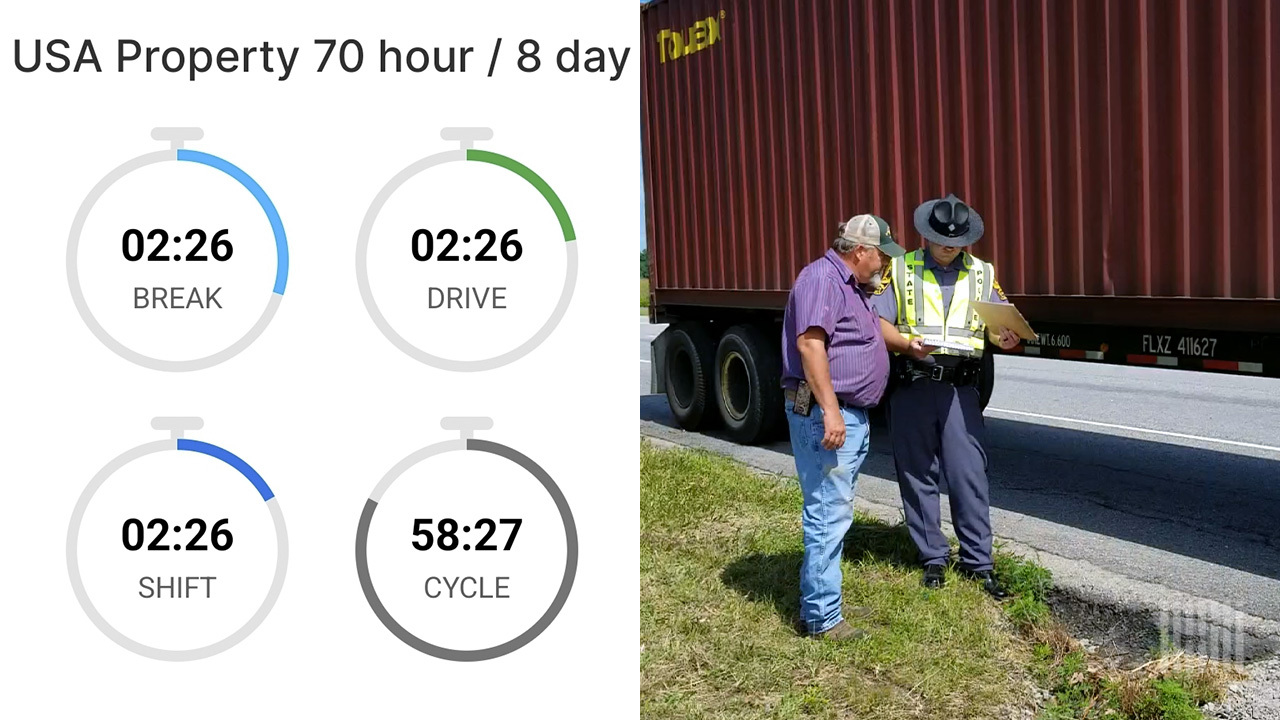
If you’re running under the 70-hour/8-day rule (common for most interstate operations), you’re limited to 70 hours of on-duty time in any rolling eight-day period. Each day, the hours you worked eight days ago “fall off” and are added back into your available time. That’s your recap.

Understanding this is critical for HOS management and for drivers who operate without a 34-hour restart. If you’re running hard and skipping the restart, knowing what hours will be added back each day gives you a tool for long-haul planning. You ask, “So, a 34-hour restart isn’t required?” No, it’s not. Argue if you want to. I said what I said.

Why Recap Hours Matter:

  • They extend your work cycle without requiring a restart.
  • They help fleets maximize available hours without burning out drivers.
  • They prevent unintentional HOS violations from poor planning.

The chart above shows a sample 14-day pattern of daily hours worked under the 70/8 rule. Notice the fluctuations and imagine how a smart dispatcher could route loads based on upcoming recap returns.

Sleeper Berth Splits: 8/2 and 7/3 Explained

Drivers using a sleeper berth can split their required minimum 10-hour break into two qualifying periods:

  • One of at least seven consecutive hours in the sleeper.
  • One of at least two hours (off duty or sleeper berth).
  • Combined, they must total at least 10 hours.

These breaks pause the 14-hour on-duty clock, meaning you can regain drive time in ways you wouldn’t with a 10-hour break.

Sleeper Split Example

A driver might work seven hours in the sleeper (midnight to 7 a.m.), drive for eight hours and then take three hours off duty later. As long as the seven+three meets the requirements, the driver can reset the 14-hour clock from the end of the first qualifying period.

The chart above visualizes how that might look on a grid log. While the math and rules can be confusing, most modern ELDs (like Motive) handle these calculations automatically if drivers are appropriately trained.

Why This Matters

FMCSA roadside violations still list HOS issues, especially 14-hour violations and log falsification, among the most cited infractions.

The Commercial Vehicle Safety Alliance’s Roadcheck blitzes and other initiatives seem never-ending and are becoming more aggressive. Fleets that don’t teach sleeper splits or recap management risk not only fines but OOS violations, lost revenue and increased insurance rates.

Tools That Help

Motive’s ELD, Free Electronic Logbook App for short-haul and other exemptions, as well as the Fleet Dashboard automatically:

  • Alert drivers of available hours.
  • Track qualifying sleeper berth splits.
  • Calculate recap hours.
  • Prevent HOS violations before they happen.

Why did I mention Motive specifically? Many fleets operate under an hours-of-service exemption, and few allow for or provide an editable, nontracked method for timesheet record-of-duty calculations. Whether short-haul, driveaway, agricultural or other exemption. An ELD isn’t always available, not all fleets have them but the free electronic logbook app is. 

Meanwhile, training platforms like Luma Brighter Learning allow fleets to onboard drivers with interactive hours-of-service modules tailored to real-world scenarios.

Compliance Is a Culture

Understanding sleeper splits and recap hours is a smart operational strategy in a world of rising litigation, nuclear verdicts and compliance crackdowns. Drivers who understand these rules can avoid unnecessary restarts and violations. Fleets that teach and track them avoid fines, improve retention and build a culture of operational excellence. These rules guide legal, efficient and profitable movement in the cab, dispatch office or safety department.