February surprise for busiest U.S. container gateway
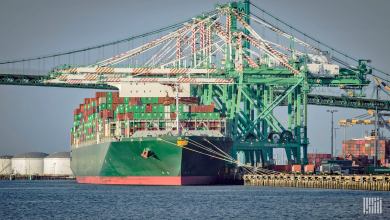
Exports prop up overall container volumes at the Port of Long Beach.
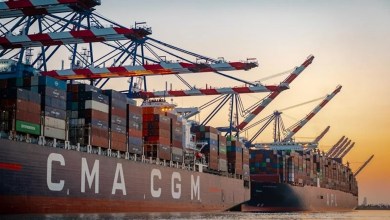
Ocean carrier CMA CGM will re-flag 30 ships under the French flag, a year after its chief executive appeared in the Oval Office to support plans to revive the American maritime sector.
Flexport’s latest release comes at a time when some of its features stand to benefit from current events.
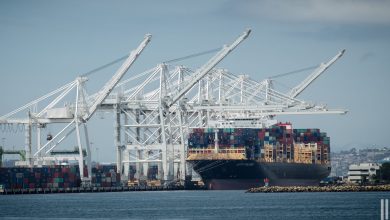
The top U.S. container port saw near-record volume in February as continued consumer resilience outpaced middling economic indicators.
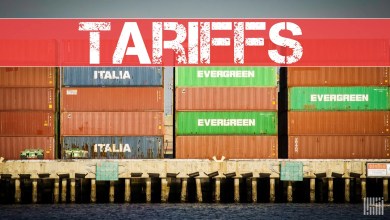
The White House has launched trade investigations into 16 U.S. trading partners, potentially paving the way for new tariffs.
Dozens of U.S. states and thousands of companies are challenging the Trump administration’s tariffs in court.
Even with some tariffs struck down, small businesses say policy volatility — not clarity — is shaping their supply chain decisions.
Canada-based Cargojet is compensating for the loss of a major Chinese e-commerce shipper by concentrating on new business opportunities closer to home.
The Port of Long Beach recorded its second-busiest January ever despite the ongoing effects of the China-U.S. trade war and economic uncertainty.
Trade uncertainty in the U.S. and beyond is reinforcing long-term supply chain decentralization, with companies betting on flexibility over political predictability.
Major importers are racing to recover tariff payments deemed unconstitutional while President Trump signals a fresh round of duties, keeping supply chains on edge.
Xeneta: Iran tensions could delay Red Sea return While ocean carriers wrangle with too many ships and too little cargo, continuing weak rates on the Asia-U.S. trade route are starting to show up on other benchmark shipping lanes. “Average spot rates are down this week across all main fronthaul trades out of the Far East,” […]
Importers are facing difficult decisions regarding refunds after the U.S. Supreme Court struck down Trump’s emergency tariffs.
The Supreme Court ruled 6-3 that IEEPA does not authorize the President to impose tariffs. Within hours, the White House invoked Section 122 of the Trade Act of 1974 to impose a new 10% global surcharge, later raised to 15%. Up to $175 billion in collected duties now sits in legal limbo. Section 232 tariffs on steel, aluminum, and heavy trucks remain untouched. For the freight industry, the ruling didn’t end the trade war. It changed the weapons.
Flatbed rejections have increased sharply in recent months and do not appear to be driven solely by tightening capacity or weather disruptions. The recent tariff ruling could serve as an accelerant to this trend.
Trump could leverage fees on container imports to raise revenue after the Supreme Court declared his emergency tariffs illegal.
The Trump administration is reassessing portions of last year’s steel and aluminum tariffs and weighing targeted exemptions.
Ocean Network Express posted a net loss of $88 million in the third fiscal quarter on weaker container traffic and rates.
Canadian National said fourth-quarter revenue and operating income improved but warned of flat freight traffic in 2026.
Ocean container shipping holds its collective breath as Trump threatens new EU tariffs over Greenland purchase.