CVSA Roadcheck and enforcement are crucial to national security
An investigative analysis of the security gaps in American commercial trucking, from terrorism to trafficking and how CVSA Roadcheck plays an important role.
Every year, roughly the same time, the Commercial Vehicle Safety Alliance runs its International Roadcheck. Three days. Thousands of inspectors. Tens of thousands of trucks. The dates get announced months in advance, the focus areas get published, and somehow, fleets still get caught off guard.
CVSA’s five-day Human Trafficking Awareness Initiative kicks off today across the United States, with law enforcement and carriers conducting coordinated outreach at truck stops and weigh stations through Jan. 16. Since Truckers Against Trafficking launched in 2009, the organization has trained over 1.8 million transportation professionals, generating thousands of hotline calls and identifying more than 1,200 potential victims.
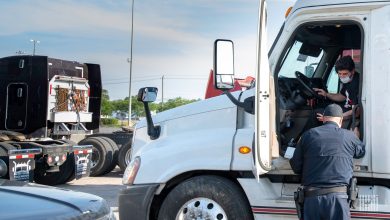
When you got your CDL and started hauling freight on public highways, you traded some constitutional protections for the privilege of operating in a closely regulated industry. Here’s what that actually means when a badge knocks on your sleeper berth door.
Inspectors pulled 2,296 commercial vehicles off the road during the 2025 Brake Safety Week, a 15.1% out-of-service rate virtually identical to 2024’s 15% failure rate. With next year’s enforcement already scheduled for Aug. 23-29, 2026, the question isn’t whether we’ll see similar results
The Commercial Vehicle Safety Alliance’s 2025 International Roadcheck brought more than 56,000 inspections to highways across the U.S., Canada, and Mexico, revealing that the same familiar culprits, brake systems, tires, and logbook falsifications, continue to drive out-of-service violations.
Operation Safe Driver Week begins July 13, targeting speeding and unsafe driving behaviors across North America. For fleets, these blitzes can directly impact FMCSA data, ISS scores, and safety ratings, which affect your ability to win freight, retain insurance, and stay on the road. Here’s what to know, what’s coming next, and how to build a clean inspection strategy before it’s too late.
For the first time in decades, the federal government is shifting its attention from policy roundtables to the actual drivers and fleets keeping the country moving.
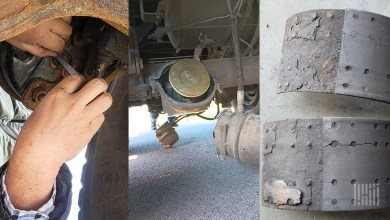
With over 12% of trucks sidelined during last year’s CVSA Brake Safety Week, the 2025 focus on rotors and brake drums puts heavy-duty and vocational trucks in the crosshairs. This guide breaks down what inspectors look for and how clean, well-maintained rigs are more likely to pass or avoid inspection altogether.
With CVSA reinstating English proficiency violations as out-of-service offenses, FMCSA’s new guidance puts front-line carriers and drivers on high alert and raises deeper questions: What about drivers who are deaf, mute or communicate differently? Who gets left behind, and what can fleets do now to stay compliant?
Tender rejections are already near last year’s July Fourth peak.
The Commercial Vehicle Safety Alliance (CVSA) is gearing up to formally request a big change: a federal time cap on personal conveyance use by truck drivers
Critics of the reinstatement of English language proficiency out-of-service violations argue that the directive is more political than practical and risks diverting attention from more pressing safety issues on U.S. highways.
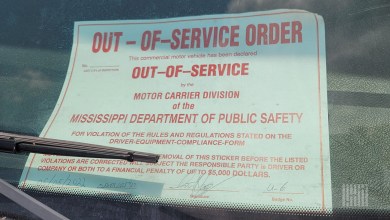
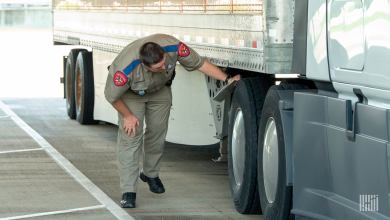
With CVSA’s International Roadcheck around the corner, thousands of inspectors will be out in force, and if you’re not ready, your truck could be the one parked roadside with an out-of-service sticker. This guide breaks down what a Level 1 inspection really involves.
CVSA enforcement blitzes like International Roadcheck, Operation Safe Driver Week, and Brake Safety Week can make or break a fleet’s compliance record. Failing an inspection means out-of-service violations, increased ISS scores, and higher insurance costs. The key to staying ahead? Proactive fleet technology. AI-powered dashcams, electronic DVIRs, predictive maintenance systems, and compliance automation help fleets avoid costly violations. With FMCSA safety ratings on the line, adopting these tools ensures that fleets remain inspection-ready year-round because trucking compliance isn’t seasonal.
The Commercial Vehicle Safety Alliance’s (CVSA) International Roadcheck is scheduled for May 13-15. Mark Barlar, director of DOT regulatory compliance at Reliance Partners, shares some insightful tips for carriers and drivers to stay compliant during this period of increased scrutiny.
Updates to the CVSA Out-of-Service criteria have been released, set to take effect April 1.
On a recent episode of Loaded and Rolling, Matt Leffler, the Armchair Attorney, spoke about the explosion in nuclear verdicts impacting trucking.
Driverless truck developers are looking to third-party validators to back their safety claims.
A recent Flock Freight survey reports 43% of truckload orders were partially empty, highlighting ongoing challenges for trailer space utilization.