DOT may scrap Biden-era road safety initiative
Despite declining traffic fatalities, DOT is considering ending its National Roadway Safety Strategy, with a decision expected by January 2026.
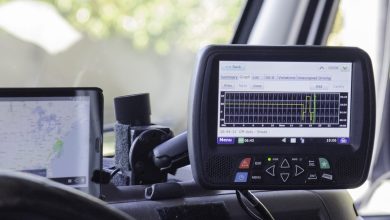
The FMCSA accelerated its effort to remove illegal and substandard electronic logging devices from service.
Regulators are threatening to withhold up to $151 million from Pennsylvania and potentially decertify its CDL program over uncorrected non-domiciled license errors.
Trucking and safety groups are warning FMCSA that its pilot program for more flexible truck driver rest rules poses a high risk of driver coercion.
FMCSA’s pilot program to pause the 14-hour driving window fails to address the industry’s detention time problem, argue truck safety advocates.
Federal regulators plan to survey 60 motor carriers for data on driver work schedules and crash risk that potentially could help inform adjustments to hours-of-service restrictions.
A federal appeals court has temporarily paused FMCSA’s new rule restricting non-domiciled commercial driver’s licenses following a lawsuit by a truck driver.
Two U.S. Senators have introduced a bipartisan bill to mandate a permanent ban on transportation licenses for anyone convicted of human trafficking.
Trucking companies face a liability risk and a capacity crunch due to FMCSA’s new CDL restrictions.
Former law enforcement official Derek Barrs will become the eighth administrator of the nation’s top trucking regulator.
Former law enforcement official Derek Barrs is on track to be confirmed by the Senate this week.
Legislation would make the U.S. Virgin Islands and Puerto Rico “states” for CDL purposes and allow their drivers to avoid foreign-driver restrictions on the mainland.
Some truckers are rejecting FMCSA’s pilot program to extend the daily driving window, arguing the real problem is corporate-driven unpaid labor.
FMCSA has taken initial steps to modernize its complaint database to improve response times and crack down on fraud.
New legislation has been introduced to protect truck drivers from predatory leasing programs used by carriers to gain an unfair advantage in the freight markets.
FMCSA will decide on a rule to exempt specialized drivers from a hazardous materials endorsement – a move opposed by tank-truck companies over safety concerns.
Federal regulators are reviving two pilot programs to see if they can safely give truck drivers more control over their driving time.
ATRI seeks motor carriers for study on FMCSA entry-level driver training’s effects on trucker safety and retention, building on 2008 research.
Federal regulators have delayed until 2026 action on a slate of proposed rules affecting truck drivers and motor carriers.
FMCSA’s new process for challenging crash and inspection data has raised concerns from lobby groups.
The Trump administration has shut down work on a three-year project aimed at addressing rape and sexual assault in the trucking industry,
Trucking regulator Sue Lawless is moving to the private sector to advise transportation clients on safety issues.
Motor carriers tell regulators that streamlining safety rules will eliminate unnecessary work.
A California Republican has taken action on a regulatory framework that would pave the way for fully autonomous trucks.
The State of Freight for July looked at what a few key SONAR indices are saying about the market.
Proposals to limit top truck speeds – initiated by major trucking companies – lacked enough data to justify moving forward, according to regulators.
Derek Barrs told Senate lawmakers he would uphold and enforce trucking industry initiatives from combatting fake CDLs to advancing autonomous truck technology.
A new bill aims to compel FMCSA to accept positive hair drug tests in the Drug and Alcohol Clearinghouse, a move supported by major carriers but opposed by owner-operators.
Economic and safety concerns attributed to non-North American motor carriers operating in the U.S. may be misguided, according to federal data.
Virginia truck drivers that need a skill performance certificate will benefit from a more streamlined evaluation process.
Dallas-based CloudTrucks tells regulators it can improve its driver hiring if allowed to be unhindered from a federal requirement.
The Trump administration has launched a sweeping package of initiatives affecting trucking that includes investigating fraudulent CDLs, money for parking, and work-hour flexibility.
Regulators are giving thousands of truck drivers relief from work-hour rules to prevent fireworks shows around the country from fizzling out.
Justice Department press release describes violations of several FMCSA rules by Shaquan Jelks; magistrate order on detention spells out some of the details.
New legislation would mandate that all truck drivers be tested for proficiency in speaking and reading English before being allowed on the road.
DOT’s proposed new enforcement policy could result in a disincentive to investigate motor carrier violations, according to accident victim advocates.
A new enforcement policy proposed by DOT raises the question of whether the trucking industry will become less safe or will be better able to comply with regulations.
Applicants for CDL grants may have an easier time now that Biden-era DEI and climate change requirements have been stripped out of the approval process.
A small-business trucker has been charged with laundering money from fake credit cards to a Turkish bank account.
Improving how truck driver registrations are vetted and collecting better crash data are among FMCSA’s FY26 priorities, according to a new detailed budget request.
Sweeping regulatory changes aimed at slashing trucking industry red tape are raising red flags from industry experts and safety advocates.
Recent identity verification changes by the Federal Motor Carrier Safety Administration are having a major impact on the number of newly minted operating authorities, according to research from CarrierOK.
The government is cleaning up motor carrier safety regulations to ensure consistency and improve clarity for the trucking industry.
The Trump administration is amending a list of truck safety rules, aiming to streamline regulations and make compliance easier.
The Trump administration is opening a new round of federal grant applications for truck drivers and truck operations.
Regulators say the drug-testing oversight for truckers hauling production crews and film equipment is still safe enough to allow for reduced federal requirements.
An industry group tells DOT that the future is now when it comes to deploying autonomous trucks.
Critics of the reinstatement of English language proficiency out-of-service violations argue that the directive is more political than practical and risks diverting attention from more pressing safety issues on U.S. highways.
One of President Trump’s favorite political organizations is pushing his administration to make it easier to grant waivers and exemptions for small trucking companies.
More scrutiny of truck drivers and fraudulent CDLs could have operational and cost implications for trucking companies.
The FMCSA would be a more efficient regulator if it changed the definition of “commercial motor vehicle,” a group representing small carriers asserts.
A Washington high school failed to convince federal regulators of the benefits of altering the training rules for teenage truck drivers.
Trucking’s lead safety agency has been failing to properly monitor billions of dollars in taxpayer money aimed at preventing crashes, according to a government watchdog.
The FMCSA says it does not have to correct a federally funded study that an insurance group claims underestimates the safety benefits of side underride guards.
WASHINGTON – A brake-light technology company focused on reducing rear-end truck crashes got another boost from regulators with a ruling that two private fleets can deploy its equipment even though it is at odds with current rules. Intellistop, which makes a module that briefly pulses a truck’s brake lights immediately after the brakes are engaged, […]
WASHINGTON — The Federal Motor Carrier Safety Administration has voided thousands of medical examiner certificates issued by two Houston-area doctors, putting the livelihoods of over 15,000 commercial drivers at risk. A “high volume” of physical examinations performed by Dr. Jenny Le (Medical Examiner National Registry No. 4762579227) and Dr. Dustin Mai (National Registry No. 7120983977) […]
WASHINGTON — U.S. Rep. Josh Brecheen is again leading the charge to keep regulators from capping truck speeds below the legal limits posted on highways and interstates. The Deregulating Restrictions on Interstate Vehicles and Eighteen-Wheelers (DRIVE) Act, introduced on Thursday by the Oklahoma Republican, would prohibit the Federal Motor Carrier Safety Administration from requiring that […]
Despite pushback from safety groups, FMCSA is allowing a private fleet owner to continue its sleeper berth exemption until 2030.
Derek Barrs, a member of the American Trucking Associations’ Law Enforcement Advisory Board, has been nominated to lead the Federal Motor Carrier Safety Administration.
A controversial rulemaking stalled at DOT has major implications for highway safety and trucking costs.
The Trump administration has picked Adrienne Camire to lead the nation’s top truck safety regulatory agency.
U.S. senators heard suggestions on how to empower regulators and law enforcement to deal with thieves and scammers in trucking and rail.
A group representing small transportation companies has successfully lobbied the FMCSA to keep the door open on a rulemaking that pits brokers against truckers.
Congress will try again to crack down on fake brokers and trucking companies that slip under the regulatory radar.
A federal task force wants Congress to shut down leasing programs used in the trucking industry due to “widespread harm” that they cause small-business owners.
Potential regulations aimed at boosting truck safety – including protecting women – will receive new scrutiny under one of many actions taken by President Trump on Inauguration Day.
The president-elect sided with protesting truckers five years ago, but will his new administration be willing to expand federal oversight of private broker contracts?
Regulators have issued an emergency hours-of-service exemption for truck drivers and carriers in response to high demand caused by severe winter storms.
Federal regulators want drivers for a study to find out if flares, fuses and warning triangles do enough to reduce crashes involving disabled trucks and passing motorists.
Earl Adams will advise Plus on autonomous driving regulations as the company works toward getting driverless trucks on the market.
FMCSA finalized its plan to extend by one year the compliance date for rules meant to protect motor carriers, saying that will ensure the agency will be ready to enforce the changes.
Safety and labor advocates won out over robotic trucking after the FMCSA rejected a request to replace traditional roadside warning devices with cab-mounted equipment.
A controversial drug-testing regulation affecting truck drivers and motor carriers is now scheduled for release under the Trump administration.
Regulators are modifying their truck-crash data system but without a change owner-operators contend would have ensured drivers are not unfairly targeted.
Federal regulators are considering a waiver that carries potential cost savings for truck drivers and agricultural aircraft operators.
Innovative Logistics Group’s Adam Wingfield says new enforcement power over truckers with drug violations could be a freight capacity game-changer.
In a new rulemaking governing broker-motor carrier contracts, regulators stop short of an out-right ban on transparency waivers sought by truckers.
Safety and trucking capacity changes resulting from new CDL restrictions could hinge on how effective each state is in implementing the regulation.
Delays in setting up a new registration system will push back compliance deadlines for a rule addressing freight fraud in trucking.
Roughly 6% of CDL holders may be involved in predatory lease contracts with their carriers, according to a federal task force.
Safety and cost implications for trucking weigh heavily on three rulemakings that could see action next year.
A demand spike in truckload markets can leave independent drivers particularly vulnerable to fraud and theft.
Regulators have approved a motor carrier’s equipment exemption despite opposition from a safety-standard group.
FMCSA has been told to strengthen ELD requirements after a fatigued truck driver was found to be the probable cause of a 2022 crash that killed three people.
Community colleges around the country will use grants from the U.S. Department of Transportation to expand and improve their CDL programs.
A second Trump presidency could mean drastic course changes for DOT truck policy if the administration embraces recommendations in The Heritage Foundation’s Project 2025.
Landfill operator Waste Management Holdings told federal regulators that certain truck driver requirements hinder its ability to respond to emergencies.
FMCSA has been called on to rein in spiraling towing rates that many claim lack proper oversight.
Owner-operators and crash victim advocates say easing restrictions for new drivers is a safety risk. Regulators approved an exemption despite those objections.
Regulators approved Convoy Technologies’ rearview exemption while contemplating a rule change allowing cameras to replace mirrors.
The nation’s trucking regulator has told Congress it lacks the ability to deal effectively with illegal brokers.
Data from regulators reveals improvements in truck safety last year, with the fewest deaths in five years.
The Biden administration is pushing back the schedules for a list of rules that are being watched closely by trucking.
Allegations of data suppression by committee members tasked with advising the federal government on truck crashes have gone unacknowledged by U.S. Department of Transportation officials.
The U.S. Department of Transportation’s chief AI officer, Vinn White, has been tapped to oversee truck safety for the Biden administration.
A congressionally mandated report on CDL skills testing reveals states that are improving — or getting worse — on testing wait times for aspiring truck drivers.
In this edition: Breaking down the new FMCSA fee increase and a big freight payment partnership.
Trucking companies will see cost bumps in their UCR Plan fees of up to $9,000, depending on fleet size.
An anonymous federal survey on seat belt use by truck drivers follows recent fatality data showing many are not buckling up.
Federal trucking regulators want in-person comments on revisions to how carriers are rated on safety.